In a workshop, a raw hide waits to be transformed. A few weeks later, it may become a belt, a notebook, a saddle, or a bag designed to accompany its owner for decades. Yet behind this everyday object lies a material that continues to raise important questions. Caught between centuries-old craftsmanship, environmental concerns, and the rise of new alternatives, leather has become the symbol of a debate that extends far beyond the world of leather goods. To understand its place in a world striving for sustainability, we must first look back at its story.
Article by Damien Lafon royalty free photo.
A Material That Has Accompanied Humanity for Thousands of Years
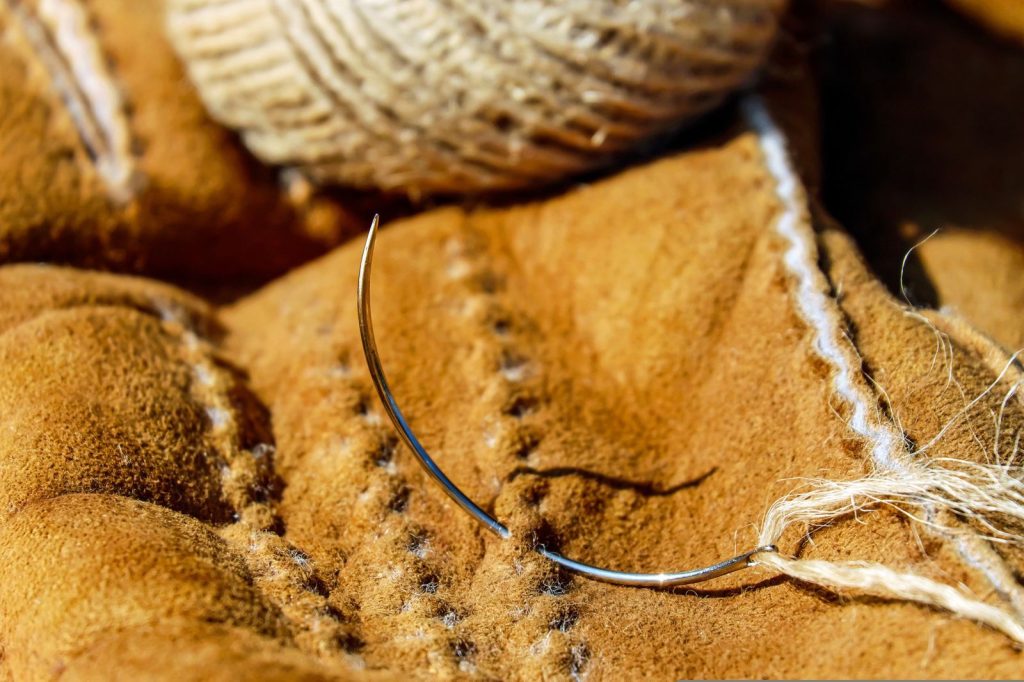
Long before the invention of modern textiles, leather was already part of everyday life for early civilizations. Animal hides were used to protect against the cold, make footwear, carry supplies, and produce hunting equipment. Strong, flexible, and relatively easy to work with, leather accompanied the development of human societies across every continent. Over the centuries, the craft evolved. Every region of the world developed its own techniques, shaped by available resources and local needs.
From European saddlers and Japanese artisans to workshops in North Africa and Southeast Asia, leather became far more than a simple raw material. It represents a body of knowledge passed down through generations, where every gesture serves a precise purpose. Today, many workshops continue to preserve these traditional methods, often alongside modern tools. In a world dominated by industrial production, this artisanal dimension helps safeguard professions whose value lies not only in technical expertise but also in the time devoted to each handcrafted piece.
Where Does Leather Really Come From?
Leather is often associated with livestock farming, yet its origin is frequently misunderstood. In the vast majority of cases, the hides used by the leather industry come from animals raised primarily for meat or dairy production. Once the animal has been processed for food, the hide is recovered and transformed into leather rather than being discarded. This practice does not eliminate the ethical questions surrounding livestock farming or animal welfare. It does, however, highlight an important reality: particularly in the case of cattle, leather is generally a by-product of an existing food production system.
The situation varies considerably depending on the country, the species involved, and the production model. Some supply chains benefit from advanced traceability systems, while environmental and health regulations differ widely from one region of the world to another. Understanding this diversity is essential. Speaking of “leather” as though it were a single, uniform material overlooks the complexity of an industry made up of thousands of producers, tanneries, and artisans whose practices can differ significantly.
Did You Know?
Every year, millions of animal hides from the food industry are transformed into leather. Without this form of recovery, a significant proportion would need to be disposed of or treated as organic waste. While this does not resolve the ethical questions surrounding livestock farming, it highlights the fact that leather is generally produced from a by-product of an existing food production system.

A Demanding Process with Real Environmental Challenges
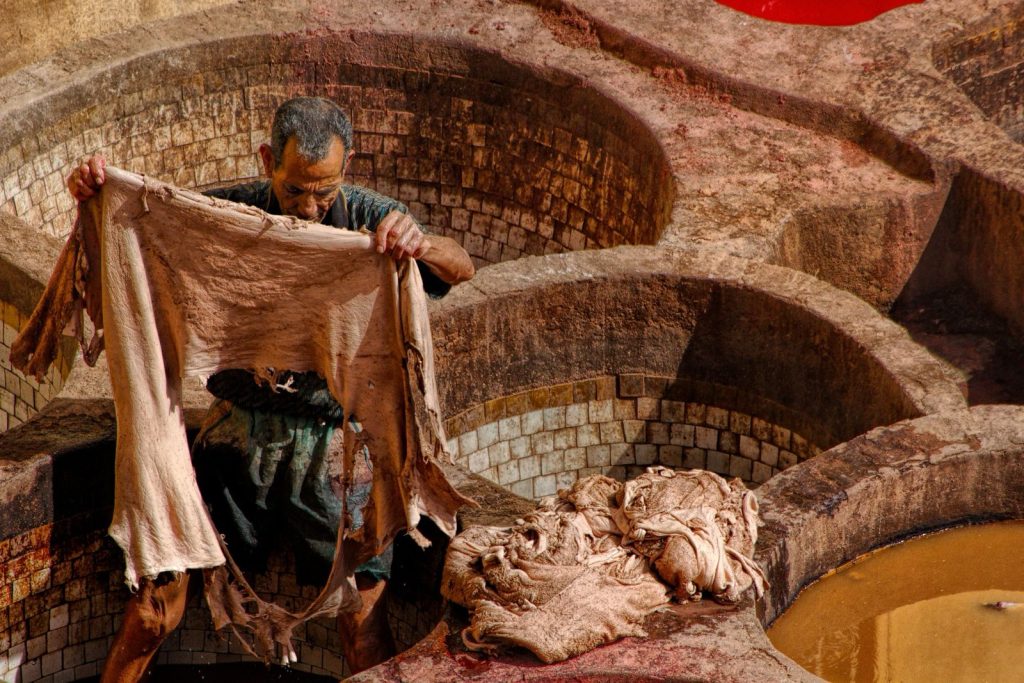
Before becoming a finished product, a hide undergoes several stages of transformation. It is first cleaned and stabilized before entering the tanning process a treatment that prevents natural decomposition while giving the material its flexibility and durability. Today, chrome tanning remains the most widely used method worldwide. Fast and efficient, it produces leather that meets the technical requirements of industries ranging from footwear to automotive manufacturing.
However, this process also raises environmental concerns. In regions lacking adequate infrastructure, some tanneries may discharge insufficiently treated wastewater, affecting rivers, soils, and surrounding ecosystems. These issues are generally associated with areas where environmental regulations and enforcement remain limited.
Conversely, many modern tanneries have invested in wastewater treatment facilities, reduced their use of chemicals, and introduced recycling systems designed to minimize their environmental footprint. As with many industries, practices vary greatly from one producer to another. Treating the leather sector as a single, homogeneous industry would overlook these important differences.
The Return of More Traditional Methods
In response to changing consumer expectations and evolving regulations, many artisans and tanneries are once again embracing vegetable tanning. This traditional method relies on natural tannins extracted from the bark, leaves, or fruits of certain plants. Slower than industrial tanning, it requires both time and craftsmanship. The leather produced through this process often has a more natural appearance and develops a unique patina over the years. This gradual transformation is highly valued by those who appreciate objects designed to last.
However, vegetable tanning is not a universal solution. Its environmental impact also depends on many factors, including water management, energy consumption, and the origin of the raw materials. It is not suitable for every technical application or industrial requirement. Rather than opposing one tanning method to another, this renewed interest highlights the diversity of approaches that now coexist within the leather industry.
Did You Know?
Not all leather is the same. Full-grain leather, corrected-grain leather, nubuck, and suede each differ in the way they are produced, as well as in their durability, appearance, and the way they age over time. The tanning process used also plays an important role in determining both the leather’s characteristics and its environmental impact.
Alternative Materials Tell Their Own Story
Over the past few years, new materials presented as alternatives to leather have experienced significant growth. Some are produced from pineapple fibres, cactus, mushrooms, or agricultural waste. These innovations reflect a genuine effort to develop more sustainable solutions while offering new possibilities for industries seeking to reduce their reliance on animal-derived materials.
Their composition, however, is often more complex than it first appears. To improve durability, flexibility, or water resistance, many of these materials still incorporate synthetic polymers. Their lifespan, repairability, and recyclability also continue to be the subject of ongoing research and development. As with traditional leather, it is difficult to draw a single conclusion. Every material has its own strengths, limitations, and environmental footprint.
The Real Question Goes Beyond the Material
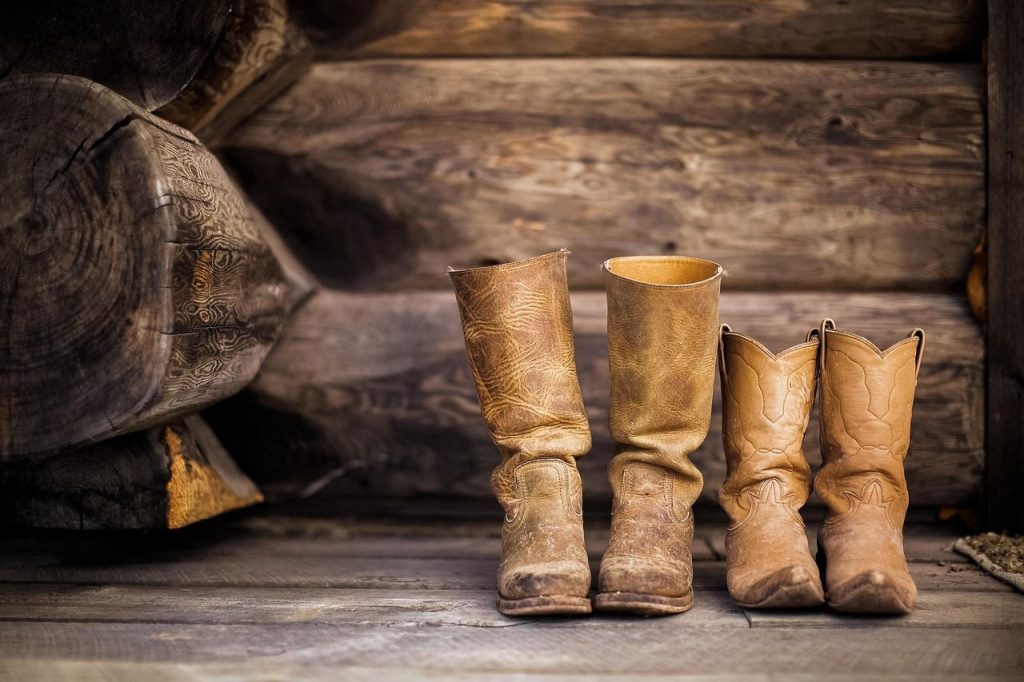
Ultimately, the debate surrounding leather raises a broader question: how do we make the objects that surround us, and how long are we willing to keep them? For decades, consumer habits have largely favoured lower-cost products, many of which are designed to be replaced after only a few years. In this context, sustainability depends not only on the material itself but also on the quality of craftsmanship, the ability to repair an object, and its actual lifespan. Whether made from leather, canvas, cotton, or an innovative new material, an object designed to last for decades tells a very different story from one intended to be quickly replaced.
Perhaps this is where the real challenge lies. Beyond choosing one material over another, it is about rebuilding a more lasting relationship with the objects we use every day. Buying less, caring for what we own, repairing when possible, and passing cherished objects on to future generations are all ways of rethinking how we consume. Leather is no exception. Neither entirely virtuous nor entirely condemnable, it remains a complex material, deeply connected to our history, our craftsmanship, and the choices we make as we seek to build a more sustainable future.
FAQ
In most cases, no. The hides used to produce bovine leather generally come from animals raised for meat or dairy production. Leather is therefore typically a valued by-product of the food industry rather than its primary purpose.
Vegetable tanning uses naturally occurring tannins extracted from plants instead of certain metallic salts commonly used in chrome tanning. However, its environmental impact still depends on many factors, including water and energy management, transportation, and the practices adopted by each tannery.
Not necessarily. Many alternative materials combine plant-based fibres with synthetic polymers to improve strength, flexibility, and water resistance. Their exact composition varies depending on the manufacturer.
Full-grain leather is generally considered the highest quality because it retains the natural surface of the hide. Strong stitching, careful finishing, repairability, and transparency about sourcing and manufacturing are also good indicators of quality.
Yes, when it is well made and properly cared for. Many leather bags, shoes, saddles, and accessories remain in use for decades before being repaired, restored, or passed on to a new generation.
Yes. Some tanneries are assessed by independent organizations that evaluate criteria such as water and energy management, chemical use, waste treatment, and traceability. While these certifications do not guarantee zero environmental impact, they encourage continuous improvement across the industry.
There is no universal answer. The decision depends on personal values, the product’s origin, how it was manufactured, and how long it is expected to be used. From a sustainability perspective, choosing durable, repairable products designed to last for many years is often a more meaningful approach than focusing solely on the material itself.
Follow us on Instagram and Facebook to stay informed
This article may be of interest to you: What Really Happens to Plastic That Ends Up in the Ocean? From Manufacturing to Microplastics