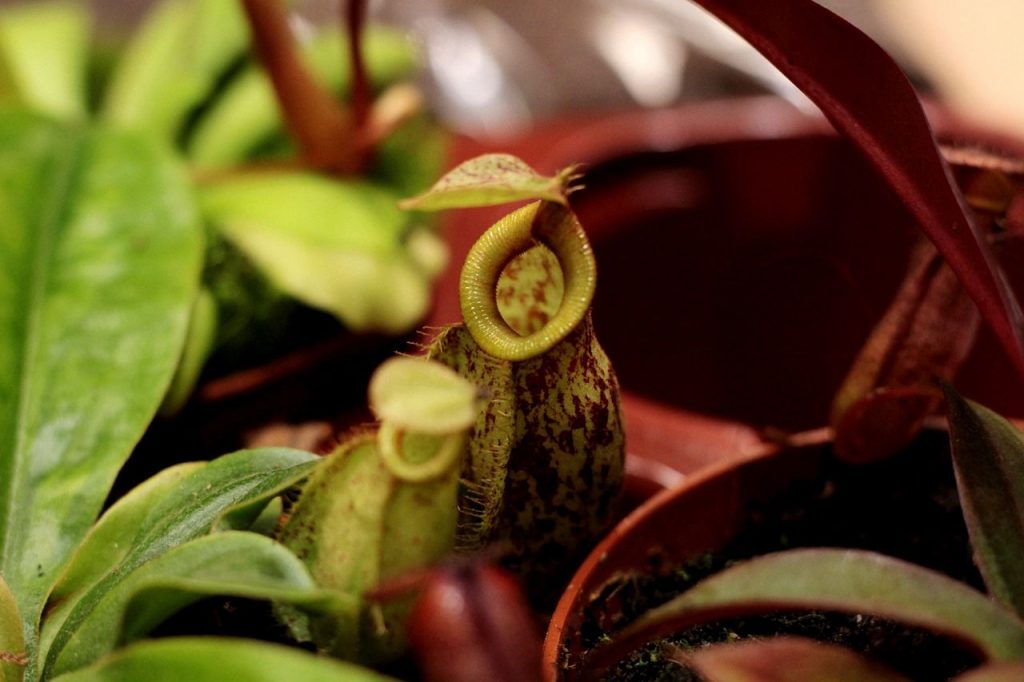
Carnivorous plants grow in environments where the soil provides very little nitrogen and other essential minerals. To survive in these demanding habitats, they have evolved specialized leaves that capture prey, digest organic matter, and absorb nutrients that roots cannot easily obtain from the substrate. This adaptation makes them one of the clearest examples of how plant structure and physiology respond to environmental pressure.
Article by Damien Lafon, royalty-free photographs
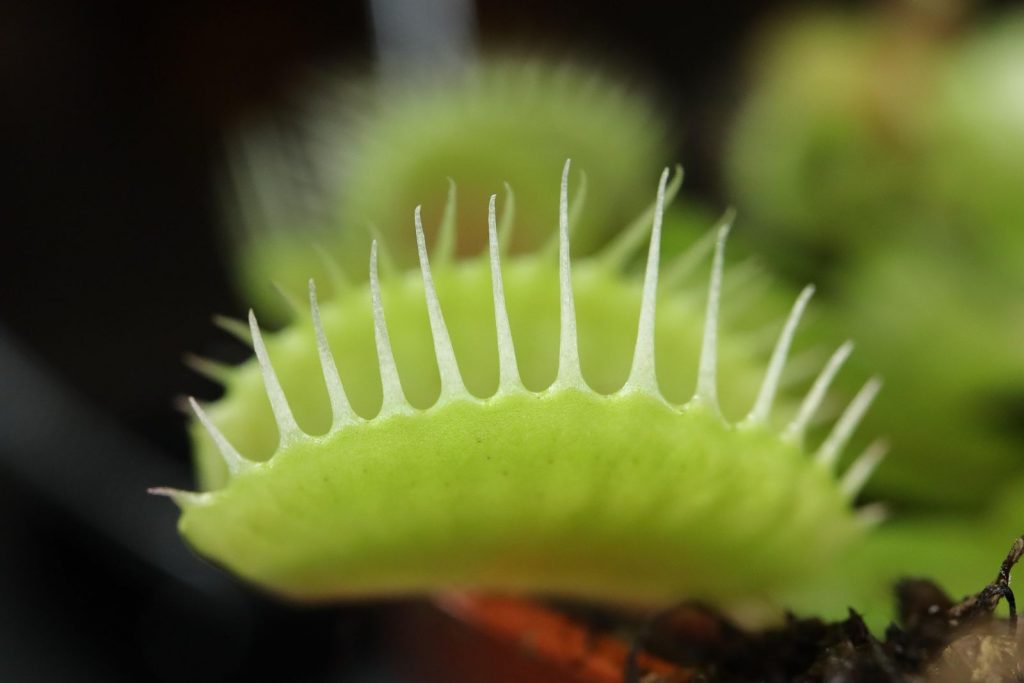
These plants do not rely on a single strategy. Depending on the species, prey capture may involve slippery pitcher walls, sticky glandular surfaces, rapid snap closures, or underwater suction mechanisms. Although these systems differ in form, they serve the same biological function: improving nutrient acquisition in poor, acidic, wet, or sandy soils where conventional uptake is limited.
Why are carnivorous plants carnivorous?
Carnivorous plants evolved in habitats where light and water are often available, but mineral nutrients in the soil are scarce. In such conditions, carnivory offers a major advantage. By trapping insects and other small organisms, these plants supplement deficiencies in nitrogen, phosphorus, and trace elements that would otherwise constrain growth.
This does not mean they stop being plants. They still produce energy through photosynthesis. Carnivory is a nutritional adaptation, not a replacement for photosynthesis. It allows them to balance the energetic cost of building specialized traps with the nutritional gain obtained from prey.
Passive traps: pitcher plants use structure, gravity, and digestive fluids
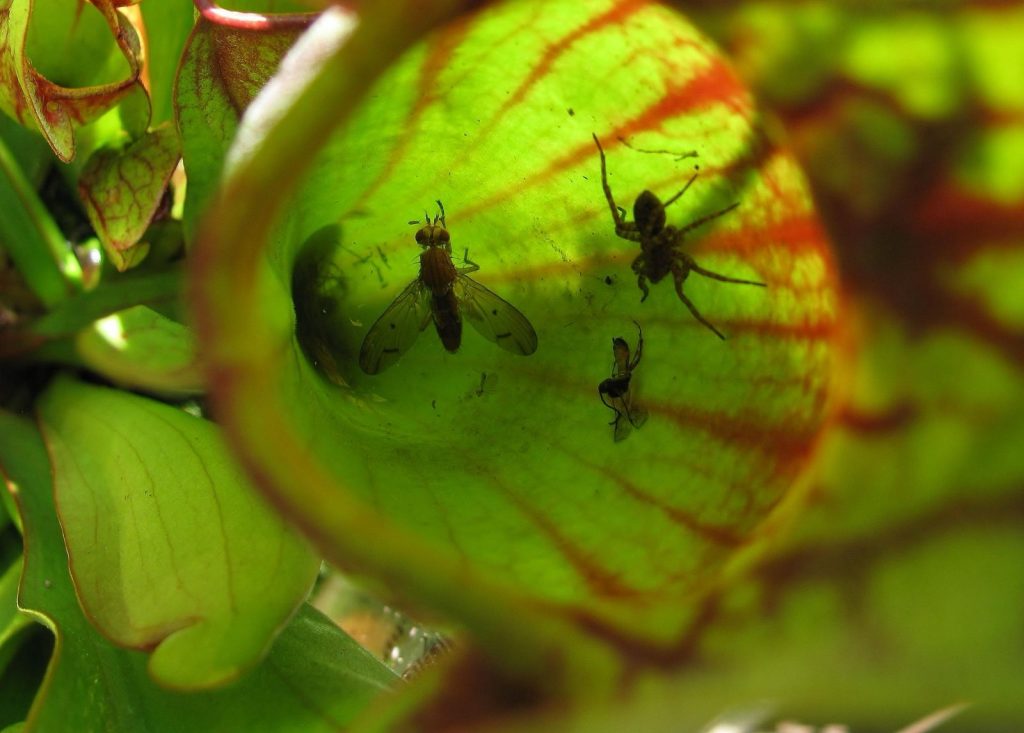
Passive traps do not need rapid movement to capture prey. In pitcher plants such as Nepenthes, Sarracenia, and related genera, the leaf forms a deep cavity that acts as a pitfall trap. Bright colors, nectar, and chemical cues attract insects to the rim. Once they step onto the slippery surface, they lose grip and fall into the pitcher, where digestive fluids and internal surfaces prevent escape.
The efficiency of these traps depends on precise structural features. Waxy inner walls, downward pointing surfaces, fluid viscosity, and pitcher geometry all contribute to capture success. Because the system relies mainly on architecture rather than fast movement, it reduces repeated mechanical energy costs and works continuously in humid environments where prey frequently slips into the trap.
Active traps: Venus flytraps convert touch into rapid movement
Active traps involve motion. The Venus flytrap is the most famous example. Its modified leaf closes only after repeated stimulation of sensitive trigger hairs, which helps reduce false alarms from rain or debris. This mechanical stimulation generates electrical signals that spread through the trap and trigger rapid biomechanical changes, leading to closure in a fraction of a second under suitable conditions.
After the trap snaps shut, the plant does not immediately begin full digestion. Continued prey movement helps confirm that a living target has been captured. The trap then seals more tightly, and digestive activity increases through a regulated physiological response involving enzymes and hormone related signaling. This selective process helps the plant avoid wasting energy on useless closures.
Sticky traps: sundews immobilize prey with mucilage
Sundews use adhesive rather than snap closure. Their leaves are covered with gland tipped structures that secrete sticky mucilage. When an insect lands on the surface, it becomes trapped in this viscous substance. The surrounding tentacles then bend progressively toward the prey, increasing contact and improving digestion.
This movement is slower than the closure of a Venus flytrap, but it is highly effective. The response can vary according to prey size and stimulation intensity, which shows that carnivorous plants do not simply react mechanically. They integrate sensory information and adjust their digestive response to the biological value of what they have captured.
Did you know?
In some species of nepenthes, the liquid inside the pitcher can host small organisms capable of breaking down organic matter. The plant then benefits indirectly from this activity.
Suction traps: bladderworts capture prey underwater
Some carnivorous plants use an even more specialized system. Bladderworts (Utricularia) live in aquatic or very wet environments and capture tiny organisms using miniature bladder traps. These structures create negative pressure, then open rapidly when trigger hairs are stimulated, sucking water and prey into the trap almost instantly.
This mechanism is one of the fastest known in the plant world. It shows that carnivorous plant evolution produced not just one successful design, but several highly efficient solutions adapted to different ecological niches.
How do carnivorous plants detect prey?
Carnivorous plants detect prey through specialized sensory structures such as trigger hairs, glandular tentacles, or other mechanosensitive surfaces. When these structures are deformed, ion fluxes and electrical signals transmit information across the tissue. In some species, this signaling is required to initiate trap movement. In others, it helps regulate enzyme secretion and nutrient uptake after capture.
This sensory capacity explains why many carnivorous plants respond differently to repeated contact, prey activity, or chemical cues. Their traps are not passive containers alone. They are dynamic biological systems able to distinguish meaningful stimuli from background noise.
Did you know?
In some nepenthes species, the liquid inside the pitcher can host small organisms that help break down organic matter. The plant then benefits indirectly from this process.
How do carnivorous plants digest insects?
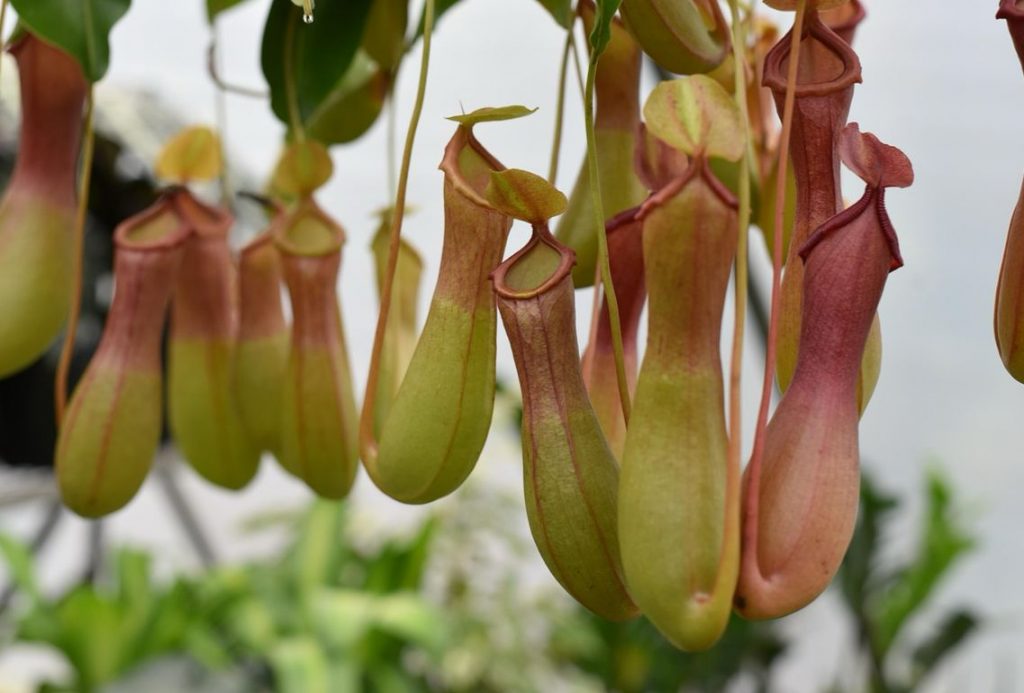
Once prey is secured, digestive glands release acidic fluids, proteins, and enzymes that break down soft tissues into smaller molecules. Reviews of carnivorous plant digestion identify enzymes involved in degrading proteins, lipids, carbohydrates, and other organic compounds. The resulting nutrients are then absorbed through specialized glandular surfaces inside the trap.
Digestion can last several days, depending on trap type, prey mass, and environmental conditions. In some pitcher plants, microbial communities or resident organisms also contribute to decomposition and nutrient cycling inside the trap. This can improve nutrient availability while reducing the plant’s own metabolic costs.
Why are carnivorous plants important to science?
Carnivorous plants are valuable model organisms for studying adaptation, signaling, biomechanics, and energy management. Their traps combine surface structure, fluid chemistry, electrical signaling, and controlled nutrient absorption in ways that interest both plant physiologists and biomimicry researchers. Scientists study them to better understand how living systems solve mechanical and metabolic challenges under extreme environmental constraints.
They also remind us that evolution often works through precision rather than excess. Carnivorous plants do not capture prey constantly or randomly. They regulate movement, digestion, and absorption in a way that conserves energy while maximizing survival in poor soils.
Conclusion
Carnivorous plants survive by combining structural innovation with precise physiological control. Pitcher plants use gravity and slippery surfaces. Sundews rely on adhesive mucilage and progressive leaf movement. Venus flytraps generate electrical signals that trigger rapid closure. Bladderworts use suction to trap prey underwater. In every case, capture is only the first step in a larger system that includes sensory detection, enzymatic digestion, and nutrient absorption.
Their diversity shows how evolution shapes form around function. In nutrient poor habitats, carnivory is not a curiosity. It is a highly efficient survival strategy.
FAQ: carnivorous plants
Carnivorous plants trap insects and other small organisms because they often live in soils that are poor in nitrogen, phosphorus, and other minerals. Prey provides nutrients that roots cannot easily obtain from the environment.
Yes. Carnivorous plants still make energy through photosynthesis like other plants. Capturing prey supplements mineral nutrition, but it does not replace sunlight as their main energy source.
A Venus flytrap closes when its trigger hairs are stimulated repeatedly within a short time. This generates electrical signals that activate rapid trap closure and help prevent unnecessary snapping.
Pitcher plants trap prey in a fluid filled leaf structure. Inside the pitcher, digestive fluids, enzymes, and sometimes associated organisms help break down prey into absorbable nutrients.
The main trap types include pitfall traps in pitcher plants, adhesive traps in sundews and butterworts, snap traps in Venus flytraps, and suction traps in bladderworts. These systems evolved to solve the same problem in different environments.
Follow us on Instagram and Facebook to keep up to date and support our media at www.helloasso.com
This article may be of interest to you: Rafflesia: The Giant Flower That Defies Nature