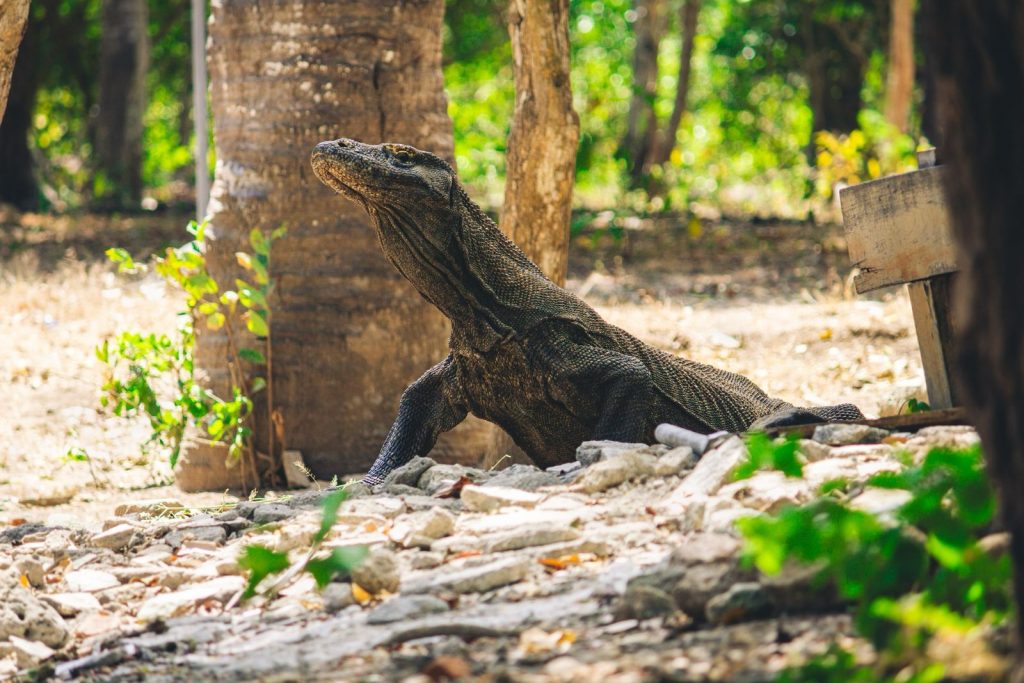
Komodo dragons, scientifically known as Varanus komodoensis, fascinate as much as they intimidate. Indeed, this extraordinary reptile is the largest living lizard on Earth. Found only in Indonesia, it embodies a raw, untouched, and sometimes dangerous natural world. However, behind this striking image lies an animal perfectly adapted to its environment.
Article by Damien Lafon with royalty-free photographs
A giant lizard perfectly adapted to an extreme environment
The Komodo dragon, or Varanus komodoensis, impresses first with its size. It can grow over 3 meters long and weigh up to 90 kg. As a result, it clearly dominates its territory. It mainly inhabits the islands of Komodo, Rinca, Flores, and Gili Motang. These environments are dry, arid, and demanding. Yet, this reptile adapts perfectly. Thanks to its slow metabolism, it can survive for several weeks without feeding. In addition, its thick skin, made of reinforced scales, acts as natural protection. However, it should not be underestimated. Although it appears heavy, it can run quickly over short distances. It can reach speeds of around 20 km/h, making it a far more agile predator than one might expect.
An efficient and formidable hunting strategy
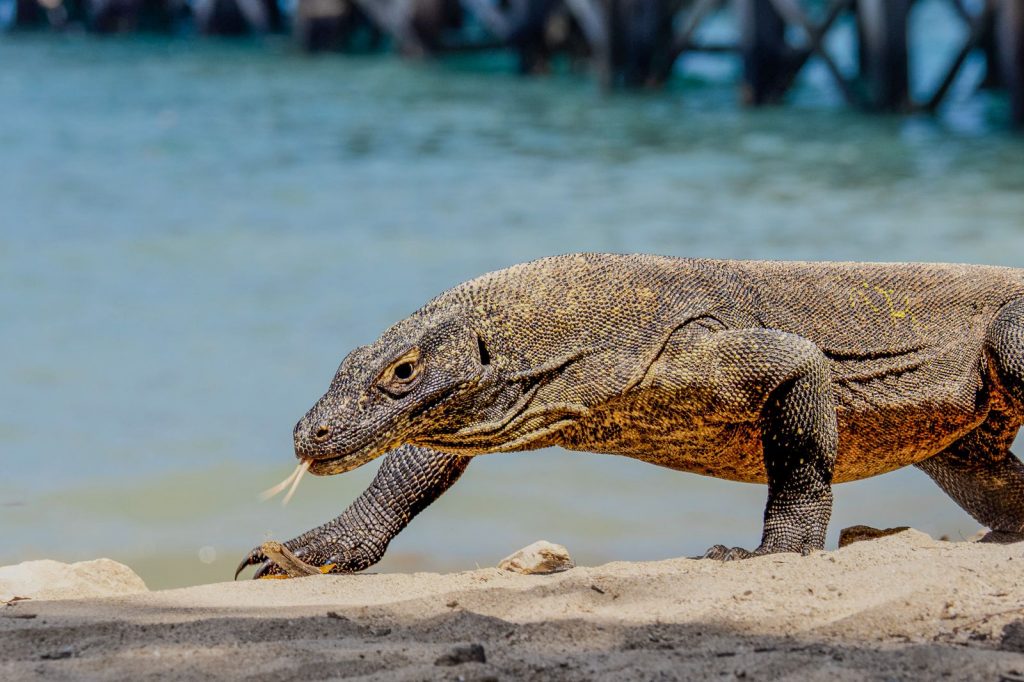
Varanus komodoensis uses a highly effective hunting technique. First, it bites its prey with a deep, powerful bite. Then, it releases venom that prevents blood clotting. As a result, the victim gradually weakens. Unlike many predators, it does not always aim to kill immediately. Instead, it tracks its prey over long distances, sometimes for several days. Eventually, when the prey collapses, it feeds. In addition, its sense of smell is exceptional. Thanks to its forked tongue, it can detect a carcass from several kilometers away. This ability maximizes its chances of survival in an environment where food is scarce.
Did you know?
Varanus komodoensis can detect prey from over 4 km away. Its forked tongue captures particles in the air with remarkable precision.
Is the Komodo dragon dangerous to humans?
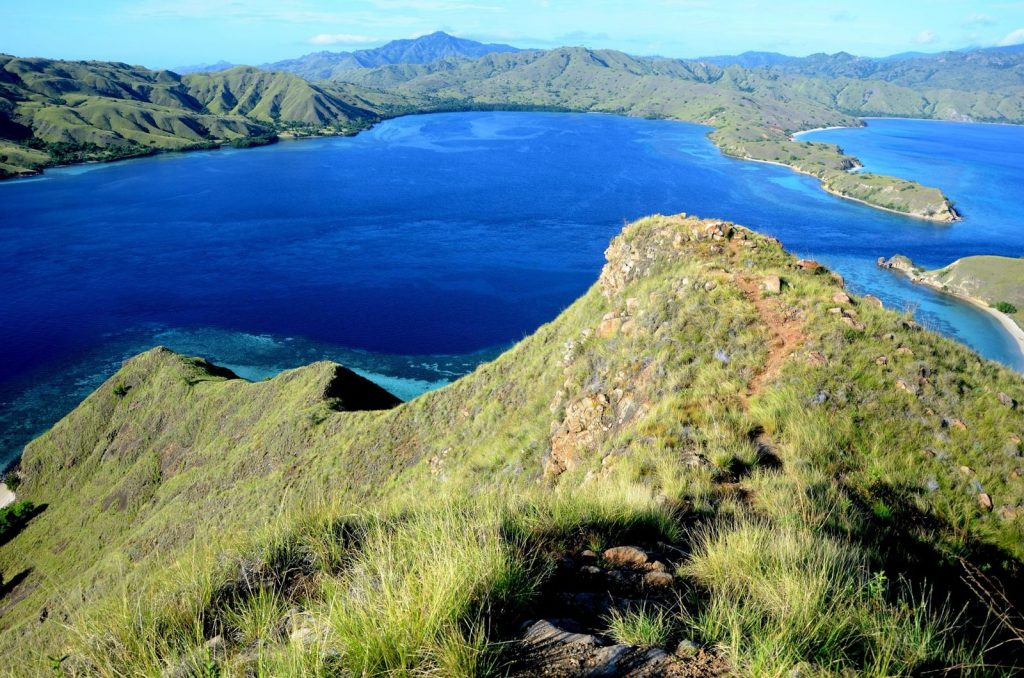
This question often comes up, and the answer is clear: yes, the Komodo dragon can be dangerous. However, this risk remains controlled when safety rules are followed. Incidents generally occur when visitors get too close or ignore guidelines. For example, the smell of blood can attract dragons and trigger unpredictable behavior. That is why visits to Komodo National Park are strictly regulated. Local guides fully understand the animal’s behavior and ensure visitor safety. With proper guidance, the experience remains both impressive and safe.
Where to see Komodo dragons in the best conditions
To observe Varanus komodoensis, you need to travel to eastern Indonesia, especially via Labuan Bajo. This town serves as the main gateway to the park’s islands. Several options are available. You can choose a day trip or a multi-day liveaboard experience. In all cases, treks on the islands are conducted with rangers. Timing is also essential. Komodo dragons are more active in the morning and late afternoon. Therefore, these periods offer the best chances for observation.
Did you know?
Young Komodo dragons live in trees to survive. This helps them avoid adults, which can sometimes be cannibalistic.
An essential ecological role in a fragile balance
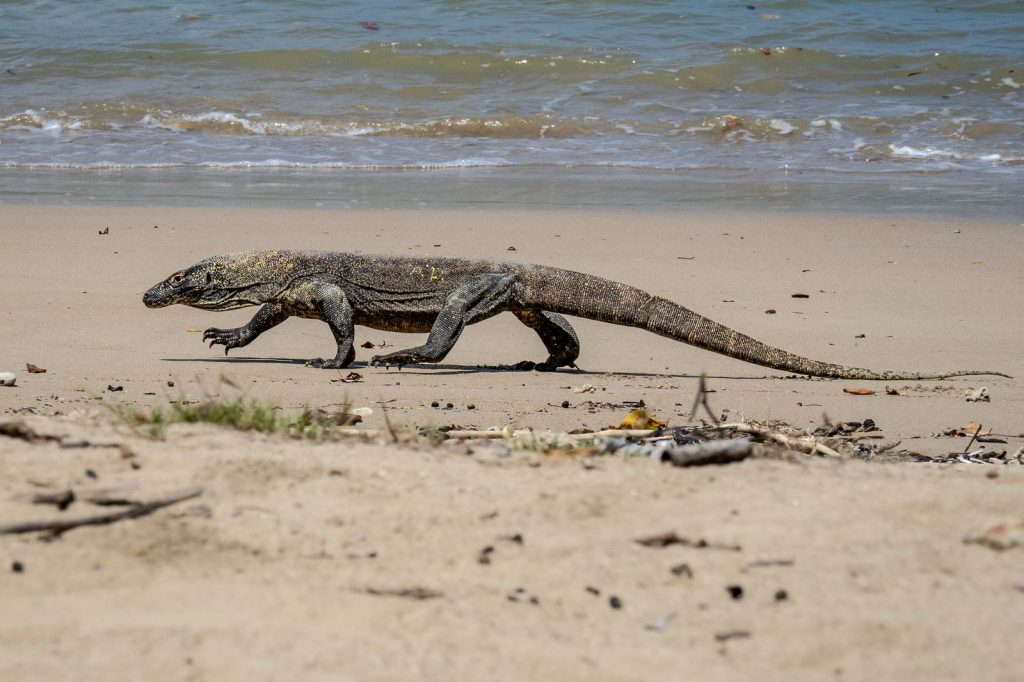
The Komodo dragon is not just a predator. It also plays a key ecological role. By regulating populations of deer and other herbivores, it helps maintain ecosystem balance. In addition, by consuming carcasses, it limits the spread of disease. However, the species remains vulnerable. Habitat loss and climate change are major threats. Protecting the Komodo dragon has become a crucial issue for Indonesia.
A powerful visual and emotional experience for visitors
Observing Varanus komodoensis in its natural habitat is a striking experience. On one hand, its appearance recalls prehistoric reptiles. On the other hand, its behavior commands immediate respect. For photographers, it is a compelling subject. The texture of its skin, combined with volcanic and marine landscapes, creates strong visual compositions. Beyond simple wildlife observation, the experience becomes immersive. Between sailing, exploration, and raw landscapes, the journey leaves a lasting impression.
FAQ
Its scientific name is Varanus komodoensis.
Yes, it has venom that prevents blood clotting.
Yes, but the dry season offers better conditions.
Yes, approaching them without supervision is strongly discouraged.
Their population is estimated at around 3,000 individuals.