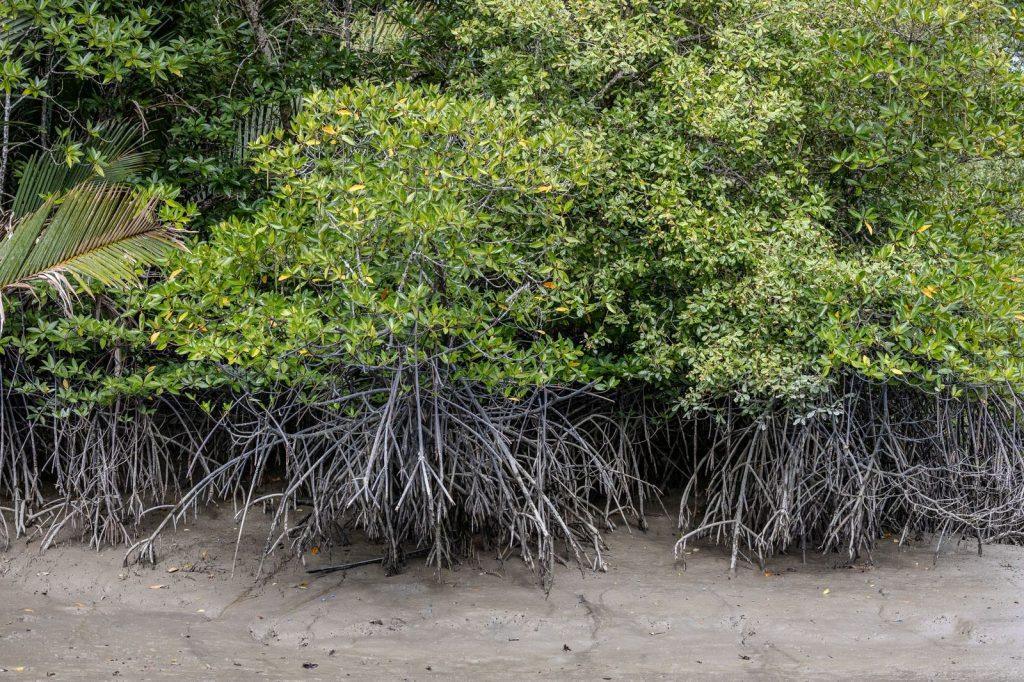
Between sea and land, mangroves shelter exceptional biodiversity and act as a natural shield against climate change. Both a sanctuary for emblematic species such as the proboscis monkey and a protective barrier for coastal communities, they embody a fragile balance between ecology and humanity.
Article and photographs by Damien Lafon.
The Fundamental Role of Mangroves in Coastal Ecosystems
Located at the interface between land and sea, mangroves form an amphibious ecosystem of remarkable complexity. These forests of mangrove trees spread across intertidal zones where their roots literally breathe in salty mud. Thanks to their tangled structures, they trap sediments, filter water, and reduce wave energy. Consequently, they play an essential role in stabilizing coastlines.
Moreover, mangroves are now recognized as major carbon sinks, capable of storing up to four times more carbon per hectare than tropical rainforests. By capturing carbon dioxide within their biomass and saturated soils, they actively contribute to the regulation of the global climate. In addition, their root systems promote sedimentation and prevent coastal erosion, forming a natural barrier against storms and floods.
Beyond their physical role, mangroves also provide a crucial biological function: they serve as nurseries for countless marine species. Fish, crabs, mollusks, and even certain species of sharks find refuge there during the early stages of their lives. This intimate link between forest and sea makes mangroves a keystone of the coastal food chain.
Mangrove Biodiversity and Iconic Species like the Proboscis Monkey
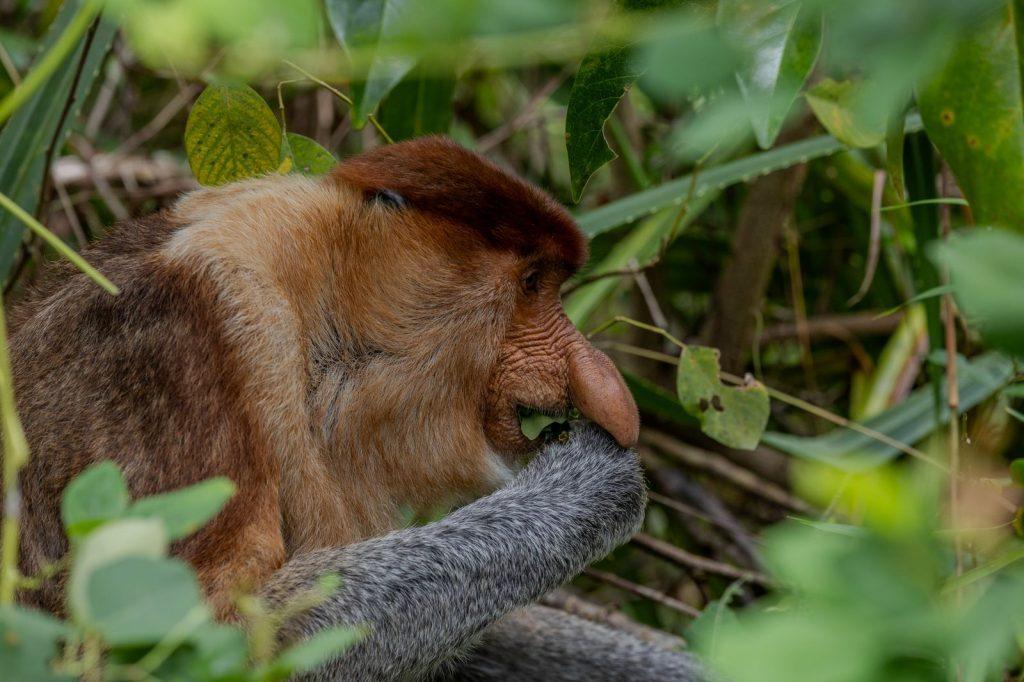
The biodiversity of Borneo’s mangroves ranks among the richest in the world. These forests host a mosaic of life forms, from migratory birds to reptiles, amphibians, and specialized invertebrates. Among the most emblematic mammals, the proboscis monkey (Nasalis larvatus) perfectly represents the uniqueness of this ecosystem. Endemic to Borneo, this primate with a distinctive nose lives exclusively near water, in mangroves and riparian forests.
Thanks to its webbed fingers, it swims easily through estuaries and moves from branch to branch in search of young leaves, fruits, and seeds. The nasal calls of males echo at dusk, reminding us that life here depends on a constant balance between land and sea.
Furthermore, mangroves host other fascinating inhabitants: saltwater crocodiles, monitor lizards, fiddler crabs, purple herons, and countless microorganisms essential to organic matter decomposition. Every layer of this habitat, from submerged roots to canopy, shelters species adapted to extreme salinity and low oxygen. This diversity reveals an exceptional ecological resilience.
Did you know?
Mangroves can store up to 1,000 tons of carbon per hectare, a major asset in the fight against climate change.
Human and Non-Human Inhabitants of the Mangroves
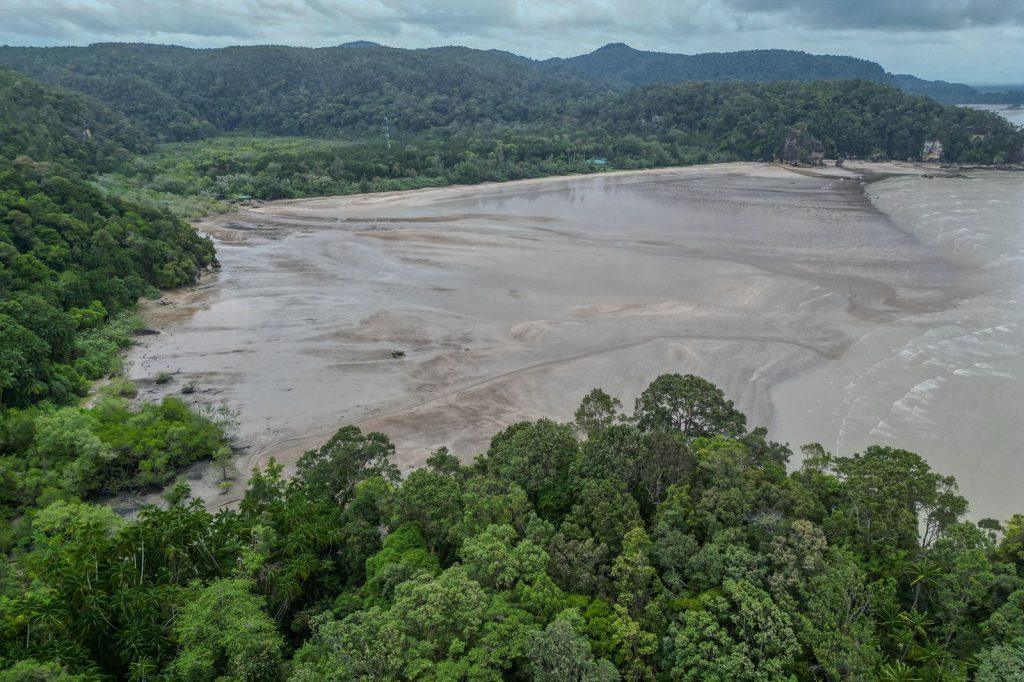
Mangroves are not only home to animals. Millions of people depend directly on their resources. In Southeast Asia, fishing communities, shell gatherers, and honey collectors live in harmony with these amphibious forests. Mangrove wood is used for construction, charcoal production, and traditional medicine.
In Borneo, local populations have maintained a strong cultural bond with mangroves for generations. They see them as sources of protection and livelihood, but also as sacred spaces. Some areas are even considered territories of spirits or ancestors.
Meanwhile, proboscis monkeys, birds, and reptiles share these same vital spaces. This proximity between humans and wildlife illustrates the fragile coexistence that defines coastal ecosystems. When mangroves thrive, all forms of life benefit; when they decline, an entire social and biological balance collapses.
Mangroves Under Threat: Degradation, Habitat Loss, and Urgency
Despite their ecological and economic importance, mangroves are disappearing at an alarming rate. In the past fifty years, more than 35% of their global area has been lost. The main culprits include intensive aquaculture, coastal urbanization, pollution, and palm oil plantations. In Borneo, deforestation fragments habitats and isolates populations of proboscis monkeys, now classified as endangered on the IUCN Red List.
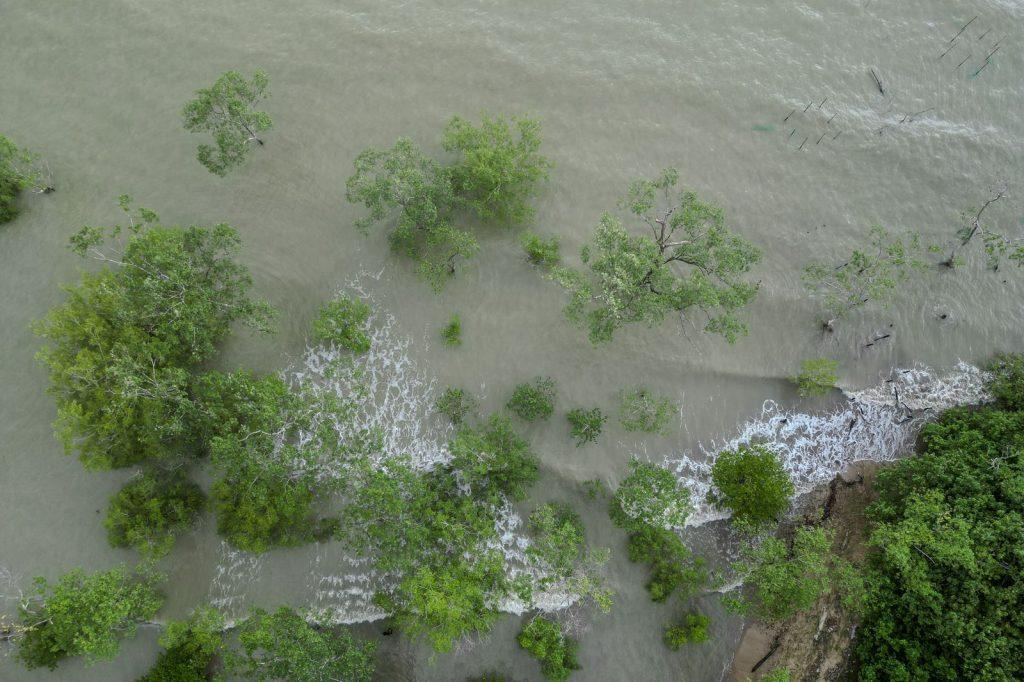
Added to this is the rise in sea level. Although mangroves can naturally migrate inland, dikes and coastal infrastructure often block this movement. Climate change also alters salinity and sediment availability, hindering natural regeneration.
Each loss of mangrove forest represents not only a decline in biodiversity but also increased vulnerability for coastal populations. Without these natural barriers, storms hit harder, fisheries decline, and the carbon stored in sediments is released into the atmosphere. It is therefore a silent crisis, whose consequences extend far beyond tropical shores.
Did you know?
The proboscis monkey is one of the few primates able to dive and swim long distances to escape predators.
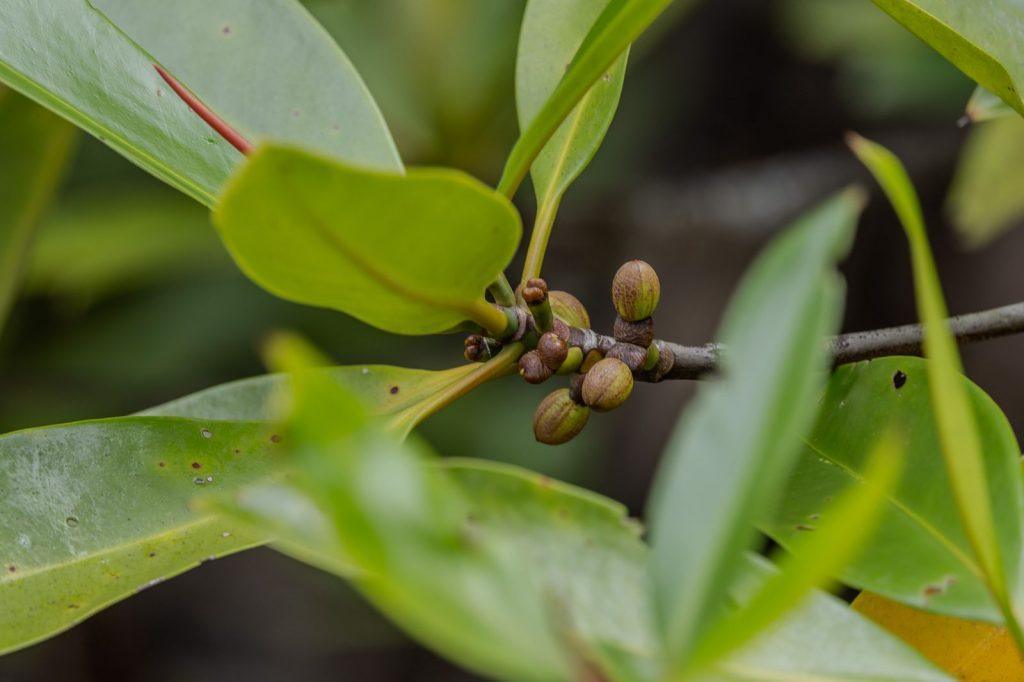
Why Preserving Mangroves Is Crucial for the Future
Today, protecting mangroves means safeguarding multiple vital services at once. These forests act as natural infrastructure: they lower the costs of climate-related disasters, secure fisheries, and improve water quality. For every dollar invested in mangrove restoration, the economic and environmental benefits are often multiplied tenfold.
Moreover, mangroves play a key role in poverty reduction. Community initiatives in Indonesia and Malaysia show that participatory management increases income while strengthening local resilience. Women, often involved in collecting and processing mangrove products (crabs, salt, honey), have become central figures in this blue economy.
Protecting mangroves thus means linking ecology and social justice. By recognizing their value, governments can include these zones in national climate adaptation and conservation plans. The future of tropical coasts depends directly on our capacity to restore this living heritage.
Innovative Solutions for Restoring and Valuing Mangroves
Fortunately, promising initiatives are emerging worldwide. In Borneo, community-based replanting and participatory ecotourism projects are raising awareness about the importance of mangroves. Researchers now use artificial intelligence to map degraded areas and measure carbon storage.
Furthermore, responsible ecotourism focused on observing proboscis monkeys attracts visitors eager to experience this delicate balance between forest and sea. By diversifying income, these activities reduce pressure on resources and encourage conservation.
Finally, restoration also relies on traditional knowledge. Local people understand the rhythms of the tides, the growth of mangrove trees, and the fragility of coastal soils better than anyone. By combining science, technology, and ancestral wisdom, societies can restore the mangroves’ role as guardians of the coastline.
Did you know?
One kilometer of intact mangrove can reduce storm wave height by more than 60%, protecting coastal villages.
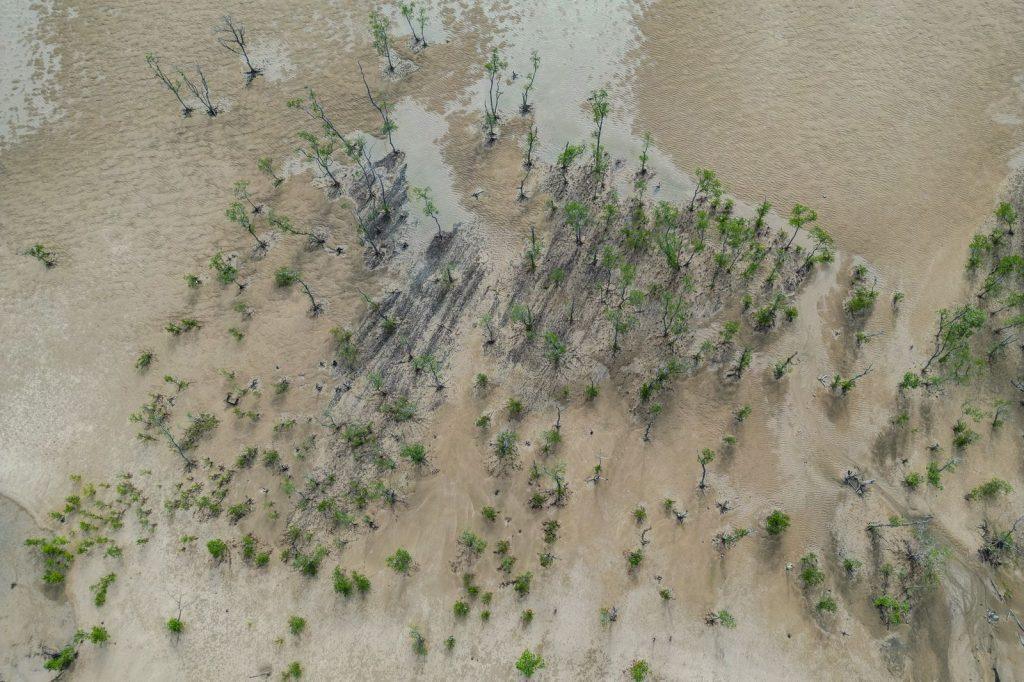
Mangroves are not ordinary tropical forests: they are living systems, both complex and indispensable. By protecting coastlines and storing carbon, they form a vital barrier against climate disruption. Yet their survival depends on our actions today. Restoring mangroves means restoring the balance between ocean, land, and humanity.
Follow us on Instagram and Facebook to keep up to date and support our media at www.helloasso.com
This article may be of interest to you: Why do proboscis monkeys have big noses?