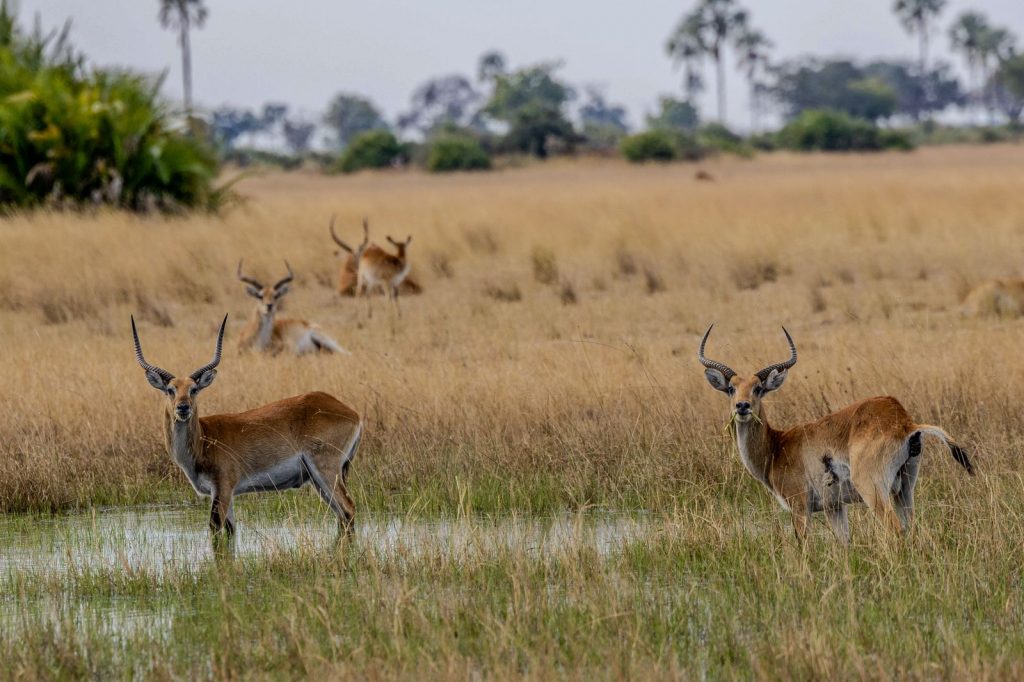
The Uganda kob (Kobus kob) is an iconic African antelope of humid savannas, where water shapes every movement. Subtle yet essential, it embodies a delicate balance between vegetation, climate, and seasonal cycles. Through its movements and social behavior, it reveals the deeper dynamics that shape Africa’s open landscapes. Observing the kob means reading the land and understanding the invisible connections between species, resources, and environmental change.
Article by Damien Lafon & Photographs by Cécile Ducreux
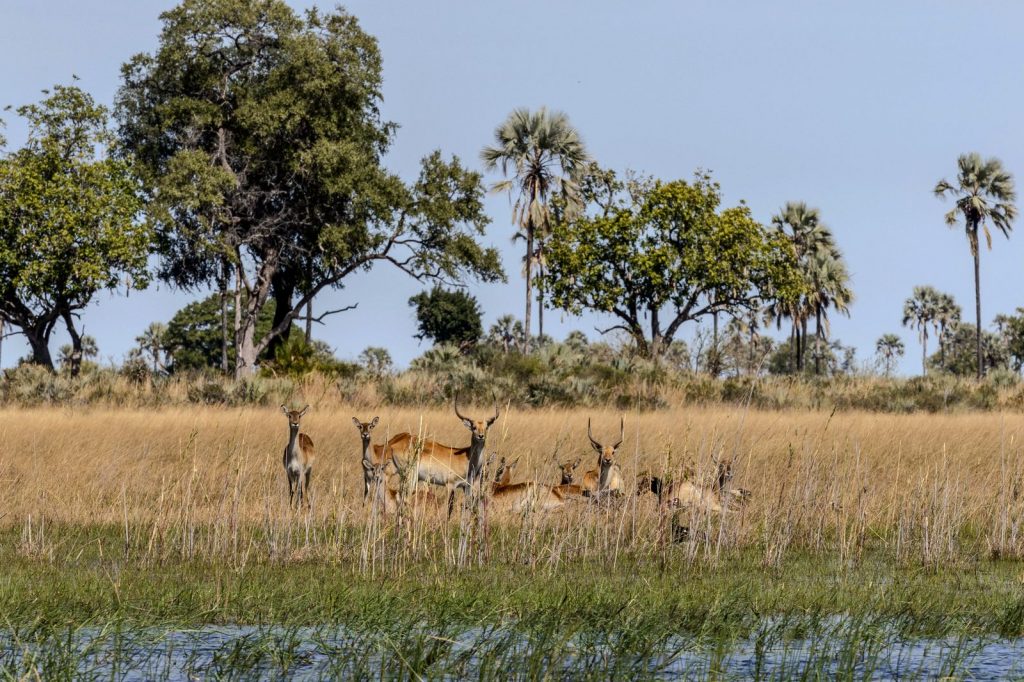
An iconic antelope of sub-Saharan African savannas
The Uganda kob, or Kobus kob, embodies the open landscapes of African savannas. This elegant antelope is distinguished by its slender silhouette and lyre-shaped horns. It is mainly found in West and Central Africa. It inhabits grassy plains close to wetlands, which are essential to its survival. As a result, its distribution is closely tied to the presence of permanent water. Consequently, its populations are concentrated in still-preserved ecosystems. Moreover, this species plays a key role in local ecological balance. In particular, it contributes to vegetation regulation and the maintenance of food chains.
Morphology of Kobus kob: identifying the Uganda kob in the field
The Uganda kob has a golden-brown coat with a lighter underside. Its dark muzzle contrasts with paler areas around the eyes. Males possess ringed horns, curving backward and then forward. Females, however, lack horns, which makes identification easier. The body remains slender, adapted for speed and rapid movement. In addition, its long legs allow it to move efficiently through tall grasses. Its attentive gaze reflects constant vigilance against predators. Thus, every morphological detail reflects an adaptation to its environment.
Did you know?
Lek areas can gather dozens of males within a very small space during the breeding season.
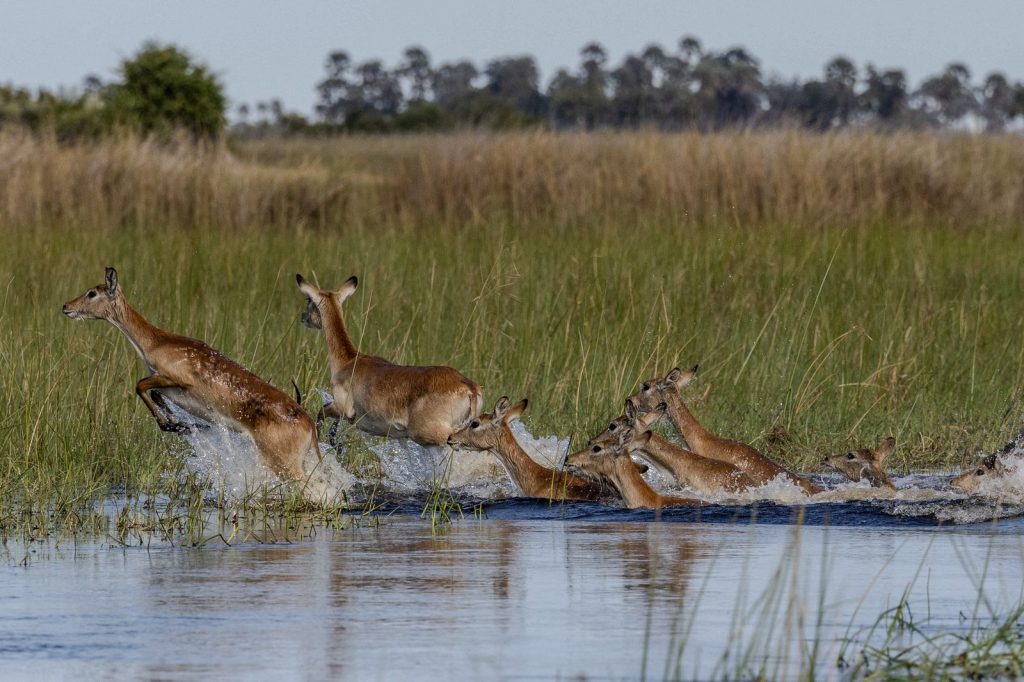
Habitat of the Uganda kob in Africa: a strong dependence on wetlands
The kob favors humid savannas, floodplains, and riverbanks. These environments provide both abundant food and regular access to water. Indeed, this species depends heavily on constant water resources. When the dry season sets in, populations move toward more favorable areas. Therefore, its movements follow seasonal climatic variations. In addition, these movements influence the structure of plant landscapes. As a result, the kob participates in a broader ecological dynamic. This close relationship with water explains its sensitivity to environmental changes.
Behavior of the Kobus kob: social organization and reproduction
The Uganda kob exhibits a structured and dynamic social organization. Females live in groups with their young in relatively stable areas. Males, on the other hand, defend territories known as leks during the breeding season. These spaces become arenas of competition and display. Thus, males compete to attract females and ensure reproduction. Outside these periods, some males remain solitary or form small groups. Furthermore, collective vigilance allows for rapid detection of predators. This behavior increases survival chances in the face of constant threats.
Did you know?
The Uganda kob can remain close to water throughout its life, unlike other more independent antelope species.
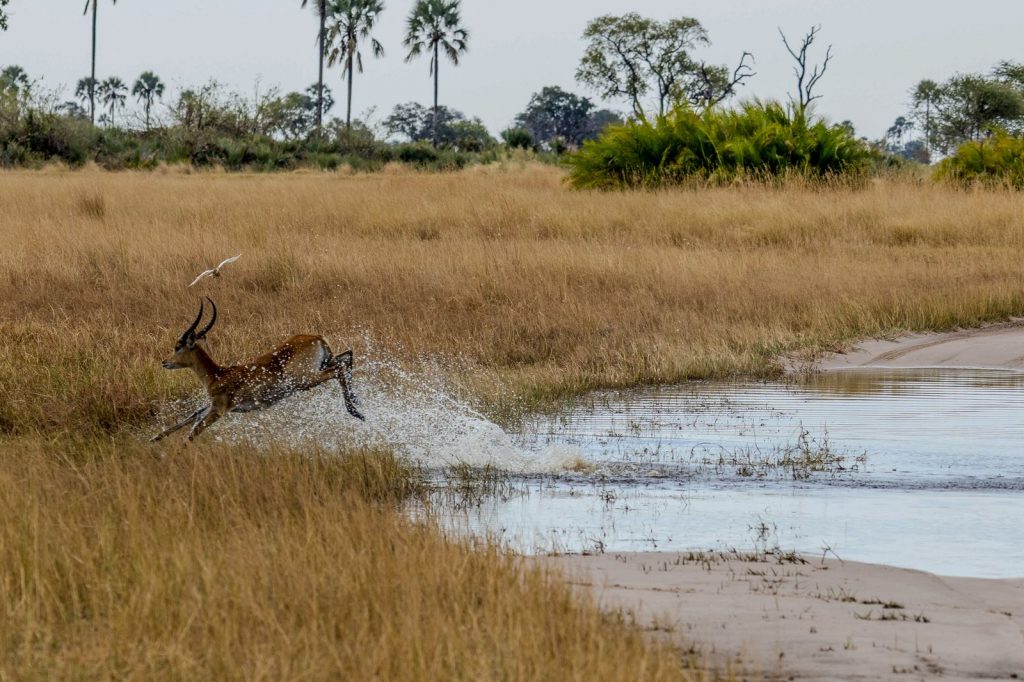
Ecological role of the Uganda kob in African ecosystems
The Uganda kob occupies a key position in trophic networks. As a herbivore, it consumes a wide variety of grasses. In doing so, it helps regulate vegetation growth in savannas. Additionally, it is an important prey species for large African carnivores. Lions, leopards, and hyenas partly depend on these populations. Consequently, its presence directly influences predator stability. Moreover, its movements promote seed dispersal. In this way, the kob actively contributes to the regeneration of natural environments.
Threats and conservation of Kobus kob in Africa
Despite its wide distribution, the Uganda kob faces several threats. Habitat loss due to agricultural expansion reduces its living areas. In addition, unregulated hunting impacts some local populations. Climate change also affects water availability. As a result, ecosystems become more unstable and fragmented. However, some protected areas still provide essential refuges. Conservation programs aim to preserve these strategic habitats. Therefore, the protection of the kob depends on sustainable management of African landscapes.
FAQ
The kob is more robust, has less twisted horns, and is more dependent on wetlands.
It can be seen in West and Central Africa, particularly in national parks and nature reserves.
Overall, no. However, some local populations are declining due to hunting and habitat loss.
Follow us on Instagram and Facebook to stay informed
This article may interest you: Wildlife photography: Observing nature without disturbing it