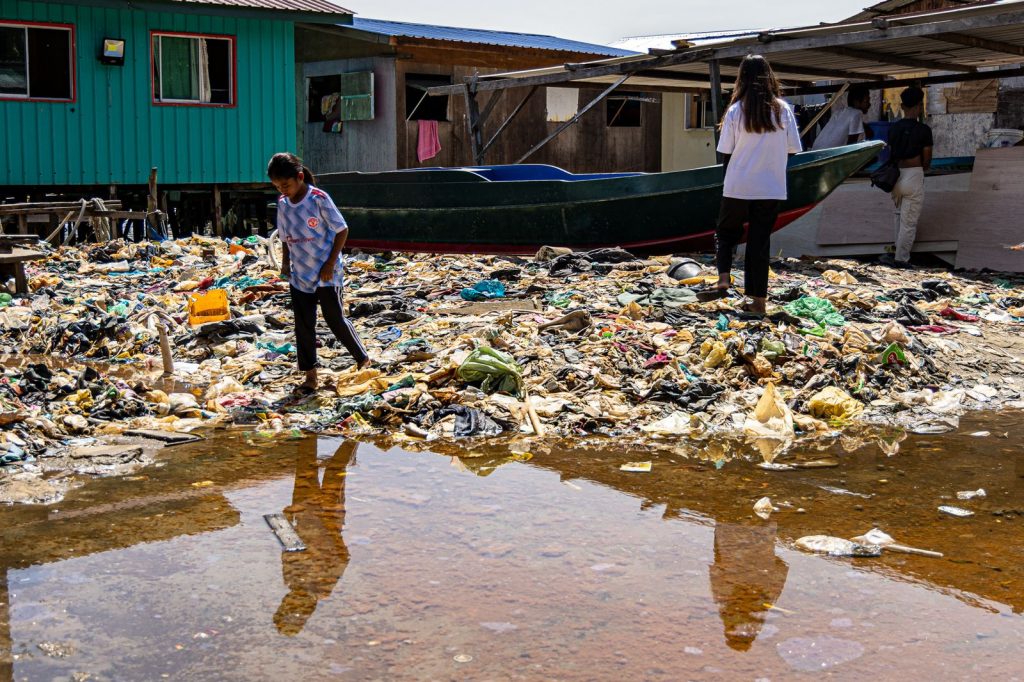
Plastic pollution is now one of the major threats to marine ecosystems. Every year, millions of tons of waste reach the oceans. This pollution comes from many land based and marine sources. Scientists study these flows to understand how they evolve and how they affect biodiversity. This article presents the main mechanisms behind this pollution and its consequences for marine life.
Article and photographs by Damien Lafon.
The constant increase in plastic waste results from rapidly growing global production
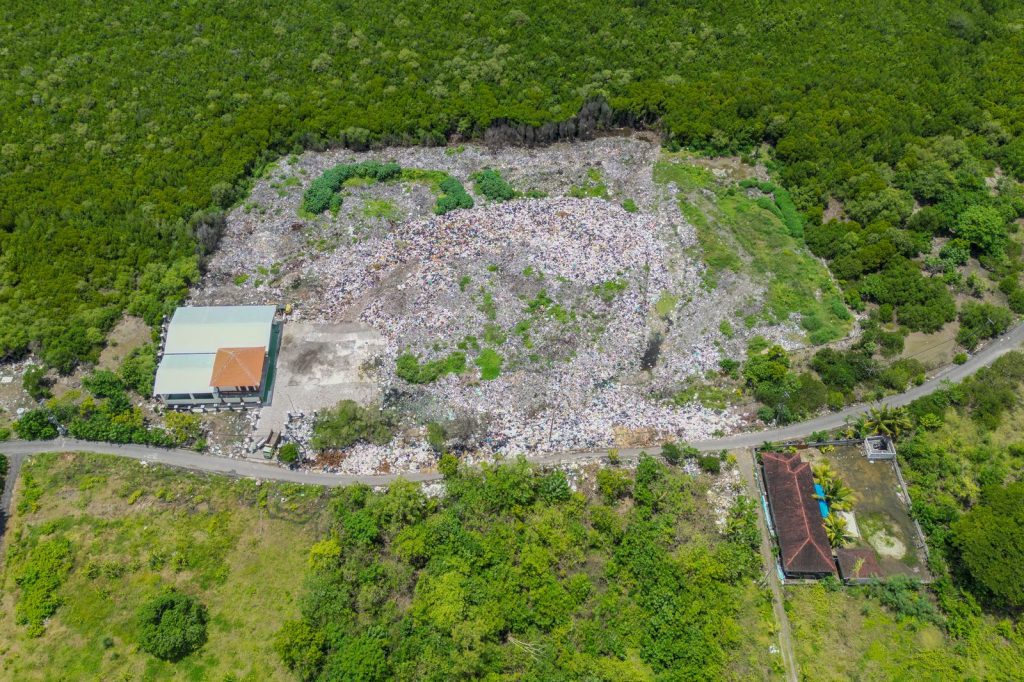
Global plastic production rises every year. A large portion of these materials ends up in the environment. The waste then disperses into rivers that carry it to the sea. Rivers therefore represent a major pathway for plastic entering the oceans. Densely populated regions contribute significantly to these flows. Waste management systems are often insufficient in these areas.
These wastes gradually fragment under the effect of sunlight and wave action. They then produce microplastics that persist for long periods in the environment. These fragments spread through all layers of the ocean. Their very small size makes extraction and monitoring more difficult. Scientists therefore use models to estimate their global distribution.
Ocean currents concentrate plastic in persistent accumulation zones
Oceanic gyres are vast circular areas where currents converge. These gyres trap floating debris and create accumulation zones. The most well known lies in the North Pacific. The waste does not form a solid surface but a diffuse mass of fragments. These fragments move according to the direction of currents and winds.
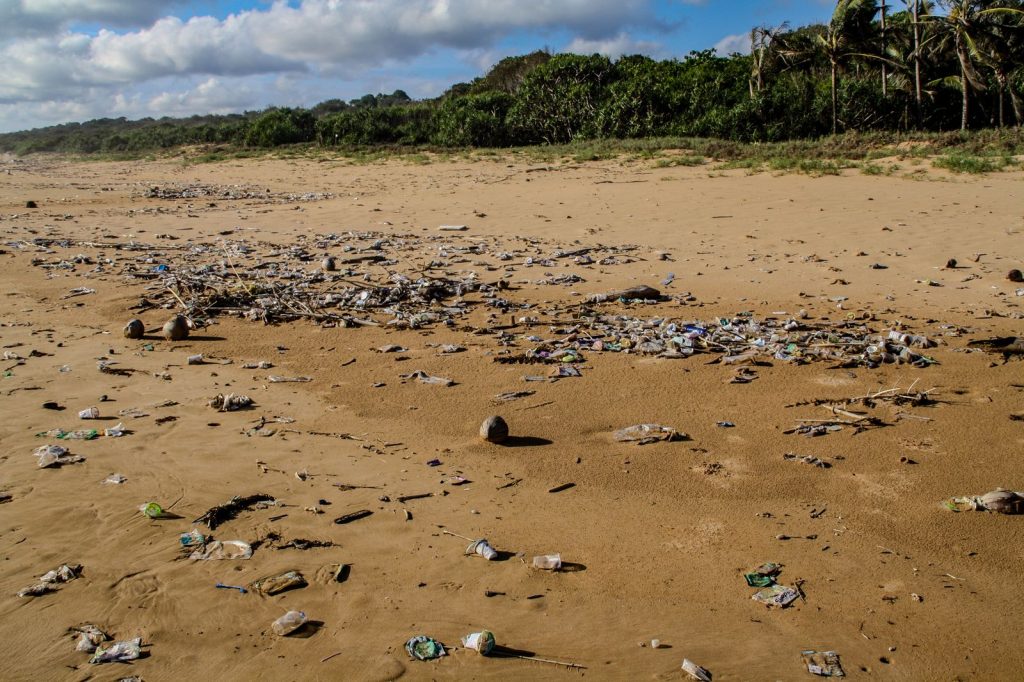
Gyres are not the only accumulation sites. Coastlines also receive a large share of the debris. Currents transport plastics toward beaches that then become deposition zones. These deposits vary with seasons and weather systems. Scientists track these variations to understand how the debris moves.
Did you know?
About eight million tons of plastic reach the oceans every year. Much of it comes from inadequate waste management systems in coastal regions.
Microplastics form through fragmentation and quickly enter food webs
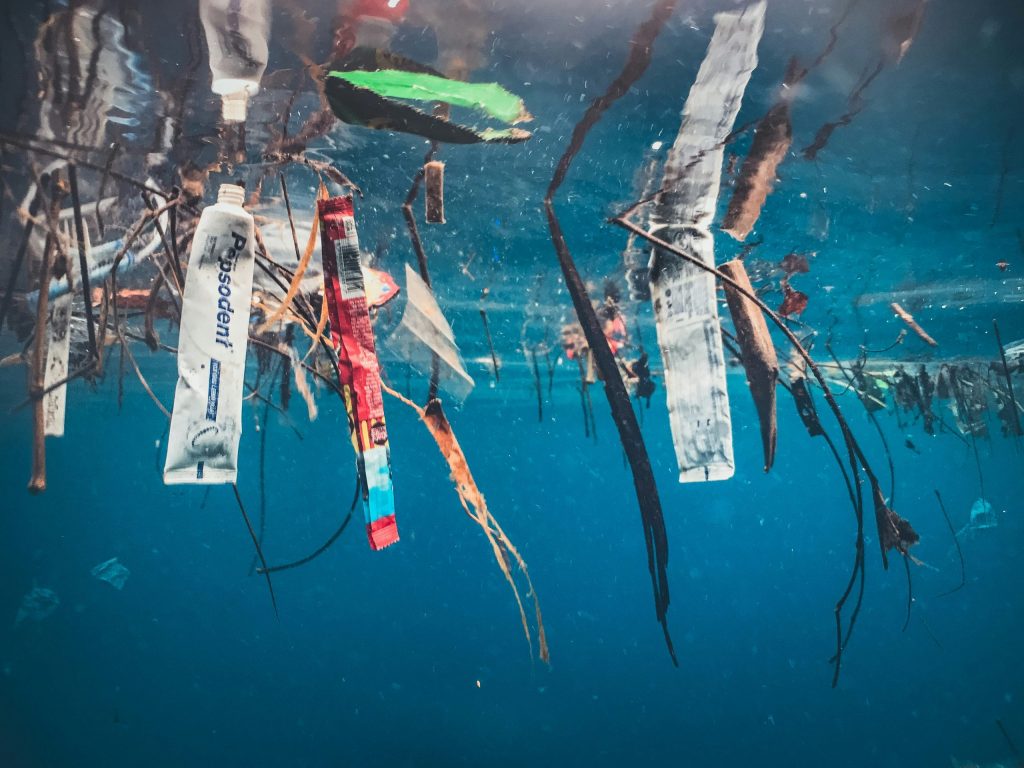
Microplastics originate from the fragmentation of larger debris. They easily enter food chains. Filter feeding organisms ingest these particles indiscriminately. Fish and other animals then consume these organisms. This transfer introduces microplastics into higher trophic levels.
Microplastics sometimes carry chemical pollutants. These pollutants adhere to their surface and accumulate in animal tissues. Scientists study this process to understand its potential effects. Data show that some organisms experience physiological damage after prolonged exposure. These effects vary according to particle size and local concentration.
Ecological impacts affect biodiversity, marine habitats and food webs
Plastic pollution affects many marine species. Turtles sometimes mistake plastic bags for prey. Seabirds ingest fragments they confuse with food. Such ingestion causes digestive blockages and sometimes death. Abandoned fishing nets also trap many animals. These nets remain active for long periods.
Marine habitats also suffer impacts. Coral reefs sometimes retain plastics that damage their structures. Mangroves accumulate debris that blocks aerial roots. These disturbances then alter ecosystem dynamics. Researchers examine these effects to understand their long term influence. Results show a progressive decline in biodiversity in heavily affected areas.
Did you know?
Some regions contain more microplastics than zooplankton. This situation alters the availability of food resources in surface waters.
Human consequences appear in fisheries, tourism and food security
Plastic pollution directly affects human activities. Abandoned nets reduce fishing yields by damaging ecosystems. Microplastics sometimes accumulate in species consumed by humans. Scientists are still studying the potential health impacts. Polluted beaches also decrease tourist appeal. This decline affects local economies.
Cleaning costs rise every year in many coastal regions. These expenses also concern ports where debris accumulates. Authorities sometimes develop collection systems to limit these effects. These systems work better when land based sources are controlled. More efficient waste management therefore remains essential.
Reducing pollution depends on complementary local and global strategies
Solutions rely first on better management of land based waste. Collection systems must reach densely populated regions. Policies that reduce single use plastics also play an important role. Awareness programs increasingly involve local communities. These initiatives encourage waste reduction at the source.
Researchers also develop technologies to remove plastics from the oceans. These technologies are useful but insufficient on their own. The priority is to limit the entry of plastic into the sea. Global approaches therefore combine regulation, innovation and international cooperation. This combination offers a better chance of reducing marine pollution in the coming decades.
Follow us on Instagram and Facebook to stay informed
This article may be of interest to you: How waves are formed: the origins of the ocean’s breath