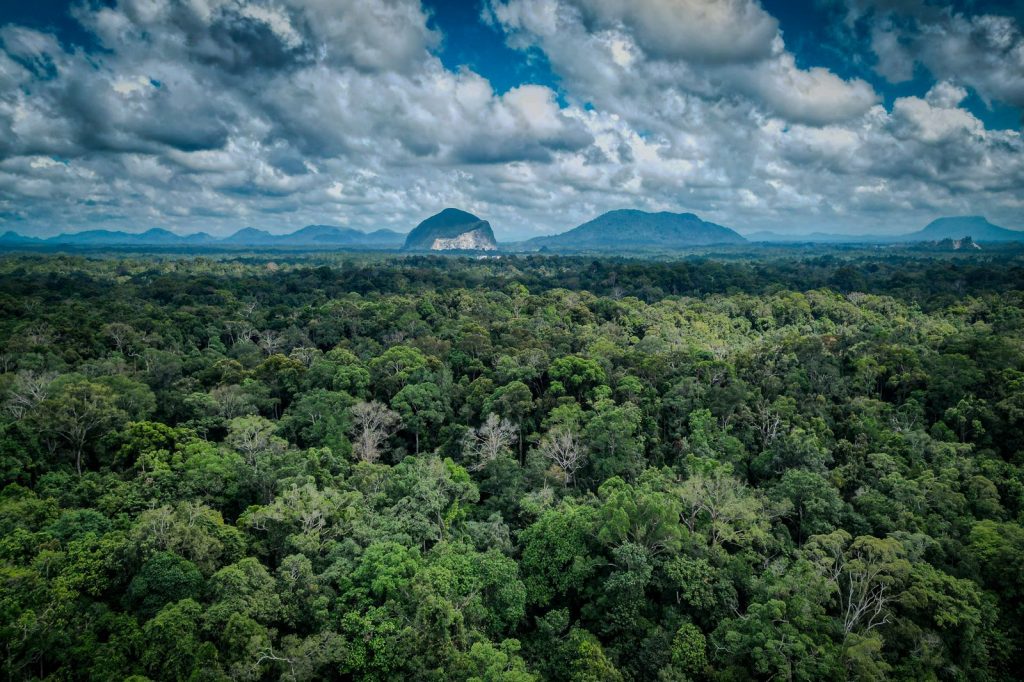
The term primary forest is widely used, yet rarely understood with precision. It refers to an ancient type of forest shaped by long natural processes, without industrial human intervention. Present on several continents, these forests play a crucial role in climatic, biological, and cultural balances. Clearly defining what a primary forest is helps us better understand what is lost when it is destroyed.
Article and photographs by Damien Lafon.
What is a primary forest
A primary forest is a forest that has never been industrially exploited by humans. It has developed naturally over centuries, sometimes millennia, without large scale logging or organized replanting. Its functioning relies on ancient ecological balances shaped by long periods of time. No production logic has altered its vegetation structure or biological composition. As a result, a primary forest forms an autonomous ecosystem regulated by climate, soils, and natural interactions. Primary forests still exist on several continents, although their total area is rapidly decreasing.
An ecological structure shaped by time
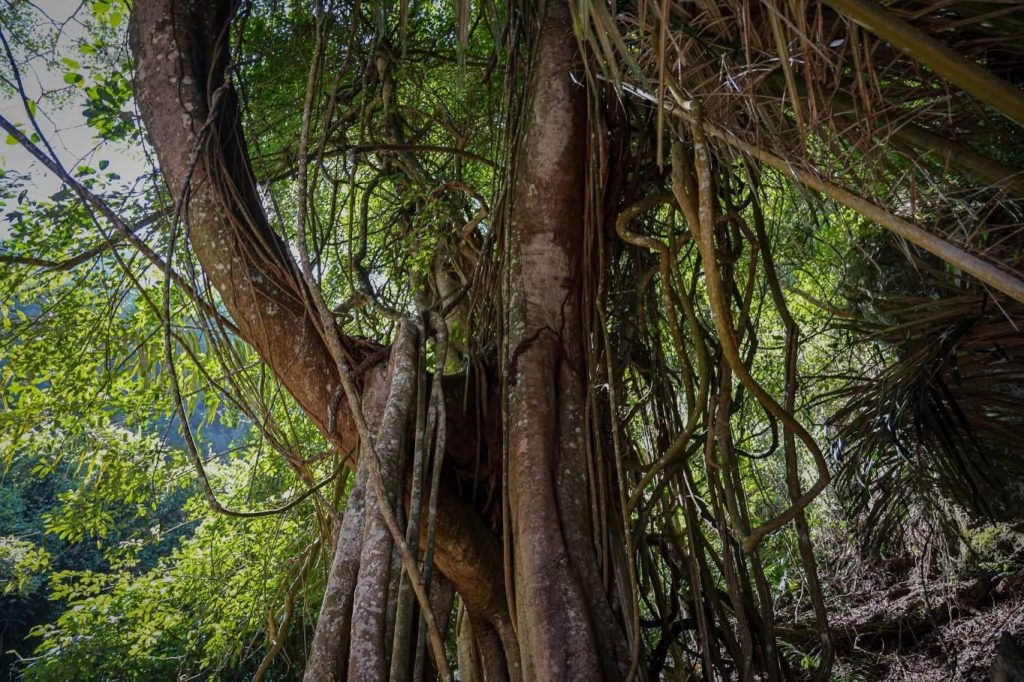
A primary forest has a complex vertical structure composed of several distinct vegetation layers. Ancient trees form a high canopy that influences light, humidity, and temperature. Beneath this layer, a wide diversity of trees, shrubs, lianas, and plants coexist. Each layer hosts specialized and interdependent animal and plant species. As a result, the biodiversity of a primary forest far exceeds that of exploited forests. This richness is the outcome of a slow process impossible to reproduce artificially in the short term.
The fundamental role of forest soils
The soil of a primary forest is a central component of its overall ecological balance. It hosts dense microbial life composed of fungi, bacteria, and interconnected microorganisms. These underground networks enable the circulation of nutrients between plants and trees. Through them, the forest recycles its organic matter without external inputs. When soils are disturbed by deforestation, this balance quickly collapses. Even after replanting, the original biological complexity of the soil remains difficult to restore.
Did you know?
A primary forest can store up to three times more carbon than a replanted forest of the same age. This storage relies on both trees and living soils. When a forest disappears, this carbon is released into the atmosphere. Reforestation therefore does not immediately compensate for the loss of an ancient forest.
Primary forest, secondary forest, and plantations
Confusion between primary forests, secondary forests, and plantations is now very common. A secondary forest grows back after human exploitation or partial destruction. It may appear dense, but its biodiversity remains poorer and less stable. Plantations usually consist of a single species planted in regular rows. They serve economic objectives rather than ecological ones. Therefore, no plantation can replace a functional primary forest.
Primary forests found on all continents
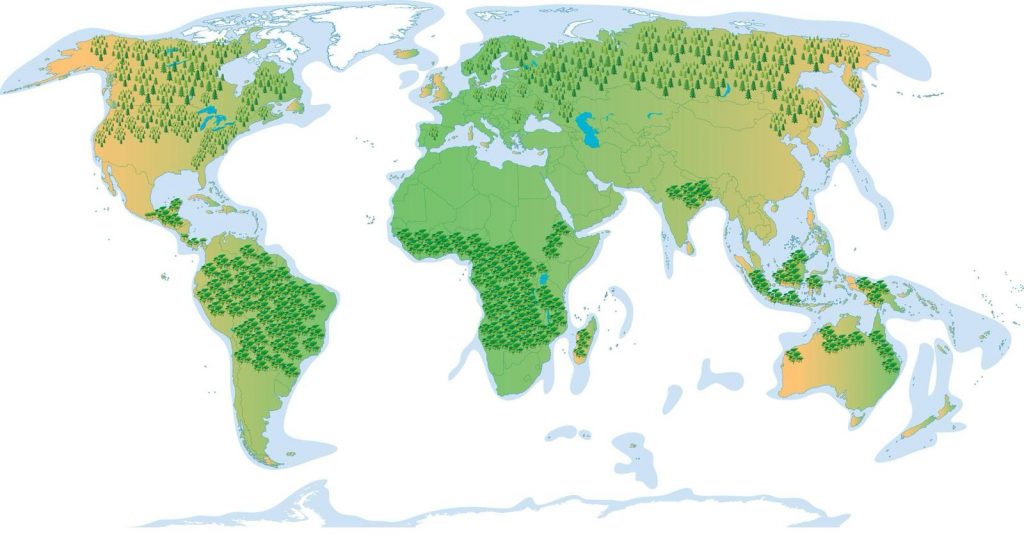
Primary forests are not limited to equatorial tropical regions. They also exist in boreal, temperate, and mountainous forests. Some primary forests cover millions of hectares, while others survive as isolated fragments. Their distribution depends on human history, climatic conditions, and territorial accessibility. Everywhere, these forests share one common feature: their ecological age. This temporal depth fundamentally distinguishes them from reconstructed forests
Why primary forests are crucial on a global scale
Primary forests play a major role in regulating the Earth’s climate. They store large amounts of carbon and influence global water cycles. They also support human cultures deeply connected to their natural environment. When these forests disappear, biological, climatic, and cultural balances collapse. This loss affects the entire planet, regardless of borders. Clearly defining primary forests is therefore a key step toward their global protection.
Did you know?
Some animal and plant species live only in primary forests. They depend on very stable habitats found exclusively in these ancient ecosystems. When a primary forest is destroyed, these species disappear permanently. They do not recolonize secondary forests or plantations.

Follow us on Instagram and Facebook to stay informed
This article may interest you: Mangroves: coastal forests that protect life and climate