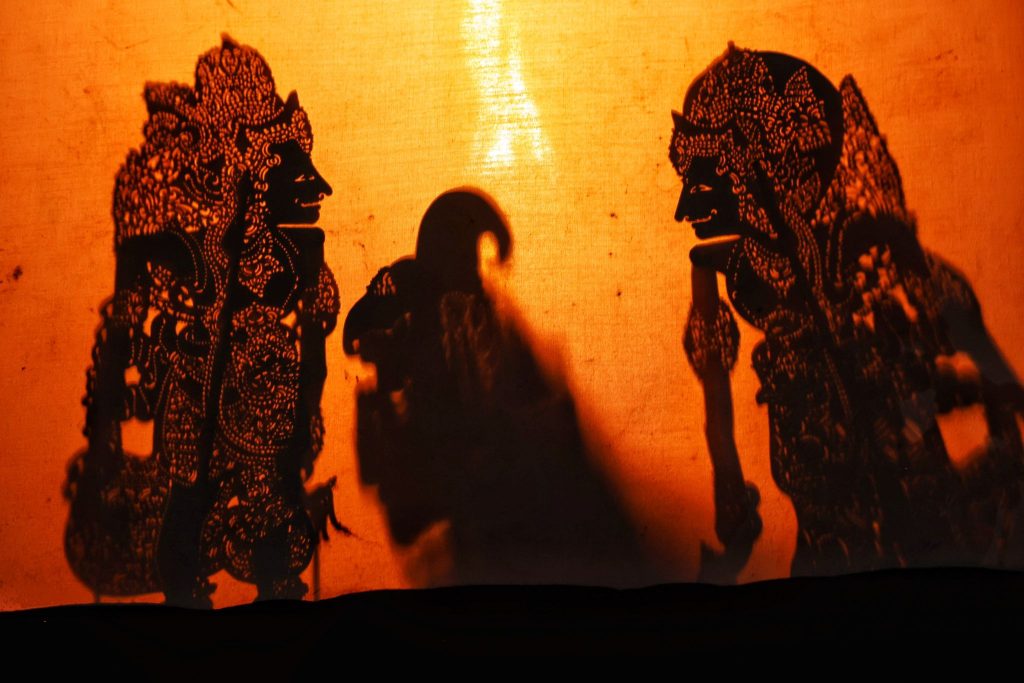
Before the lamp is lit, there is silence. Behind the white screen, a Dalang carefully adjusts his leather puppets with precision. In Bali, Wayang Kulit connects ancient storytelling, ritual, and community. Yet this art does not depend on a single man. It survives through continuous transmission between villages, families, and artistic institutions.
Article and photographs by Damien Lafon
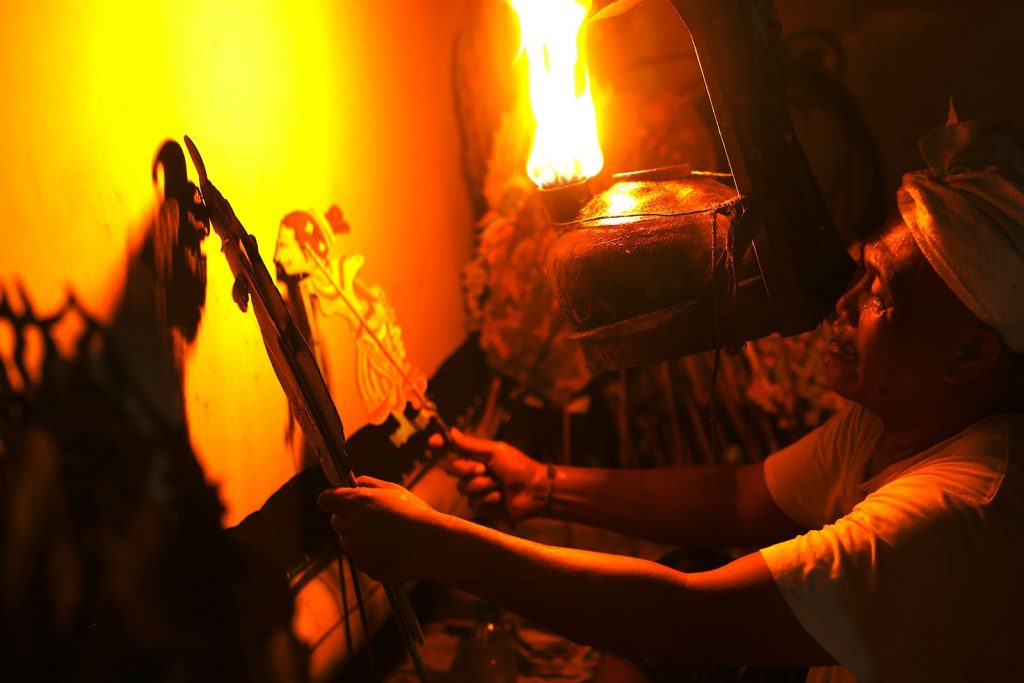
vShadow theatre as living memory
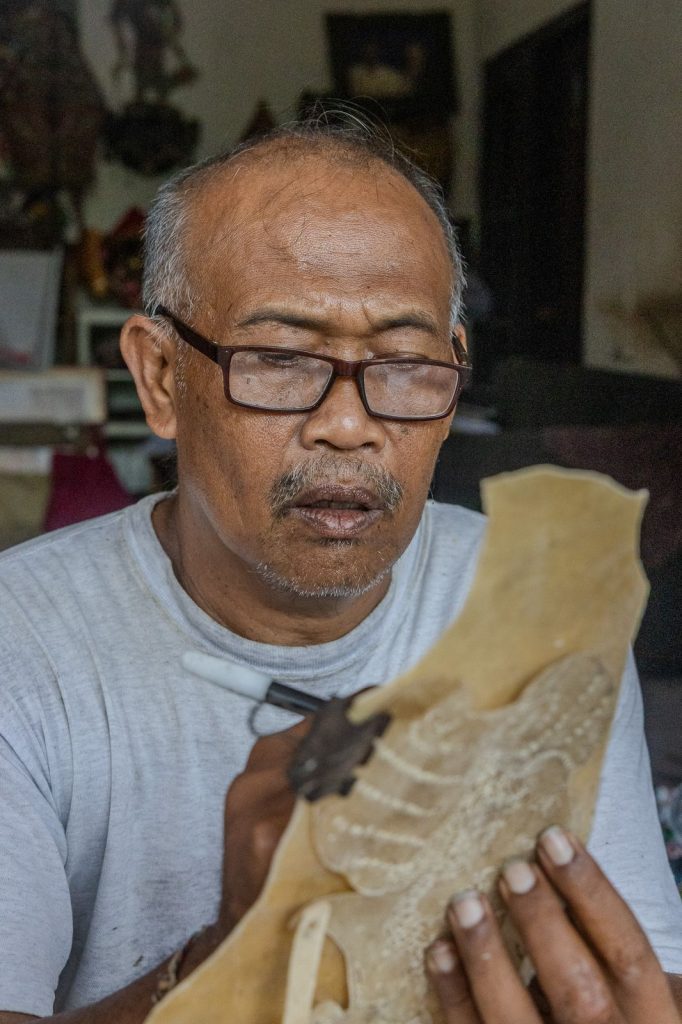
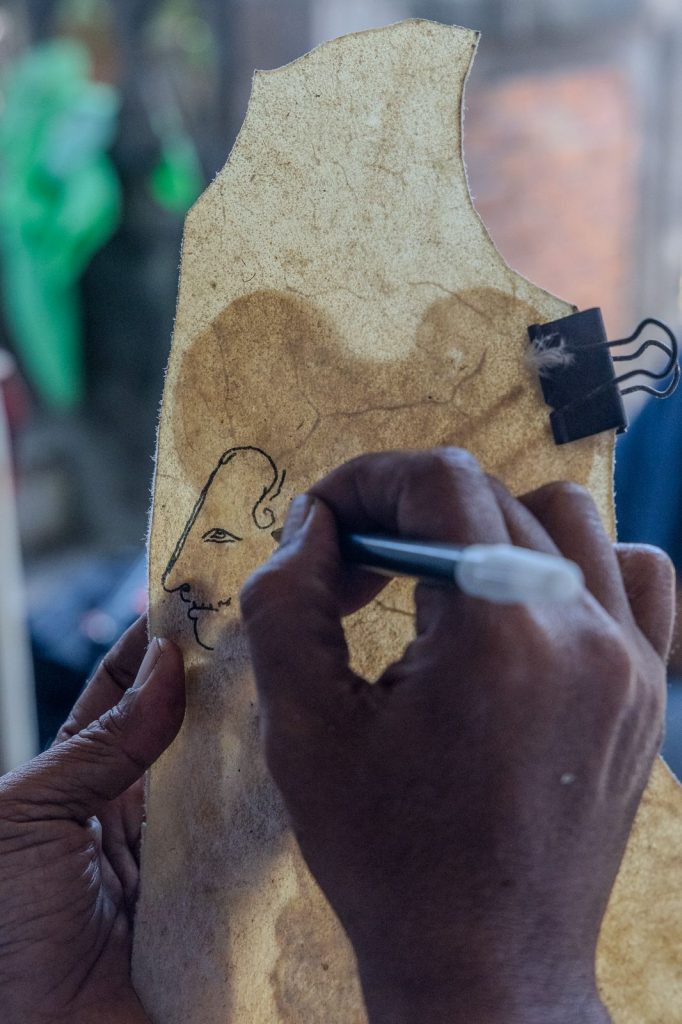
Wayang Kulit draws its narratives from the great Hindu epics. The Ramayana and the Mahabharata structure the main storylines. However, Bali has developed its own distinctive and immediately recognizable aesthetic. The puppets are carved from dried buffalo hide. Artisans shape every detail with patience and discipline. They then apply codified colors according to each character’s nature. A refined face suggests nobility. A rigid posture expresses power. The audience identifies these visual codes without explanation.
The Dalang, an invisible conductor
The Dalang directs the entire performance. He manipulates the figures, modulates his voice, and coordinates the gamelan orchestra. For several hours, he sustains dramatic tension without interruption. However, his role extends beyond artistic performance. In ceremonial contexts, he assumes an important symbolic dimension. The lamp represents sacred light. The shadow evokes the invisible world. In this way, Wayang Kulit becomes a space of mediation between the visible and the unseen, between storytelling and ritual.
A tradition carried across generations
The transmission of Wayang Kulit takes multiple forms in Bali. Some Dalang learn within their families. They observe their father or master for many years. Gradually, they take their place behind the screen. They memorize narratives, rhythms, and specific vocal inflections. This learning process relies on repetition and attentive listening. However, transmission is not limited to family circles. It also extends into more structured educational frameworks.
Did you know?
Some traditional performances last throughout the night. The Dalang performs dozens of different characters without extended breaks.
Institut Seni Indonesia and academic training
In Denpasar, Institut Seni Indonesia plays a central role in preserving Balinese traditional arts. The institution trains artists in both classical and contemporary disciplines. Wayang Kulit is included among its specialized programs. Students learn puppet manipulation, dramatic narration, and visual symbolism. They also study music and narrative structure. In this way, tradition enters an academic framework without losing its ritual dimension. Graduates may then teach, perform, or return to their villages.
Between religious ceremony and contemporary adaptation
Wayang Kulit still accompanies temple festivals and rites of passage. These performances maintain a long, often nocturnal and collective rhythm. However, shorter formats now appear in educational and cultural contexts. This adaptation does not imply dilution. It reflects an ability to adjust to social change. Some Dalang trained at the university move between academic stages and village ceremonies. The cycle of transmission continues despite contemporary transformations.
Observing the shadows today
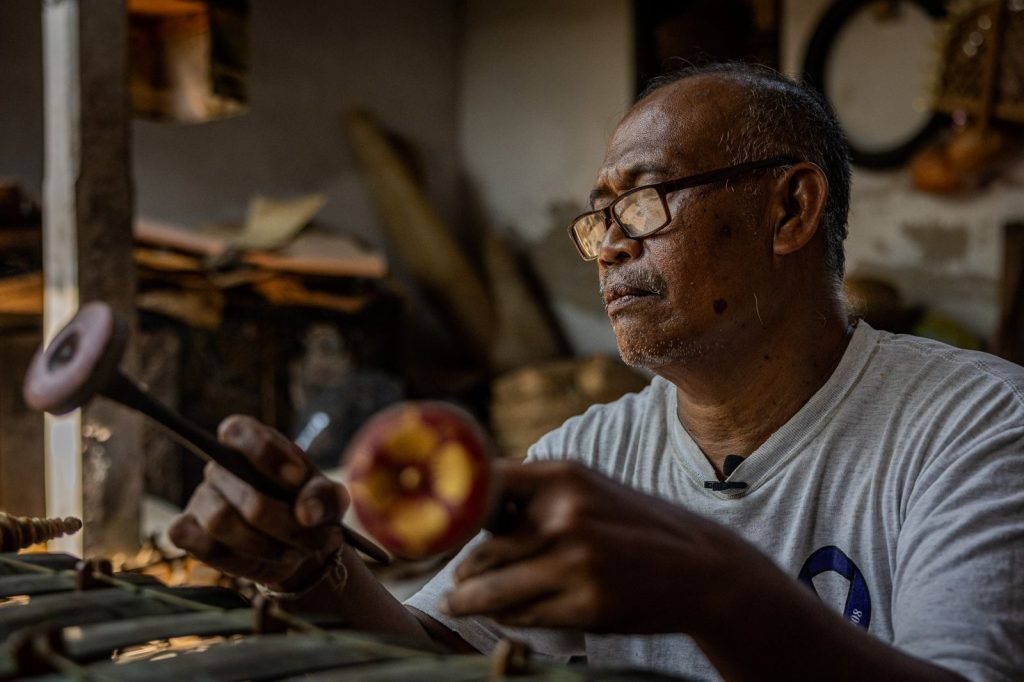
Observing a Dalang in the shadows reveals a fragile balance. Behind the screen, heat, concentration, and breath dominate. The audience perceives only the luminous projection. Yet that moment rests on years of training and discipline. It connects memory, technique, and cultural responsibility. Ultimately, Wayang Kulit in Bali does not represent a frozen relic of the past. It embodies a living tradition, carried by individuals, supported by institutions, and rooted in the present.
Did you know?
A Dalang must memorize hundreds of narrative sequences. He also adapts his storytelling according to the village, the ceremony, and the audience.
Terra Cultura Perspective
Through our visual explorations in Indonesia, we observe how certain traditions endure through adaptation rather than rigidity. Wayang Kulit in Bali illustrates this subtle dynamic. Behind every projected shadow lies a network of transmission, training, and personal commitment. Documenting these practices means listening before filming, understanding before interpreting, and respecting the rhythm of each community.
FAQ – Wayang Kulit in Bali
What is Wayang Kulit?
Wayang Kulit is a traditional Balinese shadow theatre using leather puppets. It stages narratives drawn from Hindu epics and local traditions.
What is the role of the Dalang?
The Dalang manipulates the puppets, narrates the story, changes his voice for each character, and coordinates the gamelan music. He also acts as a symbolic mediator during religious ceremonies.
Is Wayang Kulit still practiced in Bali today?
Yes, Wayang Kulit continues to be performed in villages, temples, and cultural institutions. It evolves while maintaining its traditional foundations.
Where does one learn to become a Dalang?
Some learn within their families. Others receive formal training at Institut Seni Indonesia in Denpasar, which offers specialized programs in traditional arts.
Do performances last all night?
In traditional ceremonial contexts, some performances last several hours, sometimes until dawn.
Follow us on Instagram and Facebook to stay informed
Ceci peut vous intéresser: Trunyan, the Village of Silent Souls – Short Documentary