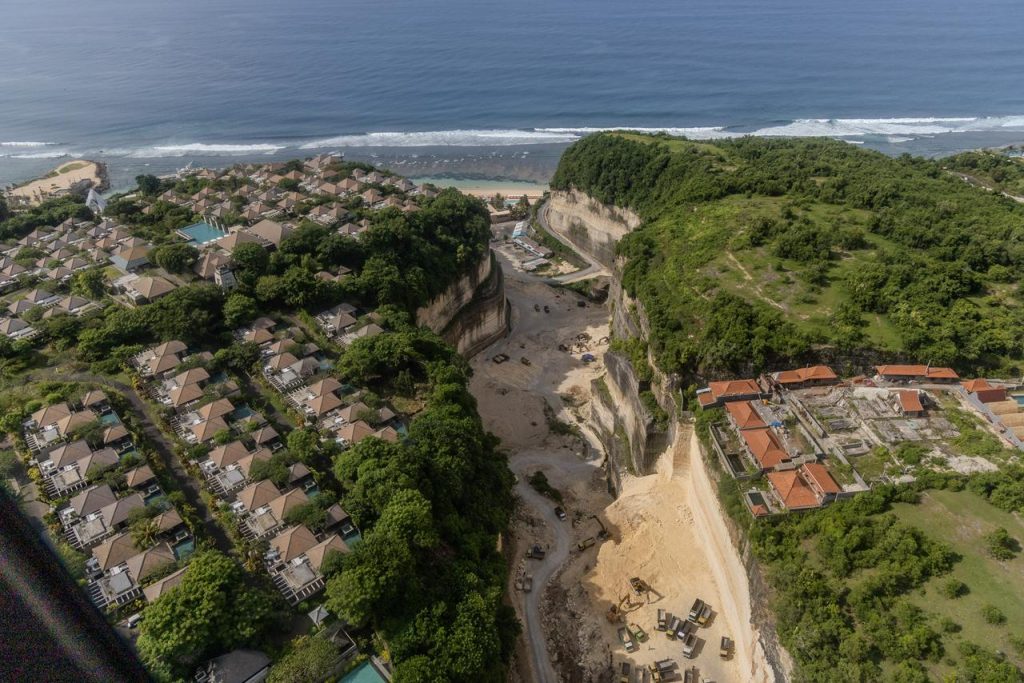
Across the world, landscapes bear the traces of human actions repeated over centuries. Agricultural terraces, rice fields, irrigation canals or ancient paths. Even when practices disappear, nature retains a discreet memory of these transformations. Observing these forms means reading a silent history in which human societies and natural environments have shaped one another over long periods of time.have shaped one another over long periods of time.
Article and photographs by Damien Lafon.
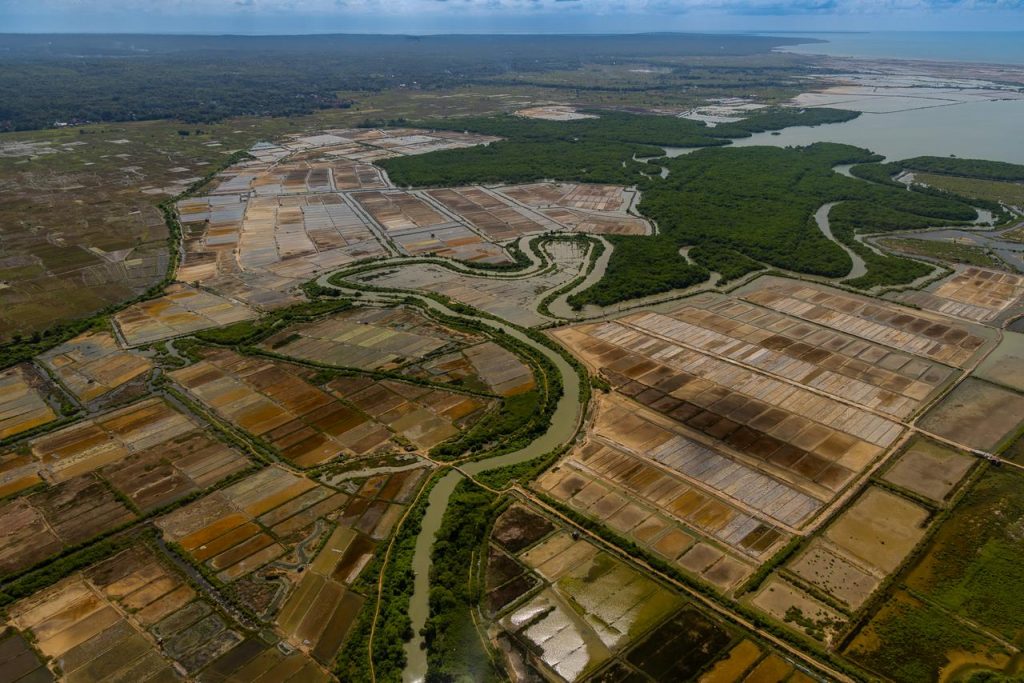
A landscape is never fixed. It evolves slowly, following the rhythms of climate, vegetation and human use. Contrary to the idea of untouched nature, many territories result from patient interactions between people and their environment. These interactions are not expressed only through large and spectacular constructions. They are mostly shaped by everyday actions, repeated over time, often modest, yet capable of transforming space in lasting ways.
Cultivated terraces clinging to slopes, rice fields drawing precise curves, canals guiding water, paths traced by generations of footsteps. These forms tell a long story, written into relief, soils and the lines of the landscape.
The landscape as a palimpsest
Geographers and archaeologists often describe the landscape as a palimpsest. Like an ancient manuscript rewritten several times, a territory retains traces of its past uses. Each period adds a new layer without completely erasing the previous one.
In some regions, agricultural terraces abandoned for decades remain visible beneath vegetation. Elsewhere, rows of trees still follow the boundaries of former plots. Even when practices disappear, forms persist, influencing water circulation, soil erosion and plant growth.
Reading a landscape therefore requires careful attention. Lines, breaks and repetitions reveal the presence of past human activity.
Repeated actions shape the terrain
Unlike large scale modern projects, many historical transformations relied on simple actions. Digging a furrow, reinforcing a stone wall, walking the same path. Repeated day after day and year after year, these gestures gradually shaped the land.
Mountain trails, for example, are not always the result of planned routes. They emerge from repeated passages by people and animals, intuitively choosing the most practical slopes. Over time, these trajectories become paths, and sometimes roads.
Topography then becomes cultural. Natural relief is subtly reinterpreted through human use.
Did you know ?
Some agricultural terraces still influence water flow and soil stability decades after being abandoned, permanently altering local vegetation patterns.
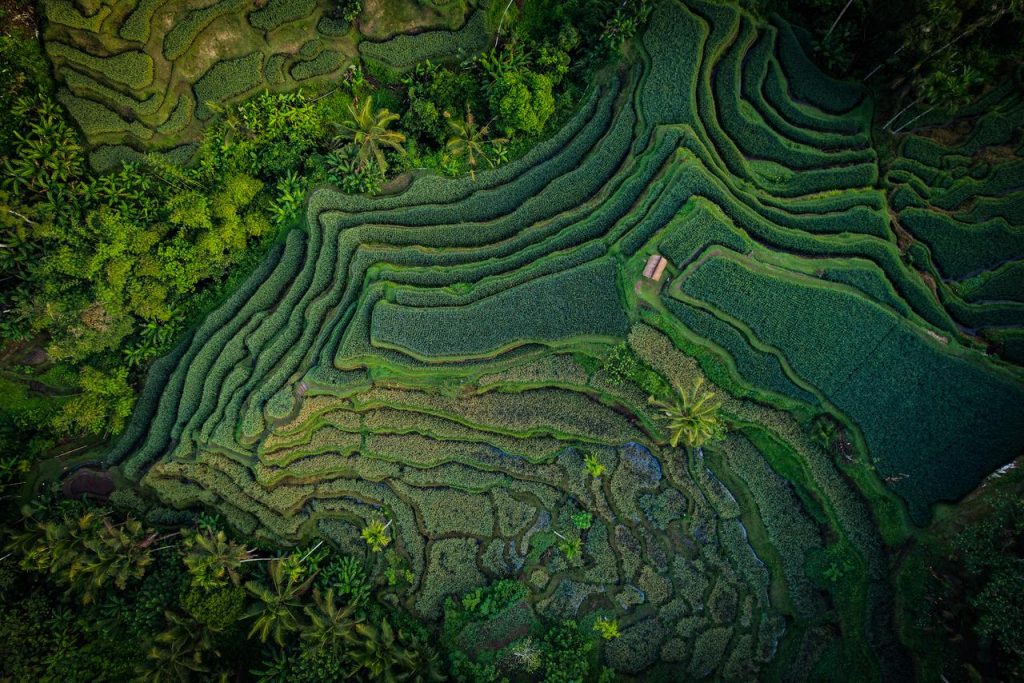
Rice fields and an intelligence of the terrain
Rice fields offer a particularly clear example of this landscape memory. Their geometry follows slopes, contours elevation lines and channels water with precision. Each terrace responds to specific constraints of the terrain.
These systems rely on detailed knowledge of hydrology, soils and seasons. Water moves slowly from one plot to another. Embankments retain the soil. Levels are adjusted by hand. The landscape becomes a living system that is agricultural, social and ecological at the same time.
Even when some rice fields are abandoned, their structure continues to organize water runoff and vegetation distribution. The form remains, even when the use changes.
Canals and paths as the veins of the territory
Beyond cultivated land, irrigation canals and ancient paths act as true veins of the territory. Canals direct water across long distances, sometimes from distant sources. Their routes reflect precise choices dictated by slope and gravity.
Paths connect villages, fields and forests. They structure movement, exchanges and social relations. Over time, they become fixed elements of the landscape, even when their original function fades.
In some regions, these ancient routes are still used today, sometimes without knowing their origins. The landscape thus continues to guide contemporary practices.
When use disappears, form remains
One of the most striking aspects of landscape memory lies in the persistence of form. When agriculture declines or transforms, terraces do not collapse immediately. They become covered with grasses, shrubs and sometimes forests.
Canals may dry up, but their channels remain visible. Paths turn into trails. Nature does not erase what existed before. It reuses existing structures and integrates them into new ecological balances.
This explains why some landscapes appear both wild and ordered. The visible organization often reflects the legacy of past human use.
Did you know ?
Ancient paths formed by repeated passage of people and animals often follow the most efficient routes across terrain, routes now confirmed by modern geographic studies.
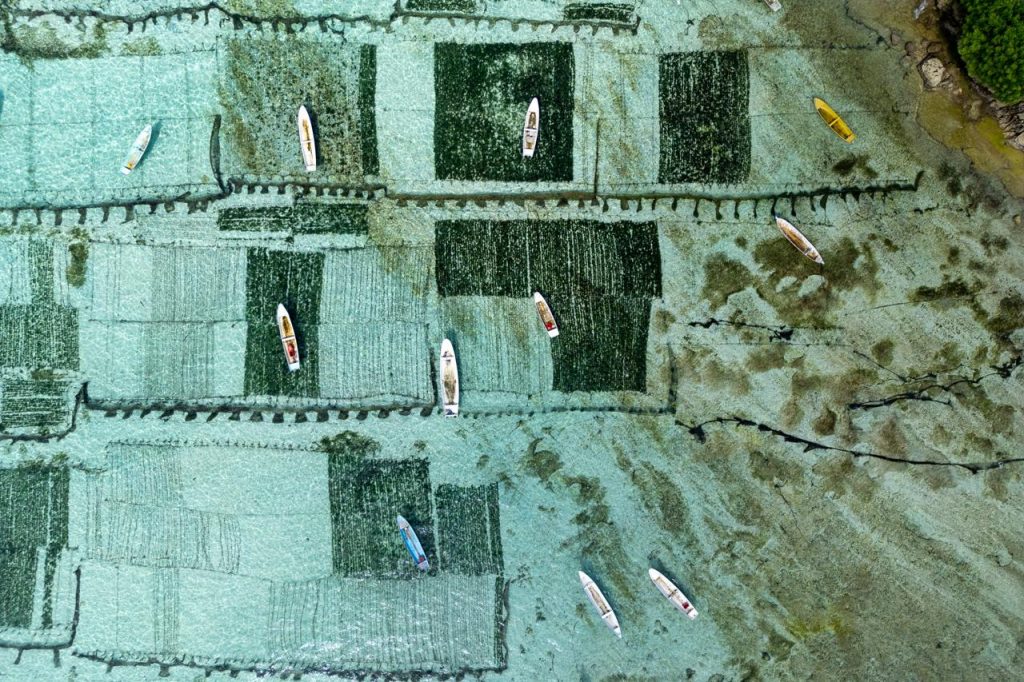
Reading the landscape as a human archive
Observing a landscape also means learning how to read it. Straight lines are rare in nature. When they appear, they often signal human intervention. Regular curves, repetitions and sharp breaks are all clues.
This reading takes time and attention. It turns a walk into an exploration. The territory becomes an open air archive, where each form tells a past relationship between people and their environment.
Understanding this memory allows for a different perspective on contemporary landscapes. They are neither fixed nor neutral. They are the result of a long and ongoing dialogue between nature and culture.
Follow us on Instagram and Facebook to stay informed and support our media via www.helloasso.com
This article may interest you: How waves are formed: the origins of the ocean’s breath?