
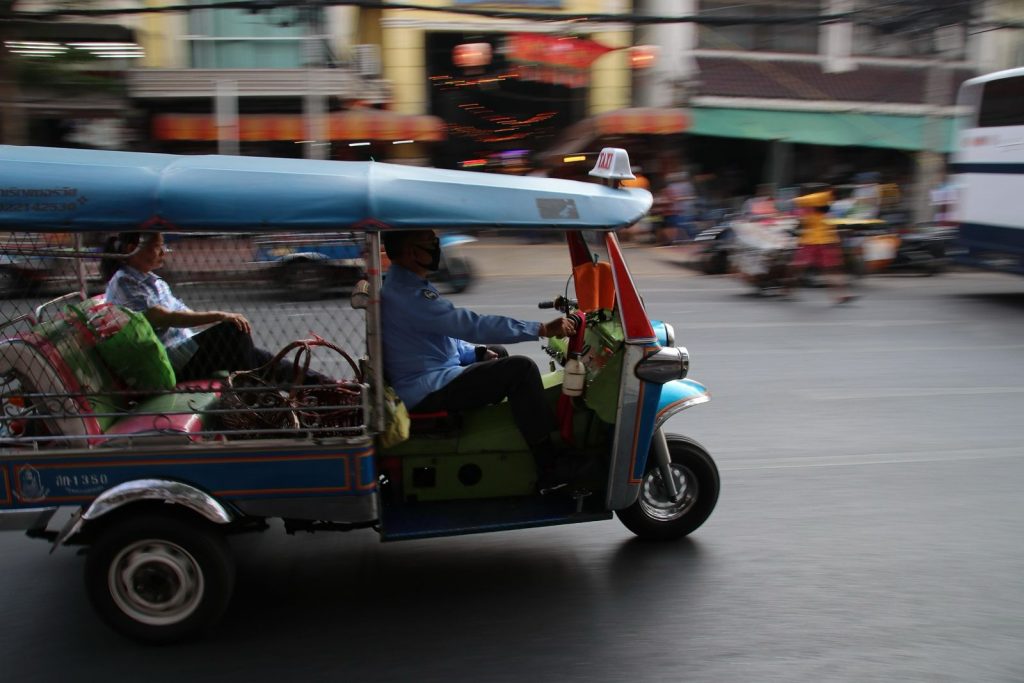
Across Asia, certain vehicles continue to move through cities despite the modernization of transport networks. Thai Tuk Tuks, Philippine Jeepneys, Vietnamese Cyclos and long tail boats remain deeply connected to everyday life. Behind their apparent simplicity, these traditional forms of transport reveal a remarkable adaptation to urban realities, local terrain and cultural traditions. Far more than simple ways of getting around, they still embody a living memory of the Asian continent.
Article by Florian Lafon.
Traditional transport remains essential in Asian cities
In several major Asian cities, modern infrastructure quickly reaches its limits. Streets become too narrow, markets spill onto the roads and traffic congestion heavily slows circulation. Residents therefore rely on vehicles capable of adapting quickly to the terrain. In Bangkok, the Tuk Tuk perfectly illustrates this flexible form of mobility. Thanks to its compact size, it moves easily through neighborhoods where cars can remain stuck for hours. The vehicle transports both passengers and light goods through the historic districts of the Thai capital.
This logic can also be found in Vietnam, Indonesia and India. Drivers know local habits perfectly and constantly adjust their routes according to traffic conditions. As a result, human experience often becomes more important than technological power. In these highly dense cities, every minute saved matters. Traditional transport therefore offers a fast, affordable and practical solution adapted to daily realities.
The Philippine Jeepney has become a cultural symbol
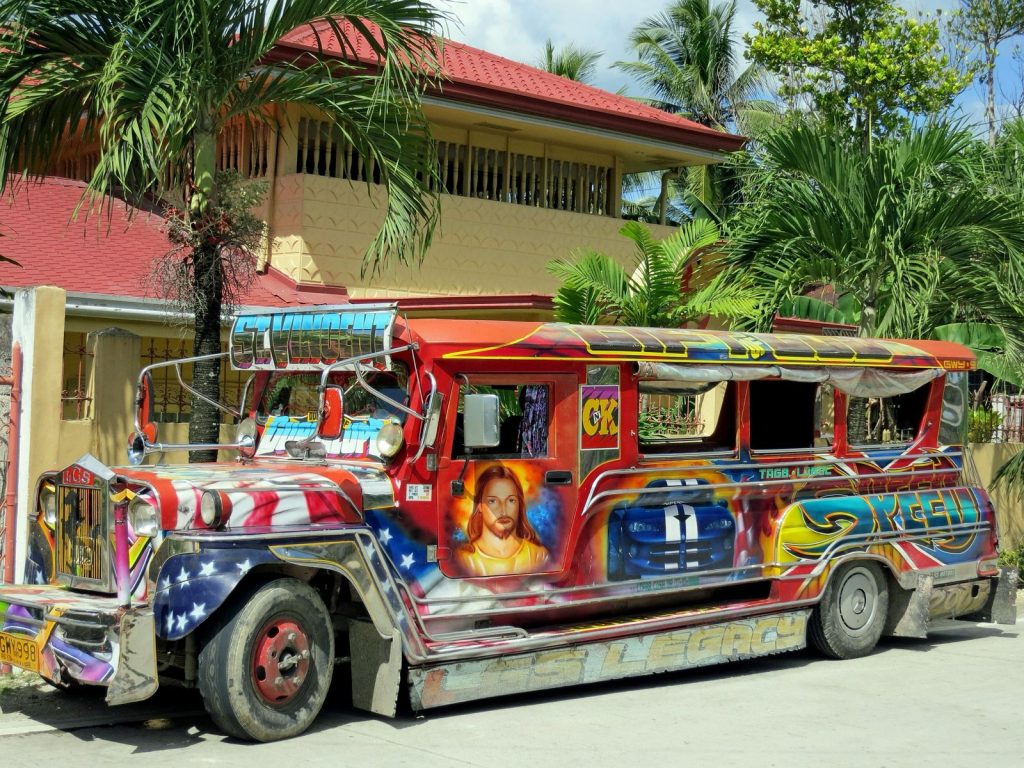
In the Philippines, the Jeepney goes far beyond its role as public transportation. This colorful vehicle has become an integral part of the country’s cultural identity. Its story begins after the Second World War, when abandoned American military jeeps were transformed into civilian vehicles. Today, each Jeepney usually has its own decoration. Some display religious references while others feature portraits, slogans or vivid colors. This customization transforms the journey into a visual and social experience.
Unlike standardized transport systems, the Jeepney often reflects the story of its owner and neighborhood. Passengers also share a small space that encourages spontaneous conversations during the ride. Even with modernization projects launched in several Philippine cities, these vehicles remain extremely popular. Many residents oppose their disappearance because they symbolize a collective memory deeply rooted in local society.
Did you know?
The word “Jeepney” comes from the combination of “Jeep” and “Jitney,” an English term referring to a small shared transport vehicle. These vehicles appeared after 1945 through the recycling of former American military jeeps.
Traditional boats adapt to local realities
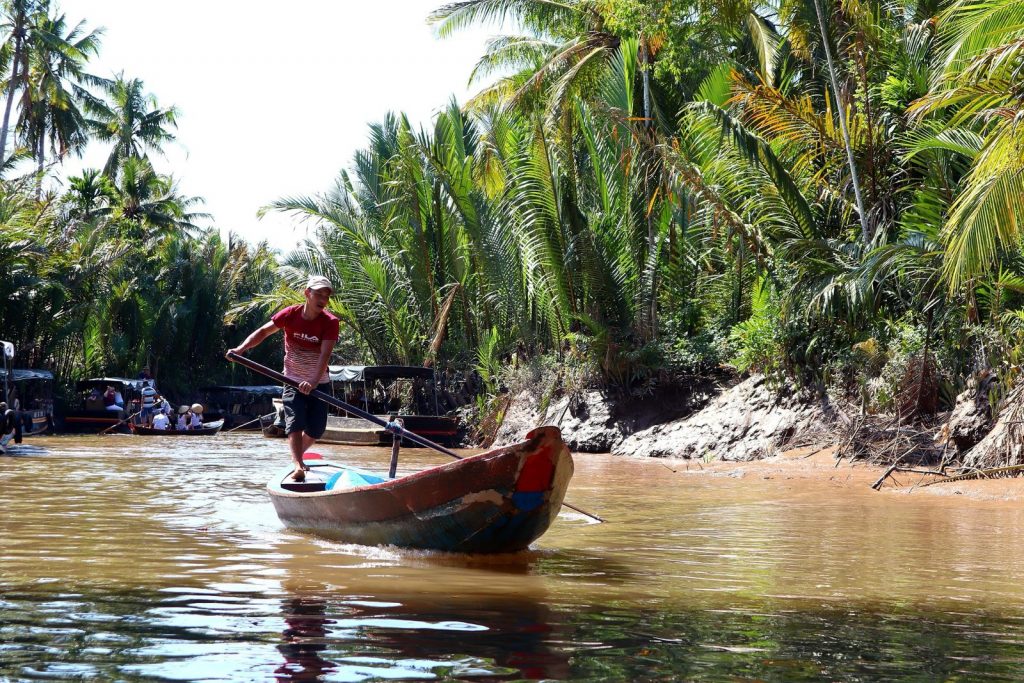
In several Asian regions, roads are not enough to efficiently connect villages and cities. Residents therefore rely on transport capable of navigating narrow canals, mangroves and shallow waters. In Thailand, the Ruea Hang Yao, also known as the long tail boat, remains essential in many provinces. Its engine is attached to a long metal shaft that allows precise control of the propeller through mud and rocky areas.
This mechanical design remains particularly effective in difficult environments. Many fishermen still use engines recovered from old vehicles in order to simplify local repairs. Technical simplicity therefore becomes a real advantage. These boats also perform essential functions in rural regions. They transport students, patients and goods to areas sometimes inaccessible by road. In many provinces, they remain at the center of everyday life.
Urban constraints continue to shape vehicle evolution
Traditional transport constantly evolves in response to local realities. A street may be flooded in the morning and completely blocked by a market a few hours later. Faced with these conditions, residents mainly look for vehicles that are easy to maneuver and repair. Motorized tricycles perfectly reflect this logic. Their lightweight structure allows goods to be loaded quickly while remaining mobile in confined spaces. In some cities, these vehicles have become essential for local commerce.
Today, several models are gradually evolving toward electric versions. This transition reduces pollution in urban centers already saturated by traffic. However, the main principles remain unchanged. Vehicles intentionally keep a simple structure in order to facilitate local repairs. In many Asian regions, mobility still depends on strong adaptability. Traditional transport continues to exist precisely because it responds efficiently to these everyday realities.
Did you know?
In Cambodia, the famous bamboo train called the “Norry” can be dismantled within minutes to allow an official train to pass on the same railway tracks.
The Vietnamese Cyclo still slows the rhythm of the city
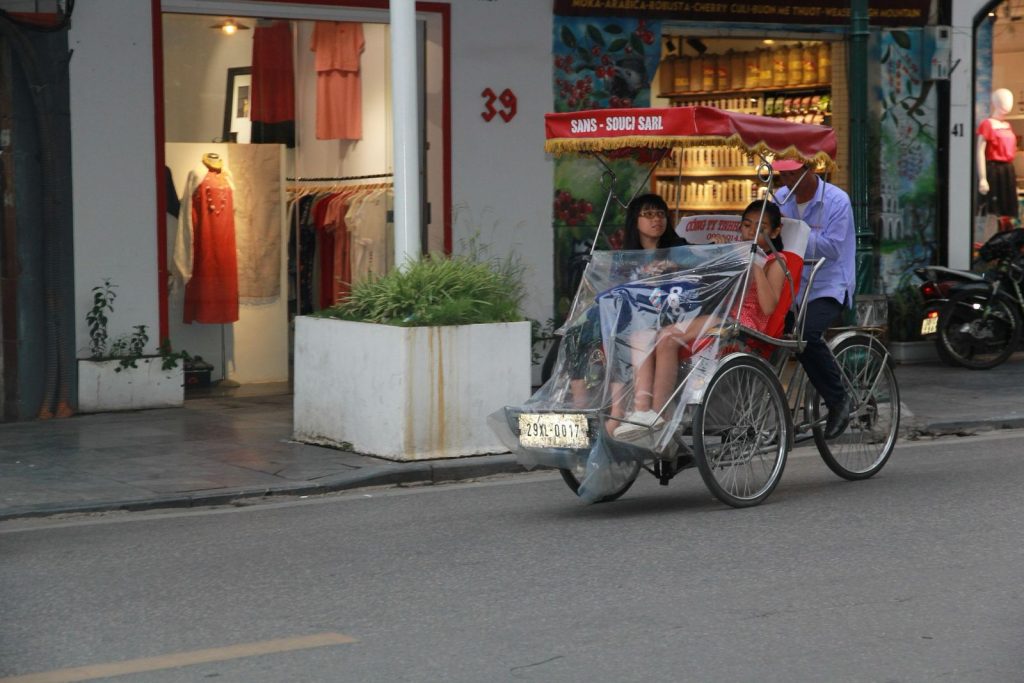
In several historic Asian districts, some forms of transportation still rely entirely on human strength. In Hanoi, the Cyclo remains one of the best known symbols of traditional mobility. Drivers often pedal for several hours under intense heat. This effort naturally slows the rhythm of the journey and changes the sound atmosphere of historic neighborhoods. Travel therefore becomes calmer and more immersive.
Unlike modern cars, the Cyclo maintains direct contact with the street. Passengers observe shops, residents and daily scenes more closely. This proximity creates a completely different perception of the city. Today, several municipalities are trying to preserve these traditional vehicles in order to protect the cultural identity of historic centers. Tourism also contributes to this heritage conservation in several Vietnamese cities.
Preserving traditional transport also means preserving local memory
Modernization is rapidly transforming Asian urban landscapes. However, completely replacing traditional transport raises many cultural and social questions. A vehicle adapted to its environment often becomes a symbol of the territory itself. It reflects local habits, mechanical know how and a unique relationship with urban space. This dimension goes far beyond transportation alone. Traditional transport also reminds us that effective innovation does not always depend on the newest technologies. In many Asian regions, simplicity often remains the most practical solution for local terrain and everyday needs.
Finally, these vehicles still create human interactions that have become increasingly rare in modern transport systems. Spontaneous conversations, advice from drivers and fare negotiations remain part of the travel experience. Asia therefore continues to move forward between modernity and heritage. Yet a few old engines, pedals and wooden hulls are still enough to tell the deep soul of many cities across the continent.
FAQ
They remain perfectly adapted to narrow streets, rural areas and the everyday needs of local residents.
No. In many Asian cities, they still transport a large part of the urban population every day.
Yes. Some cities are modernizing their transport networks, but many traditional vehicles are also evolving toward electric versions.
Because they represent a strong cultural identity and a more human relationship with the city.
Yes. Despite modernization, they remain present in several capitals and historic urban districts across Asia.
Follow us on Instagram and Facebook to stay informed
This may interest you: Kuala Lumpur: between urban verticality and living memory