
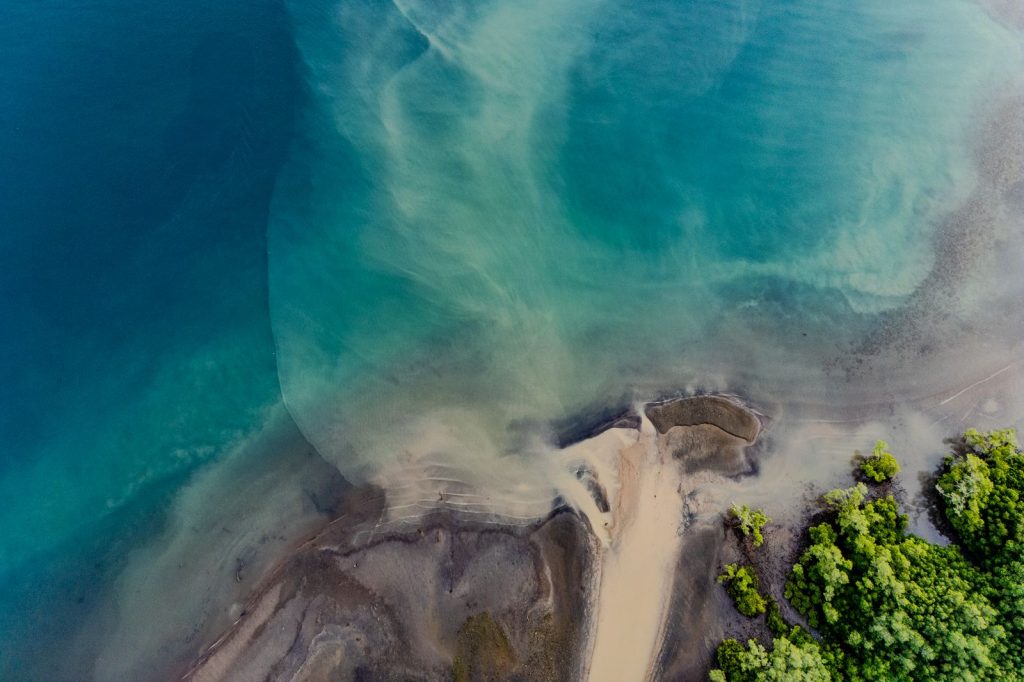
From the coastline, oceans can sometimes appear motionless. Yet immense ocean currents continuously circulate around the planet. These water movements transport heat, nutrients, plankton, and marine species across thousands of kilometers. Invisible to most populations, ocean currents directly influence climate, biodiversity, fishing industries, and the balance of marine ecosystems.
Article by Damien Lafon.
Oceans in Constant Motion
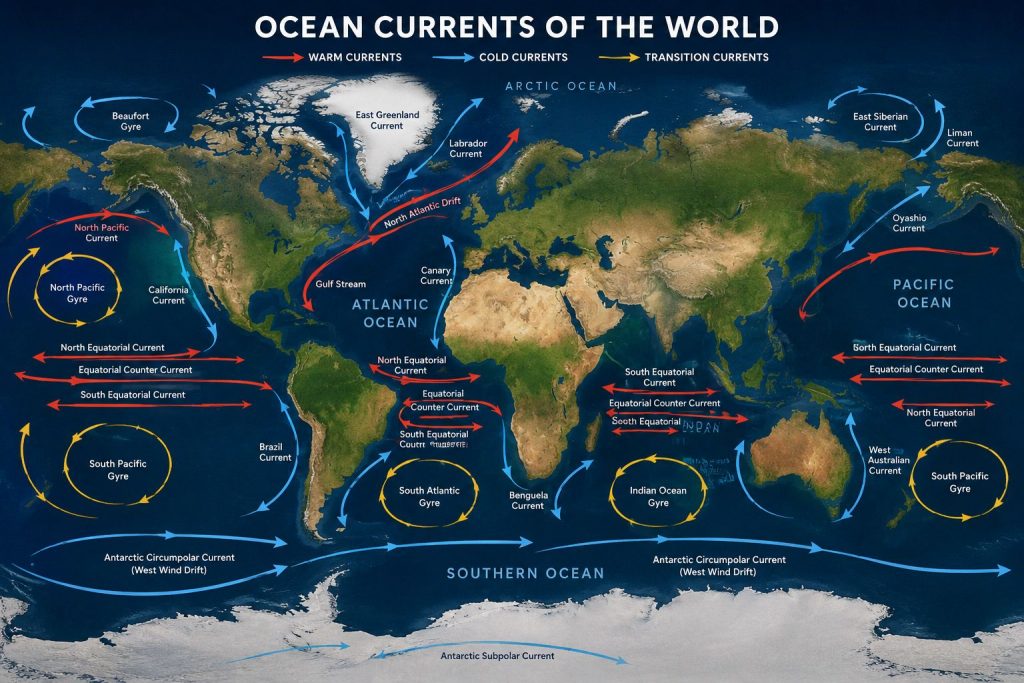
Ocean currents are vast movements of water circulating throughout the world’s oceans. Some flow near the surface while others travel deep into the abyss. Several factors influence these movements. Winds play a major role. However, Earth’s rotation, temperature differences, and salinity variations also modify ocean circulation. Together, these phenomena create a massive global circulation system often compared to an ocean conveyor belt.
Warm currents transport thermal energy from tropical regions toward colder areas. In contrast, certain cold currents move back toward equatorial zones. These exchanges strongly contribute to regulating global temperatures. Without this permanent circulation, several regions would experience very different climate conditions.
A Direct Influence on the Global Climate
Ocean currents play an essential role in Earth’s climate. The Gulf Stream, for example, carries warm waters from the Gulf of Mexico toward Western Europe. Thanks to this current, several European regions benefit from relatively temperate conditions. In the Pacific Ocean, the El Niño and La Niña phenomena also modify ocean temperatures as well as global weather systems. These variations influence rainfall, droughts, and sometimes agricultural production.
Scientists are currently observing the effects of climate change on these large ocean systems very closely. Indeed, certain modifications could disrupt long-term climate balances. Oceans also absorb a large portion of the heat generated by human activities. Currents then redistribute this energy across multiple regions of the world.
Natural Routes for Marine Species
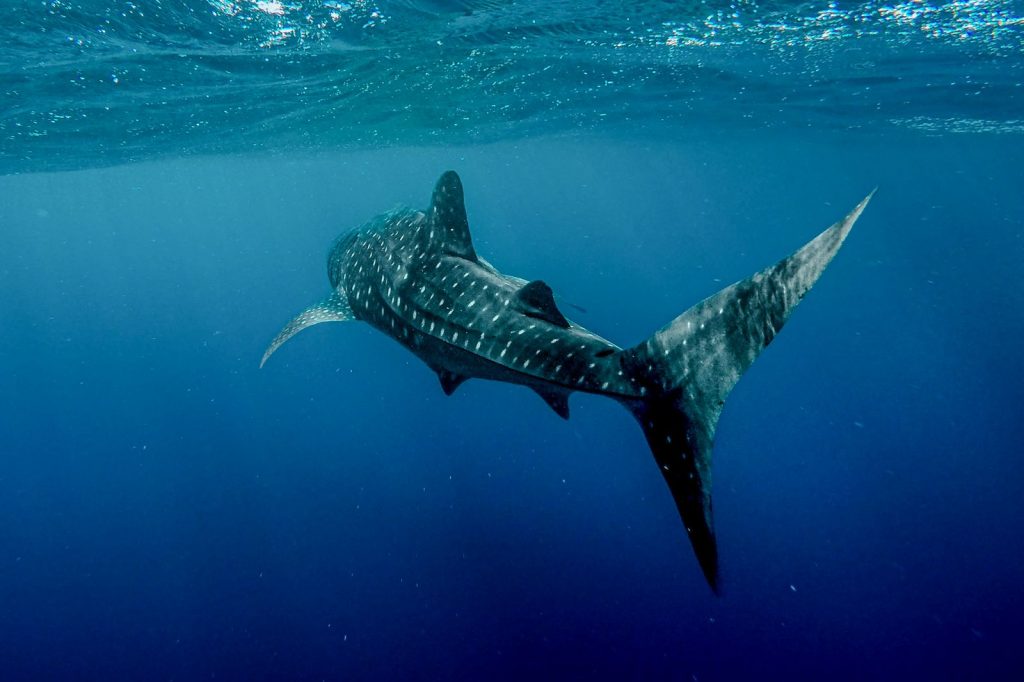
Ocean currents also function as true biological highways. Many species use these flows to travel, feed, or reproduce. Sea turtles, whales, sharks, and several migratory fish species directly depend on ocean circulation. In addition, plankton transported by currents forms the base of many marine food chains. Some fish or coral larvae sometimes travel hundreds of kilometers before colonizing new areas.
In several tropical regions, nutrient-rich deep-water upwellings also support the development of important marine biodiversity zones. These areas then attract fish, predators, and seabirds. Scientists now consider these regions essential for the biological balance of the oceans.
Did You Know?
The global ocean circulation system can take more than 1,000 years to complete a full cycle around the planet.
Major Impacts on Fishing and Local Economies
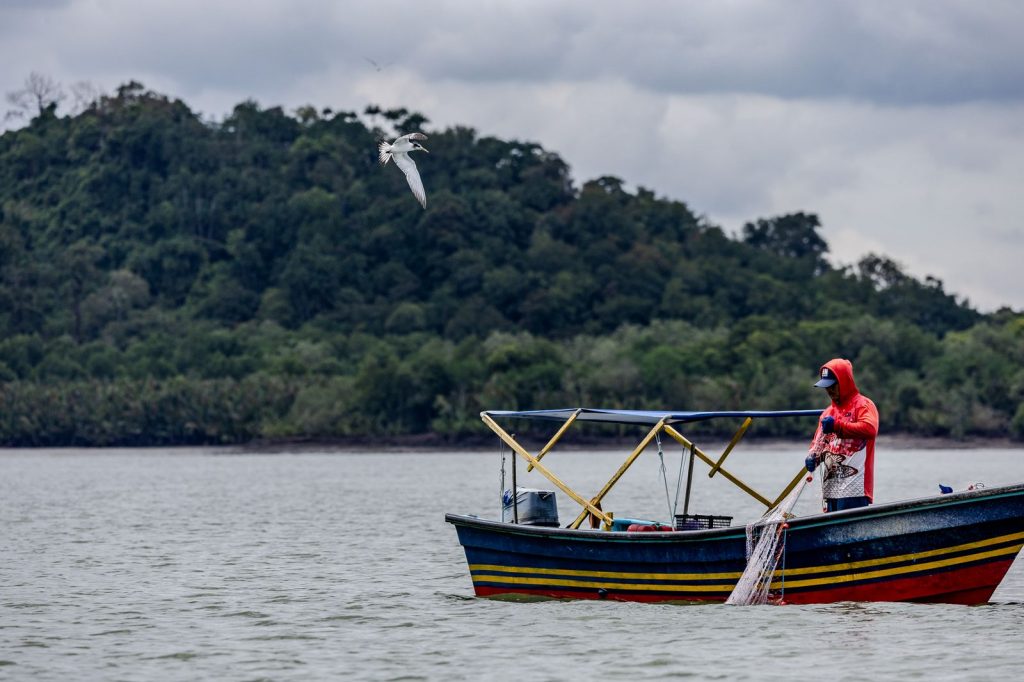
Ocean currents directly influence global fishery resources. Areas where cold waters rise to the surface often become extremely rich in fish because of nutrient concentration. Some of the world’s largest fishing zones therefore depend directly on ocean currents. Millions of people working in artisanal and industrial fishing remain closely linked to these marine balances.
However, when currents temporarily change in intensity or direction, certain species may disappear locally for several seasons. These variations then directly affect coastal economies and communities that depend on the sea. In several regions of Asia and the Pacific, fishermen already observe changes linked to ocean temperature variations. Scientists are also studying the possible effects of climate change on fish stocks across several marine regions.
Plastic Pollution and Invisible Drifts
Ocean currents also transport massive quantities of plastic pollution across the seas. Certain accumulation zones, sometimes called ocean gyres, progressively concentrate large amounts of floating waste. Over time, these plastics fragment into microplastics capable of entering the marine food chain. Researchers are currently studying the potential impact of this pollution on fish, seabirds, and several major marine predators.
In addition, currents also transport heat, oxygen, and carbon throughout the oceans. Scientists are therefore analyzing the possible consequences of oceanic changes on marine ecosystems. This research is becoming essential to better understand the current transformations affecting the oceans.
Did You Know?
Some sea turtles naturally use ocean currents to cross multiple oceans during their migrations.
Why Do Ocean Currents Remain Essential?
Ocean currents now connect climate, biodiversity, and human activities on a global scale. Invisible from the coastlines, they still directly influence weather systems, fishing industries, animal migrations, and several major ecological balances. Understanding these ocean movements has therefore become essential for observing the effects of climate change and the transformations currently affecting marine ecosystems. Beneath the sometimes calm surface of the seas lies a vast circulation network that has shaped the planet for millions of years.
FAQ
An ocean current is a continuous movement of water masses within the oceans.
They regulate climate, transport nutrients, and influence marine ecosystems.
El Niño is a climatic phenomenon linked to the abnormal warming of Pacific Ocean waters.
Yes. Nutrient-rich areas often attract large fish populations.
Yes. Scientists are currently studying the effects of climate change on several major ocean systems.
Follow us on Instagram and Facebook to stay informed
This article may be of interest to you: Invisible landscapes: nature, an abstraction seen from the sky