
Coral reefs are among the richest ecosystems on Earth. Yet they are also among the most fragile. A cyclone, a marine heatwave, pollution, or a ship grounding can damage an entire reef within a matter of hours. Despite this, nature has an extraordinary capacity for resilience. When conditions improve, corals slowly begin to recolonize their habitat. This process, often invisible to the human eye, can take several decades and depends on a delicate balance between climate, biodiversity, and water quality.
Article by Damien Lafon.
A Disaster Can Disrupt an Entire Ecosystem
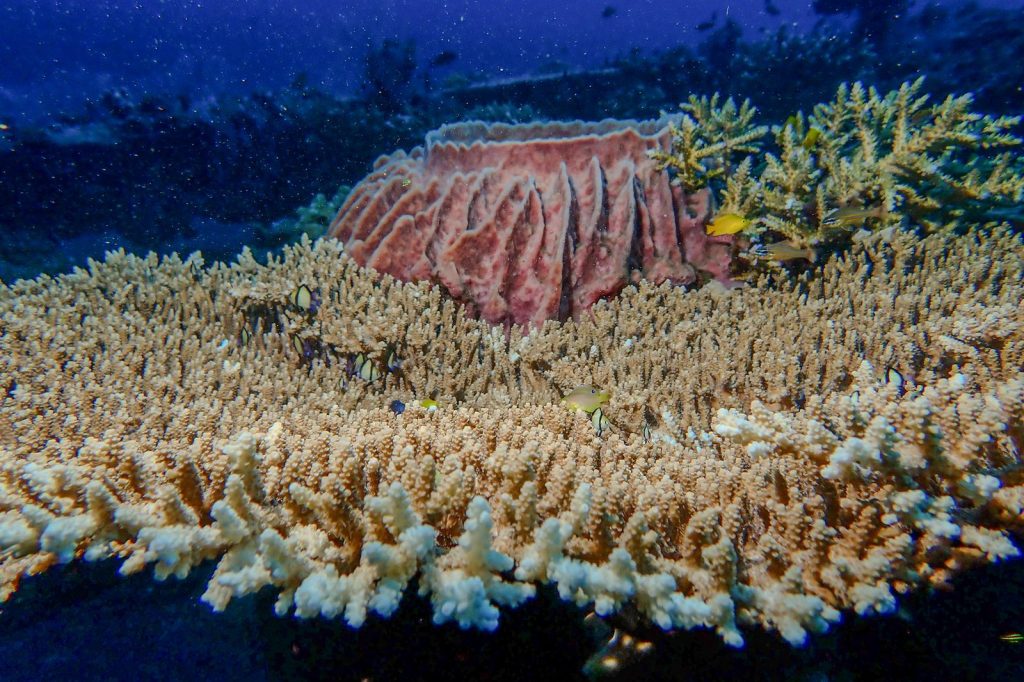
A coral reef is far more than a collection of rocks. It is a vast living structure built by billions of tiny animals called coral polyps. Each polyp measures only a few millimetres, yet generation after generation, they produce a calcium carbonate skeleton that gradually forms the reef. When disaster strikes, this balance can be broken almost instantly. Cyclones shatter coral colonies and scatter their fragments across hundreds of metres.
Marine heatwaves also trigger coral bleaching. During this process, corals expel the microscopic algae known as zooxanthellae that live within their tissues. These algae provide up to 90% of the coral’s energy through photosynthesis. Without them, corals lose their colour and rapidly weaken. However, a reef does not always disappear entirely. Some colonies survive better than others and become the first source of recovery when environmental conditions improve.
Recovery Begins with Invisible Larvae
The rebirth of a reef often begins long before the first new corals become visible. Once a year, sometimes only a few nights after the full moon, many coral species release their reproductive cells into the water simultaneously. This spectacular event is known as mass coral spawning.The fertilized eggs develop into tiny larvae called planulae. These larvae drift with ocean currents for anywhere from a few days to several weeks. Some travel only a few hundred metres, while others can be carried for tens or even hundreds of kilometres depending on the currents.
When they find a clean, stable, and well-lit surface, they settle permanently. They transform into their first coral polyp and immediately begin building a calcium carbonate skeleton. The colony then grows through cloning, with each new polyp constructing its own chamber while remaining connected to the rest of the colony. The process appears incredibly slow. Yet it forms the foundation of every coral reef on Earth today.
Did You Know?
The world’s largest coral reef, the Great Barrier Reef, stretches for approximately 2,300 kilometres along Australia’s northeastern coast and is visible from space.
Growth That Takes Decades
Unlike plants, corals grow very slowly. Massive coral species, such as brain corals, typically grow between 0.5 and 2 centimetres per year. Branching species such as Acropora can grow between 10 and 20 centimetres annually under ideal conditions. This difference explains why some reefs recover much faster than others after disturbance.
However, rebuilding a true reef requires far more than the growth of a few colonies. A complex three-dimensional structure capable of supporting thousands of marine species must be restored. Scientists estimate that a severely damaged reef generally needs 10 to 20 years to recover significant coral cover. Restoring biodiversity comparable to its original state may require 30 to 50 years, or even longer. If disasters occur too frequently, reefs simply do not have enough time to recover.
Fish Play a Vital Role in Recovery
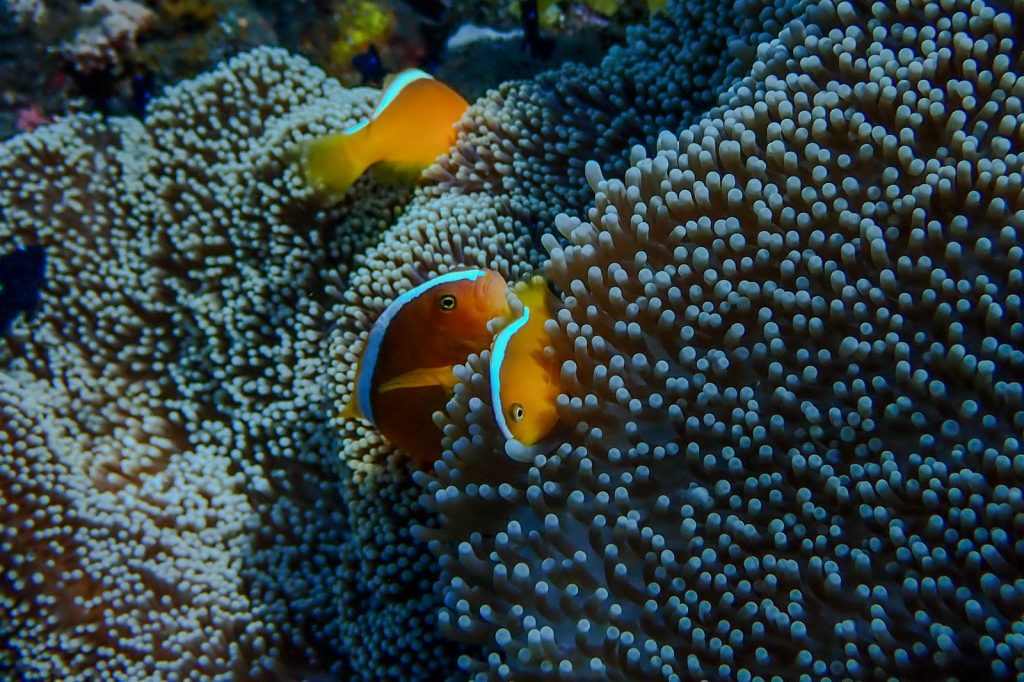
Coral reef recovery depends on much more than corals alone. Herbivorous fish are essential partners in this process. Parrotfish, surgeonfish, and rabbitfish consume large quantities of algae every day. Without them, algae quickly spread across available surfaces, preventing young coral larvae from settling successfully.
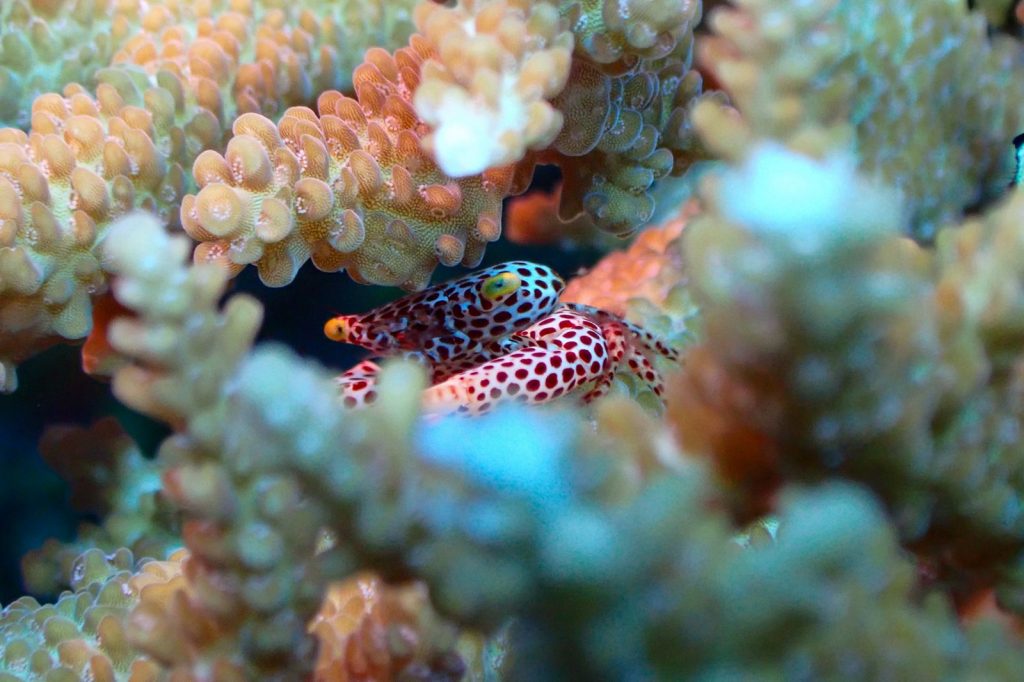
Sea urchins perform a similar cleaning role. However, their decline in some regions has significantly altered reef ecosystems. As young corals continue to grow, biodiversity gradually returns. Small crustaceans occupy tiny crevices. Molluscs settle into protected cavities. Fish populations increase, followed by larger predators such as groupers and reef sharks. Each species contributes to restoring the reef’s ecological balance.
Did You Know?
Some massive coral colonies are more than 400 years old, making them among the oldest living reef-building organisms in the oceans.
Restoring Coral Reefs Through Science… and Protecting the Oceans
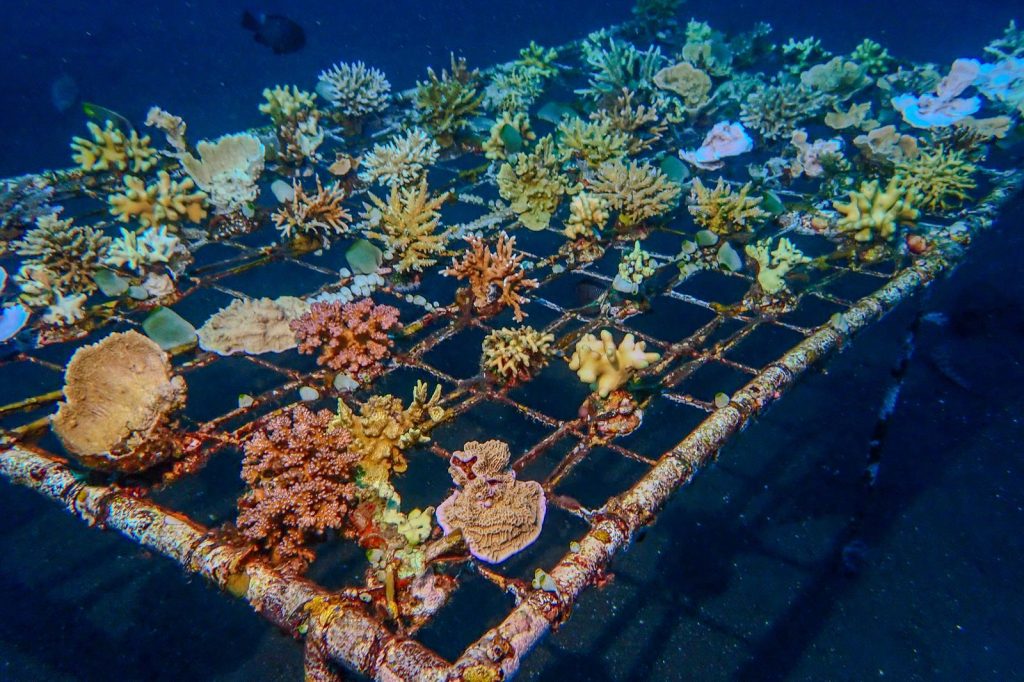
As coral reefs continue to decline worldwide, restoration projects are becoming increasingly common. Scientists collect small fragments from healthy coral colonies and grow them in underwater nurseries or floating structures. After several months, these corals are transplanted onto degraded reefs. Other restoration methods use metal frames, artificial reefs, or specially designed ceramic structures that encourage young corals to attach and grow. These techniques have produced promising results on a local scale. In parts of Indonesia, the Caribbean, and Australia, restored reef areas have already shown noticeable increases in biodiversity after only a few years.
Nevertheless, scientists remain cautious. Restoration can only succeed if the original causes of degradation are addressed. A new marine heatwave can destroy years of restoration work within weeks. Current estimates suggest that nearly 84% of the world’s coral reefs experienced bleaching during the global marine heat events of 2023–2025, highlighting the scale of the challenge facing our oceans.
The Future of Coral Reefs Depends on Us
Coral reefs cover less than 1% of the ocean floor, yet they support around 25% of all known marine species. Nearly one billion people benefit directly or indirectly from the services reefs provide. They protect coastlines from wave erosion, sustain fisheries, support tourism, and contribute significantly to local economies across tropical regions. Although coral reefs can recover naturally when given enough time and suitable environmental conditions, rising ocean temperatures, ocean acidification, pollution, and overfishing continue to reduce their resilience.
Protecting reefs therefore begins long before restoration projects. Reducing greenhouse gas emissions, limiting plastic pollution, protecting mangrove forests, improving wastewater management, and expanding marine protected areas all provide coral reefs with the best opportunity to recover naturally. A coral reef never comes back overnight. It rebuilds itself slowly, one polyp at a time, generation after generation. Behind this remarkable patience lies one of nature’s greatest demonstrations of resilience.
FAQ
Partial recovery may take 10 to 20 years, while a mature reef with restored biodiversity often requires 30 to 50 years, or even longer.
Corals expel their symbiotic algae when water temperatures become too high or when they experience severe environmental stress. Without these algae, they lose their main source of energy.
Yes. When some coral colonies survive and environmental conditions improve, larvae carried by ocean currents naturally recolonize damaged areas.
No. Artificial reefs can encourage marine life to return, but they cannot fully replicate the biological complexity of a mature natural coral reef.
They prevent algae from overwhelming coral reefs. Without them, young corals struggle to settle, grow, and rebuild the reef ecosystem.
Follow us on Instagram and Facebook to stay informed
This article may be of interest to you: Whale Sharks: Understanding the Largest Fish in the World