
African wild dogs are among Africa’s most fascinating predators. Their remarkable hunting strategies, strong social bonds and cooperative behaviour make them exceptional survivors. Yet these extraordinary animals face an uncertain future.
Credit Photography © Cécile Ducreux.

African Wild Dogs: The Painted Hunters of Africa
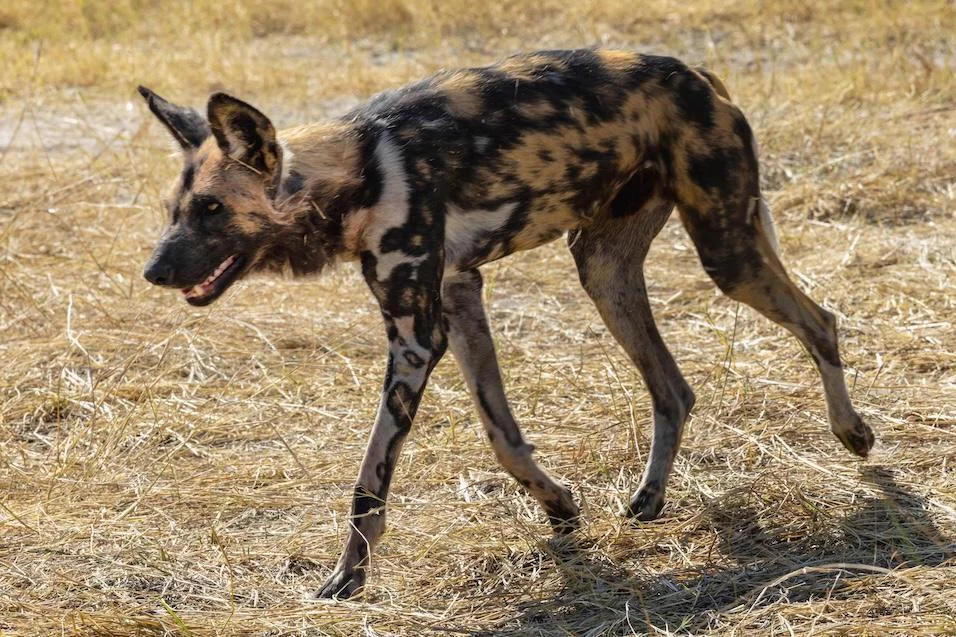
Native to sub-Saharan Africa, the African wild dog (Lycaon pictus) is the only living species in the genus Lycaon. Its scientific name means “painted wolf”, reflecting its distinctive coat. Also known as the painted dog or Cape hunting dog, this species displays irregular patches of black, brown, yellow and white fur.
Each African wild dog has a unique coat pattern, allowing researchers to identify individual animals. Their large, rounded ears provide excellent hearing, while their white-tipped tails help maintain visual contact during movement. Unlike domestic dogs, African wild dogs have evolved as highly specialised predators, relying on endurance, cooperation and complex social relationships.
Why Are African Wild Dogs Such Successful Hunters?
African wild dogs are renowned for their remarkable hunting abilities. Their success depends on speed, coordination and cooperation between pack members. Hunting success varies considerably between habitats, prey species and individual packs. Although figures approaching 80% are frequently cited, scientific observations reveal a more complex picture.
A 2016 study published in Nature Communications showed that hunting efficiency can emerge through multiple individuals pursuing prey. Each animal’s efforts contribute to the pack’s overall success. African wild dogs generally hunt medium-sized antelopes, including impalas and gazelles. They may also pursue larger or smaller animals depending on local conditions.
Their slender bodies, powerful legs and exceptional stamina allow them to sustain high-speed pursuits. During short bursts, they can reach approximately 60–70 km/h. Unlike ambush predators, African wild dogs often rely on active pursuit. Once prey is captured, pack members feed rapidly, reducing opportunities for competing predators to steal their kill.
A Hypercarnivorous Diet
African wild dogs are hypercarnivores, meaning animal flesh makes up the overwhelming majority of their diet. The term describes a diet containing more than 70% meat, rather than animals feeding only 70% of the time.
Their preferred prey consists mainly of antelopes and other medium-sized ungulates. However, their diet varies geographically, depending on prey availability. Because these predators depend heavily on hunting, access to large, connected territories remains essential to their survival.
Life Inside an African Wild Dog Pack
African wild dogs are intensely social animals. They typically live in packs consisting of several adults and their offspring, although group sizes vary considerably. Their social structure revolves around cooperation rather than constant competition.
Pack members communicate through vocalisations, physical contact and body language. These interactions help strengthen relationships and coordinate group activities. Unlike domestic dogs, African wild dogs are not descended from wolves. They belong to the Canidae family but represent a distinct evolutionary lineage.
Within each pack, a dominant breeding pair usually occupies a central reproductive role. However, other members contribute to hunting, territorial defence and caring for younger animals. This cooperation extends beyond hunting. Injured or temporarily weakened individuals may receive food from other pack members, reflecting the importance of social bonds.
Cooperative Breeding and Raising Puppies
African wild dogs demonstrate one of the most remarkable examples of cooperative breeding among carnivores. In most packs, reproduction is concentrated within the dominant male and female pair. Nevertheless, subordinate individuals occasionally reproduce.
Following a gestation period of approximately 70 days, females give birth inside sheltered dens. Breeding patterns vary according to geographical location and environmental conditions. In parts of southern Africa, births often coincide with periods favourable for raising young.
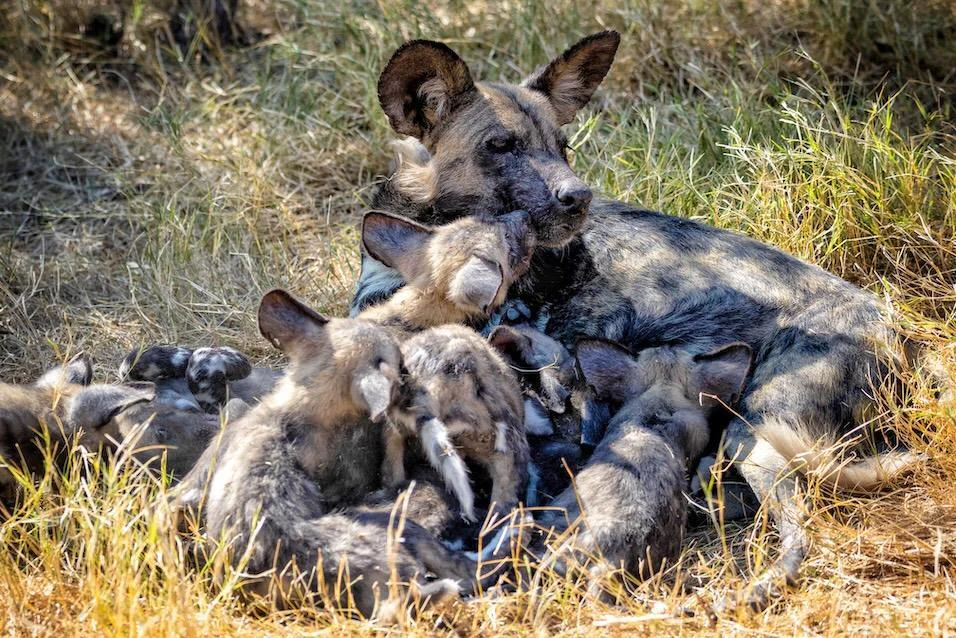
Once the puppies arrive, the entire pack participates in their care. Some adults remain near the den while others hunt. Returning hunters may regurgitate food for puppies and adults staying behind. This shared responsibility helps young animals survive during their most vulnerable months.
Did you know?
African wild dogs frequently allow puppies to feed before adult pack members. This unusual behaviour illustrates the importance of cooperation in their social lives.
African Wild Dogs Are Still Endangered
Despite their extraordinary adaptations, African wild dogs remain among Africa’s threatened large carnivores. The International Union for Conservation of Nature (IUCN) continues to classify Lycaon pictus as Endangered. According to its 2025 assessment, the global population contains an estimated 1,676 mature individuals, distributed among fewer than 700 packs.
Although this estimate exceeds the previous assessment, it does not indicate a population recovery. Improved surveys and revised estimation methods partly explain the difference. The species has disappeared from much of its former distribution. Today, its populations survive in increasingly fragmented landscapes.
Habitat destruction, conflict with livestock farmers, road mortality and infectious diseases represent major threats. Rabies and canine distemper can devastate entire packs. Habitat fragmentation also restricts movement between populations, making long-term recovery more difficult. Conservation programmes focus on protecting habitats, maintaining wildlife corridors, managing disease risks and reducing conflict between people and predators.
Protecting Africa’s Painted Hunters
African wild dogs demonstrate how cooperation can shape survival in the natural world. Their hunting abilities are impressive, but their complex social relationships are equally remarkable. Protecting this species requires more than preserving isolated wildlife reserves. African wild dogs travel across extensive territories, frequently moving beyond protected boundaries.
Maintaining connected landscapes and supporting conservation partnerships will be essential to their future. The survival of these painted hunters ultimately depends on our ability to protect the ecosystems they share with other wildlife and local communities.
FAQ
African wild dogs combine endurance, speed and cooperative hunting. Multiple pack members may pursue prey, increasing opportunities for successful captures.
African wild dogs can reach approximately 60–70 km/h during short pursuits. Their endurance also helps them maintain prolonged chases.
African wild dogs primarily eat meat, particularly medium-sized antelopes such as impalas and gazelles. Their diet varies with local prey availability.
The IUCN’s 2025 assessment estimates around 1,676 mature individuals worldwide, distributed among fewer than 700 packs. The species remains Endangered.
Habitat loss, fragmentation, human-wildlife conflict and infectious diseases threaten African wild dogs. Conservation efforts focus on protecting connected habitats and reducing these pressures.
Follow us on Instagram and Facebook to stay informed
This article may be of interest to you: Africa’s Big Five: Masters of the African Savannah
Credit Photos © Cécile Ducreux.