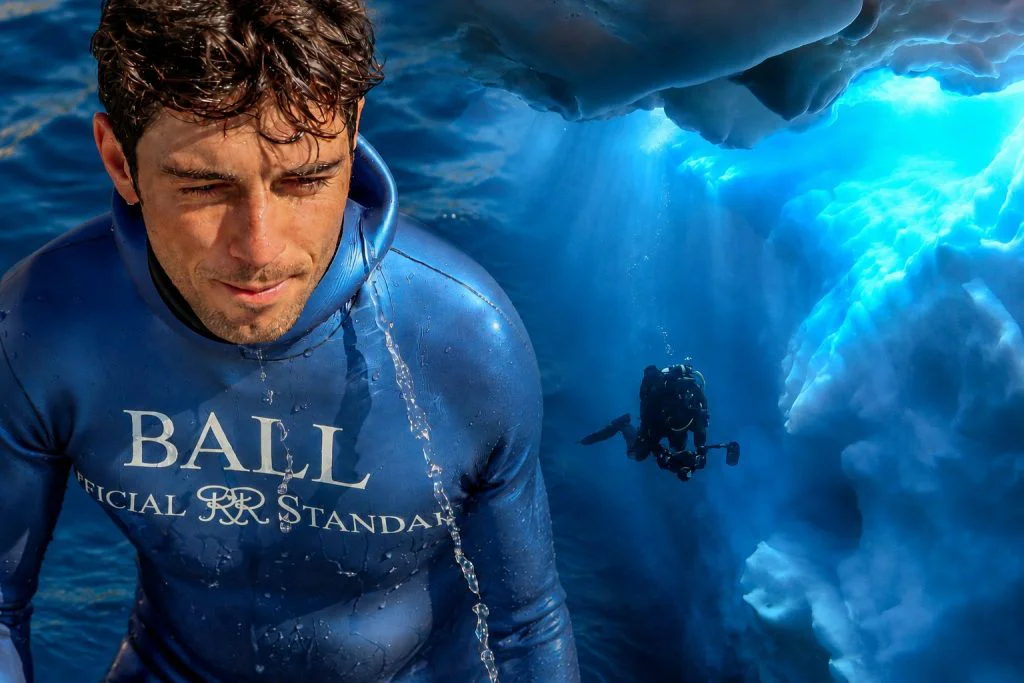
For Gilles Gambini, the ocean has never been simply a place to explore. It is a world of discovery, scientific observation and personal connection. A French freediver, marine biologist and scientific diver, he has spent much of his life beneath the surface, combining a passion for underwater exploration with a deeper understanding of marine ecosystems.
From the Mediterranean waters of his childhood to scientific expeditions in some of the planet’s most demanding environments, his relationship with the sea has evolved over time. Freediving has become more than a physical discipline. It offers a rare opportunity to disconnect, concentrate on the present moment and experience the underwater world differently.
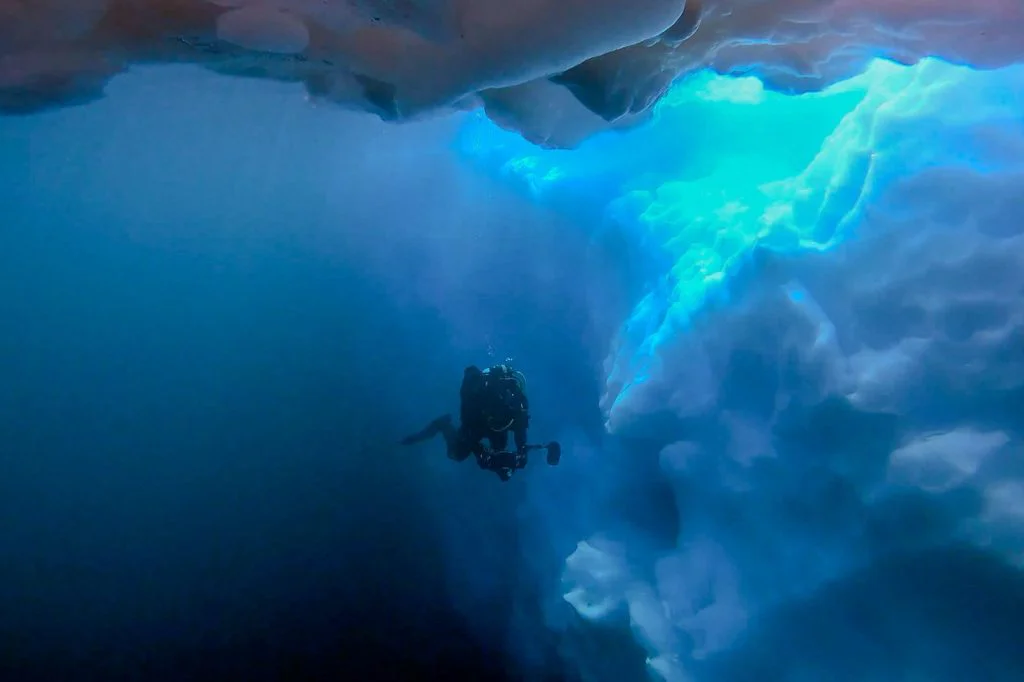
Beyond sport, Gilles Gambini is a scientific work involves observing marine species, studying their habitats and using underwater photography and video to document environments that remain largely unfamiliar to the public. His experience has taken him from tropical ecosystems to the icy waters of Greenland, where diving beneath sea ice and alongside icebergs left a lasting impression.
In this Terra People interview, Gilles Gambini reflects on his early connection with the sea, the relationship between freediving and marine science, and what a lifetime of underwater exploration continues to teach him about nature and himself.
You discovered freediving at a young age, long before it became both a sporting discipline and an important part of your professional life. What first drew you beneath the surface?
What first attracted me to the underwater world was simply how comfortable I felt in the water. I was always looking for an excuse to end up in the sea, even in winter, when my parents mistakenly believed I would catch a cold.
I started spearfishing at a very young age and continued practising it for many years. What interested me most was observing the behaviour of different species, learning to identify them and understanding their habitats. In a way, you could say that my journey towards becoming a marine biologist began there too.
You are a freediver, marine biologist and scientific diver. Has science changed the way you experience the ocean when you dive?
Science has allowed me to sharpen my observation skills and deepen my knowledge of the marine environment. I no longer dive in the same way I used to. Every species I encounter has a story to tell, and that can sometimes mean processing a great deal of information during a dive, even when I am diving purely for pleasure.
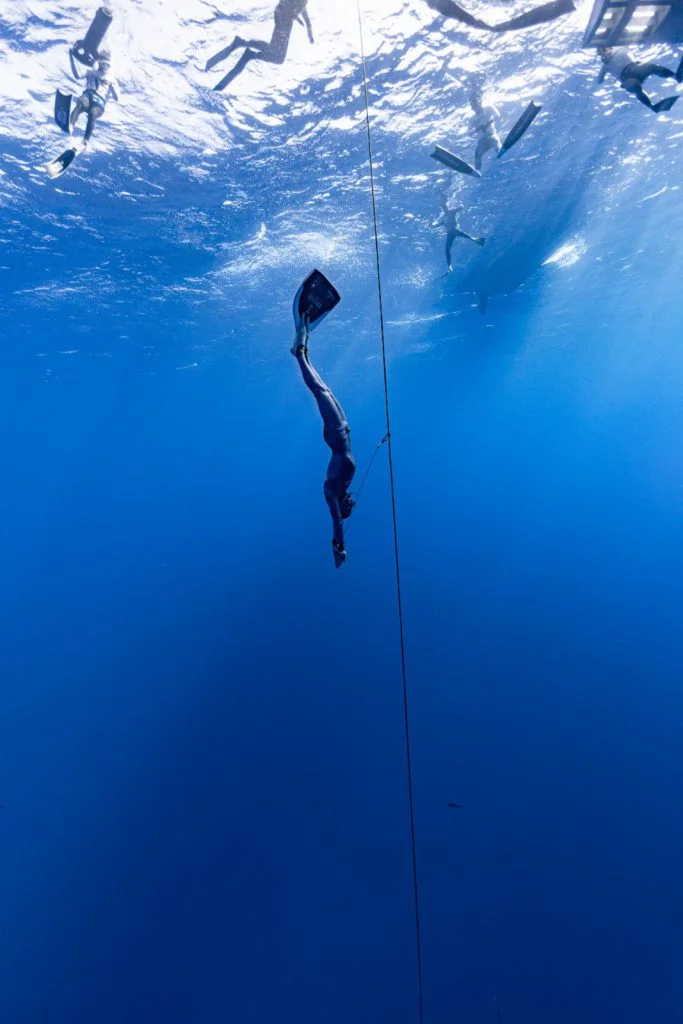
To disconnect completely from the scientific side of things and from the marine environment itself, I practise competitive freediving. Apart from a line and the deep blue, there is not much to see.
During a deep freedive, there comes a moment when you leave the world above completely behind. What happens in your mind as you descend several dozen metres on a single breath?
When I leave the surface and switch into freediving mode, I enter a state of intense concentration. Nothing else exists beyond the dive itself. I focus entirely on my sensations, my technique and the slightest signals my body sends me. It is an extremely peaceful state of mind.
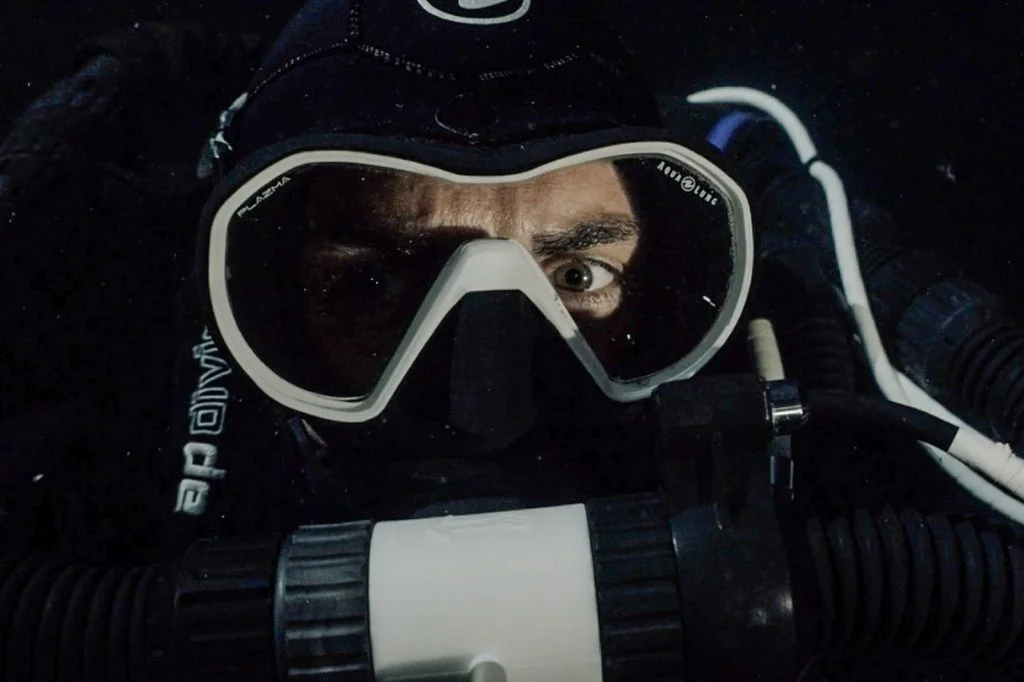
Freediving is often associated with performance, depth and records. But what does depth really mean to you today?
I have always been quite detached from numbers, even though they can sometimes provide motivation. I have always valued enjoyment over performance. For me, a successful dive is one where the sensations feel right and where I experience no apprehension before setting off.
Your work has taken you into very different marine environments, from tropical waters to cold and remote regions. Which environment has left the strongest impression on you, and why?
The most extreme environments have always left the strongest impression on me, both in my life as a diver and beyond. I think they remind us just how vulnerable we are and how dependent we remain on nature. Being in these places is a genuine lesson in humility.
The expedition that affected me most and truly immersed me in this world took place a few years ago in Greenland, where I had the opportunity to dive alongside icebergs and beneath the sea ice.
When you understand marine ecosystems from a scientific perspective, is it more difficult to accept the environmental changes and degradation you witness underwater?
On a personal level, acceptance is indeed more difficult because I can directly measure what is happening and understand the intensity of these changes.
Does freediving offer a different way of approaching and observing marine life compared with scuba diving?
For me, freediving is a genuine complement to scuba diving. It allows us to observe species in a less intrusive and more discreet way. Fish do not behave in the same way around a scuba diver as they do around a freediver.
Freediving also offers greater freedom and speed of movement, which can be a real advantage when observing certain species in particular.
What role do photography and video play in your scientific work, and how can these images help people better understand the marine environment?
Photography and video allow us to collect a considerable amount of information as part of scientific research. These techniques are particularly effective when we need to document a habitat in detail but have very limited time on site because of the constraints associated with diving.
Images and videos also help illustrate scientific procedures, introduce the general public to a world they know relatively little about and raise awareness of the importance of protecting it.
After so many years beneath the surface, what does the ocean continue to teach you, both about nature and about yourself?
I believe the sea, and nature more generally, are endless sources of knowledge. They will continue to teach me things throughout my life, both about myself and about the environment around us. Humanity still has so much left to discover.
Credits photos:
Hero:©️Marie Lopez & ©️Greg Lecoeur
Follow us on Instagram and Facebook to stay informed
This article may be of interest to you: Blue Carbon: The Coastal Ecosystems Helping Protect Our Climate