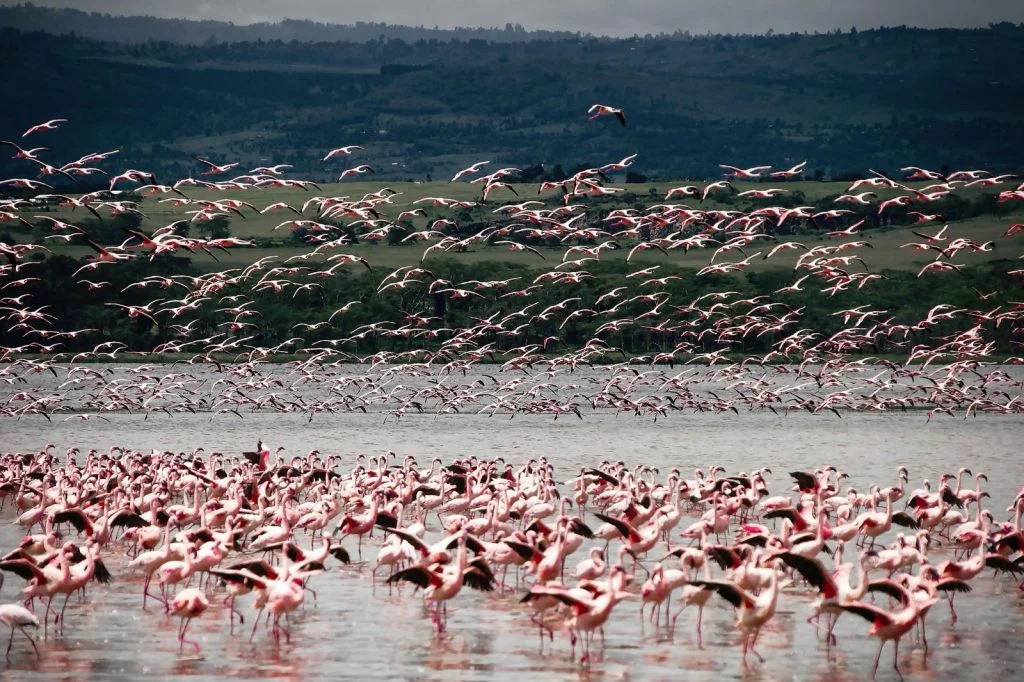
Across the planet, millions of animals are on the move. Some cross vast oceans without stopping. Others follow seasonal rains, searching for food and water across changing landscapes. From birds flying through the night to whales travelling thousands of kilometres, these journeys reveal extraordinary endurance and instinct.
But migration is becoming increasingly difficult. According to a 2026 United Nations report, 49% of species listed under the Convention on Migratory Species have declining populations. Their survival depends not only on protecting individual habitats, but also on keeping the routes between them open.
Why Do Animals Migrate?
Migration is more than moving from one place to another. It is a journey that many animals make each year, often with the seasons. They travel to find food, breed, escape harsh weather or reach water. For many species, staying in one place all year is not an option. In the north, winter can make food scarce. In the tropics, dry seasons can leave grasslands bare. At sea, currents and changing seasons affect where food is found. Some animals also need different places to feed and raise their young.
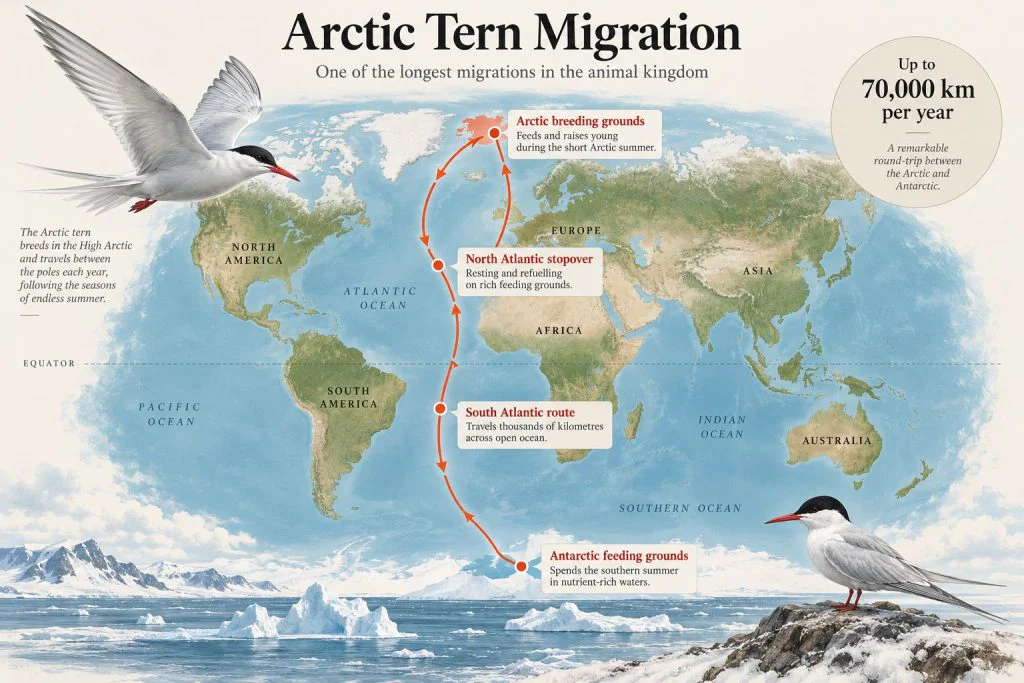
As a result, many species rely on places far apart to survive each year. A bird may nest in the Arctic, stop at coastal wetlands and spend winter south of the equator. A whale may feed in cold seas, where food is rich, before swimming to warmer waters to breed. Some of these travellers weigh only a few grams. Others move in herds of millions.
Migration has developed in birds, mammals, fish, reptiles and insects. The reason is often the same: animals move to follow food and other resources as conditions change. But these journeys come at a cost. They take energy and expose animals to storms, predators and natural barriers. Roads, dams, fishing nets and other human activities add new risks. For these species, survival depends on more than a single safe home. It depends on every stop along the way.
Birds: Crossing Continents and Oceans
Birds make some of the longest and most remarkable journeys in the animal world. Each year, billions travel between their breeding grounds and the places where they spend winter. Some follow coastlines or mountain ranges. Others fly across vast deserts and oceans, with nowhere to land for thousands of kilometres.
The bar-tailed godwit offers one of the most striking examples. In 2022, a young bird flew about 13,560 kilometres from Alaska to Tasmania without stopping. Tracked by satellite, it remained in the air for more than 11 days. The flight set a world record for the longest known non-stop bird migration.
Such journeys demand careful preparation. Before leaving, birds build up large stores of fat to fuel their flights. Some species even change the size of their organs and flight muscles to cope with long periods in the air.
Yet distance is only one challenge. Migrating birds must also find safe places to stop, rest and feed. Wetlands, river mouths, islands and coastal mudflats provide vital shelter along the way. These places allow tired birds to recover their strength before the next stage of their journey.
Losing just one key resting site can put an entire migration route at risk. Some of these routes cross several countries and stretch over thousands of kilometres.
Bird migration also shows why nature protection must reach beyond national borders. Saving a bird’s breeding grounds means little if its winter home or feeding sites vanish elsewhere.
Did You Know?
A young bar-tailed godwit completed a 13,560-kilometre flight without landing in 2022, travelling directly across the Pacific from Alaska to Tasmania. Guinness World Records
Marine Mammals: Following Productivity Across the Oceans
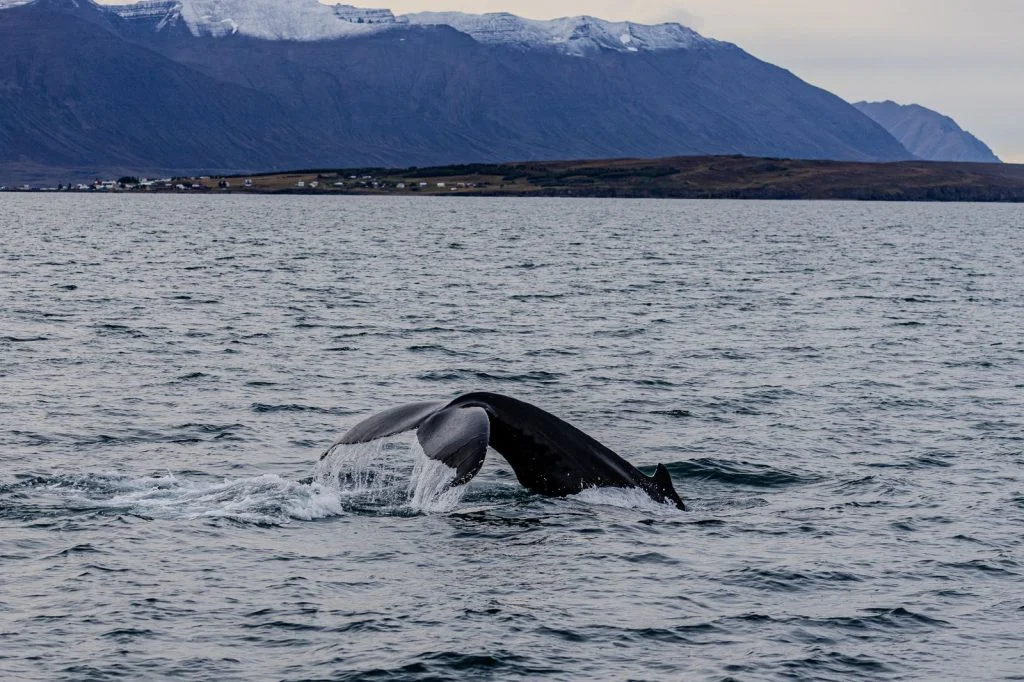
Some of the world’s largest animals also make some of its longest journeys. Each year, many whales travel between two very different parts of the ocean. Cold northern and southern waters offer rich feeding grounds during certain seasons. Warmer seas provide places where whales can mate, give birth and care for their young.
The eastern North Pacific gray whale is a striking example. These whales spend much of their feeding season in Arctic and nearby cold waters. They then swim south along the west coast of North America to the lagoons of Baja California, Mexico. Their yearly round trip can cover 16,000 to 19,000 kilometres, or about 10,000 to 12,000 miles. Source: NOAA Fisheries
Humpback whales follow a similar pattern in many parts of the world. They move between rich feeding areas and warmer waters where they breed. Yet unlike animals on land, whales leave no visible paths across the sea. There are no tracks or clear routes for us to follow. Even so, many return to the same regions year after year, often following similar paths.
These journeys now bring whales into growing contact with human activity. Ships, fishing nets, underwater noise and coastal development can all threaten their passage. NOAA identifies ship strikes and entanglement in fishing gear as major threats to gray whales. Source: NOAA Fisheries
The ocean may seem vast and open. But for a whale on the move, it can be a sea filled with obstacles.
Land Mammals: Moving With Rain, Grass and Water
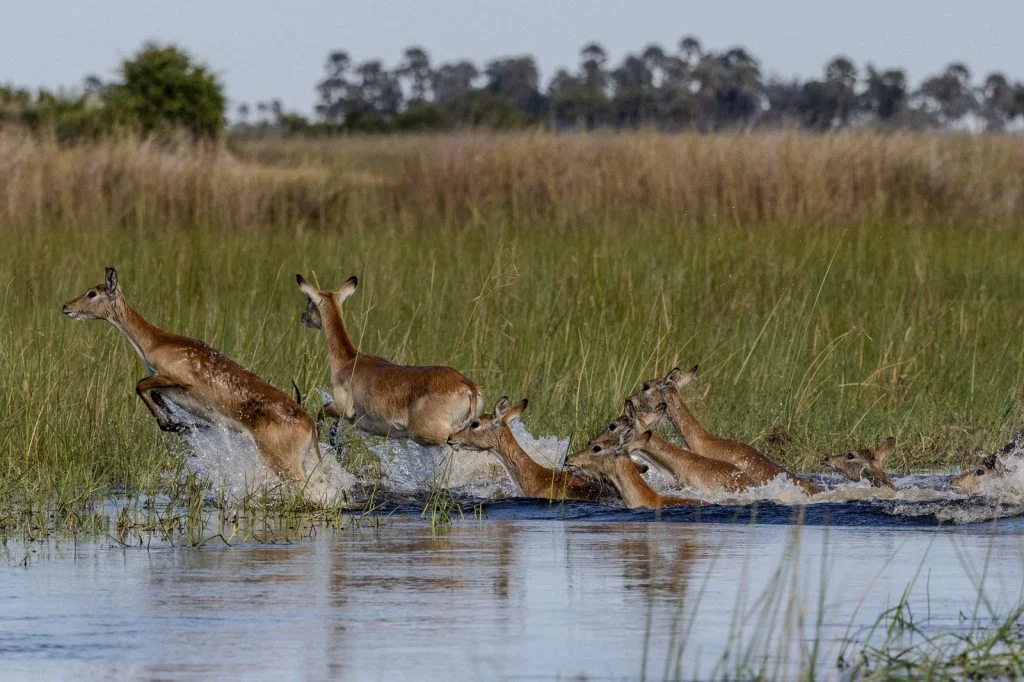
On land, migration can transform entire landscapes. The most famous example is probably the Serengeti migration across Tanzania and Kenya. Wildebeest, zebras and gazelles move through the ecosystem following seasonal rainfall, fresh grazing and access to water. UNESCO describes a circular journey of roughly 1,000 kilometres, involving more than one million wildebeest alongside hundreds of thousands of other ungulates. UNESCO World Heritage Centre
Yet the Serengeti is not the largest land-mammal migration currently documented. In 2025, new mapping released through the UN Convention on Migratory Species documented an immense movement across South Sudan and Ethiopia. Around five million white-eared kob and approximately 400,000 tiang move across seasonal habitats covering more than 100,000 square kilometres. Aerial surveys also recorded other migrating ungulates, bringing estimates for the wider system to between five and seven million animals. Convention on Migratory Species
These migrations are driven largely by water and vegetation. When seasonal rains arrive, landscapes that were previously dry can rapidly produce fresh grass. When floods spread across wetlands, animals shift again towards areas where food and access remain suitable. Terrestrial migration therefore depends heavily on connectivity. A herd may be capable of travelling hundreds of kilometres, but a new fence, road, settlement or agricultural zone can interrupt a route followed for generations. Protecting the animals without protecting their corridors is rarely enough.
Did You Know?
The famous Serengeti migration is not the only movement involving millions of animals. Recent mapping indicates that around five million white-eared kob alone participate in the Great Nile Migration across South Sudan and Ethiopia. Convention sur les Espèces Migratrices
How Do Migrating Animals Know Where to Go?
One of the greatest mysteries of animal migration is how animals find their way. How can a young bird cross an ocean towards a place it has never seen? How do animals return to the same feeding or breeding grounds after travelling thousands of kilometres?
Scientists have found no single answer. Studies suggest that migrating animals use several clues to guide their journeys. These include the Sun, stars, light patterns, smells, landmarks and the Earth’s magnetic field. Each species may rely on a different mix of these signals. Rather than using one natural compass, many animals seem to combine several ways of finding their path. Source: Nature
Experience can also play a role. Some young animals learn their routes by following adults or travelling with a group. Others seem to inherit a sense of direction that helps them travel without a guide.
One of the most striking examples comes from a small insect: the monarch butterfly.
Each autumn, monarch butterflies from eastern North America travel south towards the forests of central Mexico. Some fly more than 3,000 kilometres, with the longest journeys reaching nearly 4,800 kilometres. Yet these butterflies have never made the trip before.
They belong to a new generation, born months after their ancestors began the journey north. Still, they manage to find wintering grounds that earlier generations used.
How they achieve this remains a subject of scientific research. Their journeys reveal how inherited instincts, natural signals and physical changes can work together.
Migration is not simply about moving across the planet. It is also about knowing where to go, often without ever having been there before.
What Happens When Migration Routes Disappear?
Animal migration developed long before roads, cities and other human barriers changed the landscape. Today, many of these ancient routes face growing pressure. On land, roads, fences, farms and cities can block the paths animals have used for generations. Wetlands where birds stop to rest and feed are also being lost. At sea, fishing fleets, ships and offshore industries increasingly share the same waters as migrating whales.
Climate change brings further risks. Many animals must arrive at the right place at the right time. They may depend on fresh plants, emerging insects or seasonal changes in ocean food supplies. But as the climate shifts, food may no longer be available when they arrive.
The scale of these threats is becoming clear. A 2026 United Nations report found that 49% of species listed under the Convention on Migratory Species have declining populations. Another 24% are now threatened with extinction. These figures show how many migratory animals face growing risks. Source: Convention on Migratory Species
Protecting these animals is not simple. A national park may protect a breeding ground, but animals often travel far beyond its borders. A marine reserve can protect one feeding area while leaving much of a whale’s journey exposed to danger.
To protect migrating wildlife, efforts must reach across their entire routes. This means keeping natural corridors open, restoring wetlands and making roads and other barriers safer for wildlife. It also means stronger cooperation between countries that share the same migratory species.
Migration tells a story of connection across the natural world. A wetland in Asia may support birds that breed thousands of kilometres away. Changes in Arctic waters may affect whales seen months later off Mexico. A road across an African grassland may block paths that animals have followed for countless generations.
The distances these animals travel are extraordinary. But their future depends on more than how far they can go. It depends on whether the places they need remain connected.
FAQ
Animal migration is a regular movement between different areas, often occurring seasonally. Animals migrate primarily to find food, reproduce, access water or avoid unfavourable environmental conditions.
Some birds and whales undertake exceptionally long migrations. A bar-tailed godwit has been recorded flying 13,560 kilometres non-stop, while eastern North Pacific gray whales may travel roughly 16,000 to 19,000 kilometres during their annual round trip. Guinness World Records
Recent surveys and tracking indicate that the migration across South Sudan and Ethiopia is the largest known land-mammal migration, involving millions of white-eared kob, tiang and other ungulates. Convention sur les Espèces Migratrices
Different species use combinations of the Sun, stars, landscape features, smell, polarized light and the Earth’s magnetic field. Navigation can also involve inherited behaviour and learned information. Nature
Migratory species depend on several habitats and the routes connecting them. Habitat loss, roads, dams, fences, fishing activity, pollution and changing climate conditions can affect different stages of the same journey.
Follow us on Instagram and Facebook to stay informed
Continue Exploring:
The Blue Wildebeest, Sentinel of the African Savannas