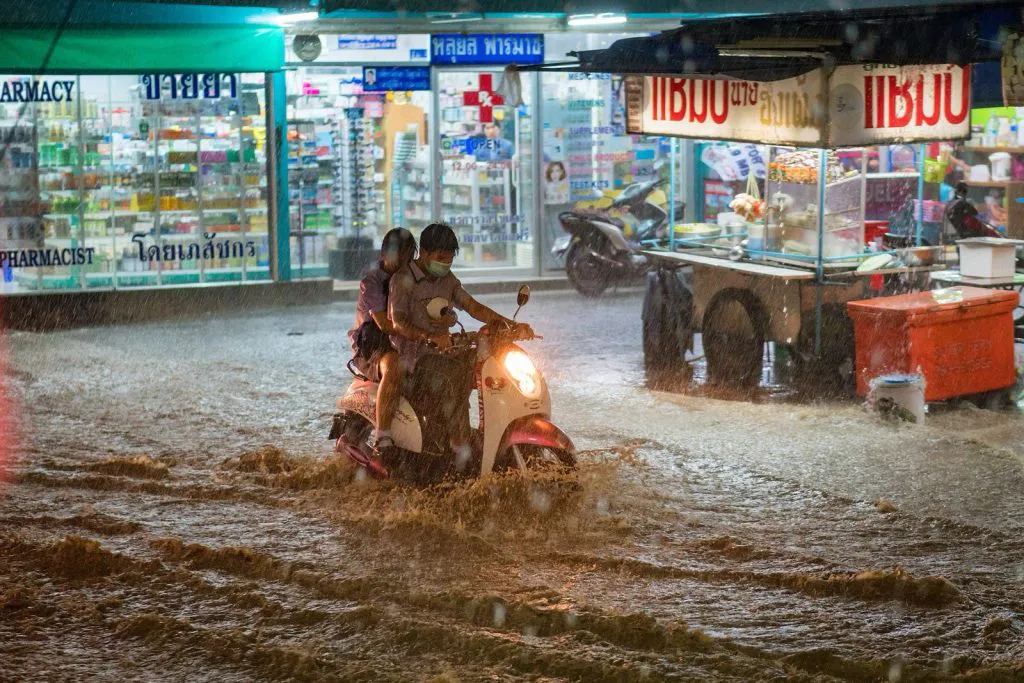
Heavy rain is raising flood risks across parts of Southeast Asia, with fresh warnings issued in Vietnam and Thailand. Authorities are urging residents and travelers to remain cautious as rivers rise, roads face flooding and rough seas threaten boat journeys.
The latest alerts, issued on November 12, cover popular tourist destinations, including Da Nang, Hue, Koh Samui and parts of southern Thailand.
Vietnam Faces New Flood Warnings
Central Vietnam remains on alert after days of heavy rainfall. The country’s National Centre for Hydro-Meteorological Forecasting issued fresh warnings on November 12 for rivers between Hue and Khanh Hoa.
The authorities expect further flooding in low-lying areas. Flash floods and landslides also threaten mountainous districts, where saturated soil increases the risk of sudden ground movement.
Some areas have already recorded exceptional rainfall. Monitoring stations in Da Nang registered more than 300 millimeters of rain during the 24 hours leading up to November 12. Parts of Gia Lai also received more than 350 millimeters.
These conditions may affect roads, rural communities and access to national parks. Travelers planning mountain excursions should check local conditions before departure.
Vietnam’s National Centre for Hydro-Meteorological Forecasting continues to publish weather and flood warnings.
Thailand Warns of Heavy Rain and Rough Seas
Southern Thailand is also facing severe weather.
On November 12, the Thai Meteorological Department warned that heavy to very heavy rainfall could continue through November 13.
The provinces of Surat Thani, Chumphon and Nakhon Si Thammarat face particularly difficult conditions. Heavy rain may also affect parts of the Andaman coast, including popular destinations such as Phuket and Krabi.
On November 11, Thailand’s disaster prevention authorities issued flood alerts for Koh Samui and Koh Phangan. The warnings highlighted the risk of flash floods, overflowing waterways and landslides.
Sea conditions are another concern.
Waves in the lower Gulf of Thailand could reach two to three meters, rising above three meters during thunderstorms. Authorities have advised small boats to remain ashore in affected waters.
Island transfers, diving excursions and other marine activities may face disruption if conditions worsen.
Why Heavy Rain Can Quickly Become Dangerous
Southeast Asia experiences intense seasonal rainfall, but the impact varies widely between regions.
After several days of rain, rivers can rise rapidly and hillsides become unstable. Even short periods of intense rainfall may trigger flash floods, particularly in valleys and built-up areas with limited drainage.
Coastal communities can face additional pressure when strong winds and rough seas make fishing or transport difficult.
However, these alerts do not mean that every destination in Southeast Asia is experiencing severe weather. Conditions can differ significantly between nearby provinces.
What Travelers Should Know
Travelers visiting affected areas should monitor official forecasts, confirm transport arrangements and avoid flooded roads.
Mountain trails, river crossings and boat excursions deserve particular attention. Conditions can change quickly, even when rainfall has temporarily stopped.
For now, the most important warnings concern central Vietnam and southern Thailand. Both countries continue to monitor the situation as heavy rain and flood risks persist.
Sources: Vietnam National Centre for Hydro-Meteorological Forecasting · Thai Meteorological Department · France Diplomatie-Vietnam Travel Advice
Legend & Credit PhotoHeavy rainfall floods a street in Thailand as two people ride a scooter through rising water. Photo: ©️ Arek Socha / Pixabay.
Follow us on Instagram and Facebook to stay informed
This article may be of interest to you: Floods in Southeast Asia: Why Extreme Rainfall Is Becoming a Growing Threat