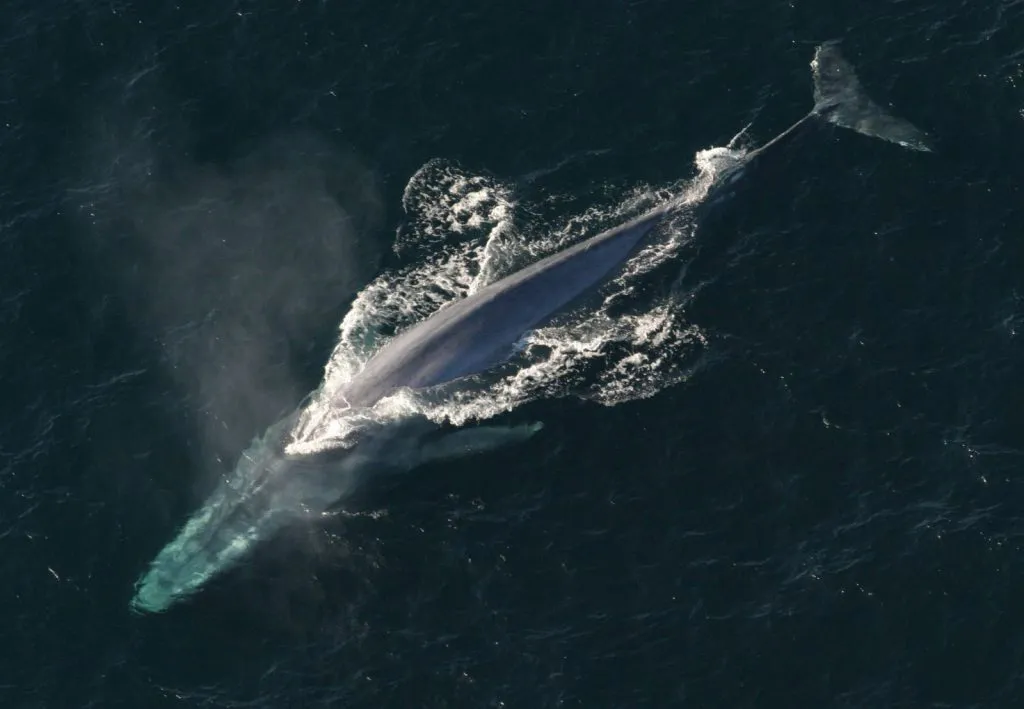
The largest animals on Earth are slowly returning to Antarctic waters. A new study offers encouraging news for blue whales, once hunted to the edge of extinction.
Scientists now estimate that around 4,018 Antarctic blue whales live in the Southern Ocean. That is a remarkable increase from just 418 individuals in 1973, when the last reported catches ended.
However, their recovery remains fragile. Today’s population represents only 1.9% of the number that existed before industrial whaling.
A Remarkable Recovery After Decades of Hunting
During the 20th century, commercial whaling devastated Antarctic blue whale populations. Hunters targeted these enormous mammals for their valuable oil, pushing them dangerously close to extinction.
The International Whaling Commission banned commercial hunting of Antarctic blue whales in 1964. Yet illegal Soviet whaling continued for another decade.
According to a new study published on November 5, 2026, the population is now growing by an estimated 4.5% annually.
Researchers from the University of Washington combined historical hunting records, population surveys, and whale photographs to reconstruct this recovery.
Their findings suggest that decades of protection have helped the species begin a slow return.
Why Blue Whales Matter to the Ocean
Antarctic blue whales can weigh more than 180 tonnes. Despite their enormous size, they mainly feed on tiny crustaceans called krill.
These whales also play an important role in marine ecosystems. Their movements and feeding activities help circulate nutrients through ocean waters.
When a whale dies, its body sinks to the seabed. This creates a temporary ecosystem that supports many deep-sea organisms.
As a result, protecting blue whales also helps preserve the complex relationships that sustain ocean life.
A Long Road Before Full Recovery
Despite these encouraging figures, Antarctic blue whales remain critically endangered.
Their slow reproduction makes recovery particularly difficult. Females usually give birth to one calf every two or three years.
Scientists also face challenges when monitoring these animals across the vast Southern Ocean. Whales spend much of their lives underwater, making accurate population counts difficult.
Researchers hope new acoustic technology will improve future surveys by detecting whale calls across remote waters.
Meanwhile, environmental changes create additional uncertainty for this recovering population.
The latest findings offer cautious optimism. They show that protecting wildlife can produce meaningful results, even after decades of destruction.
Yet the return of Antarctic blue whales is far from complete. Their survival will depend on continued protection, research, and the health of the Southern Ocean.
Legend & Credit Photo Hero: The blue whale is the largest animal on Earth. A new study reveals signs of recovery among Antarctic blue whales after decades of protection. Photo: NOAA.
Follow us on Instagram and Facebook to stay informed
This article may be of interest to you: 11 Protected Mobula Rays Seized in Bali Amid Marine Conservation Concerns