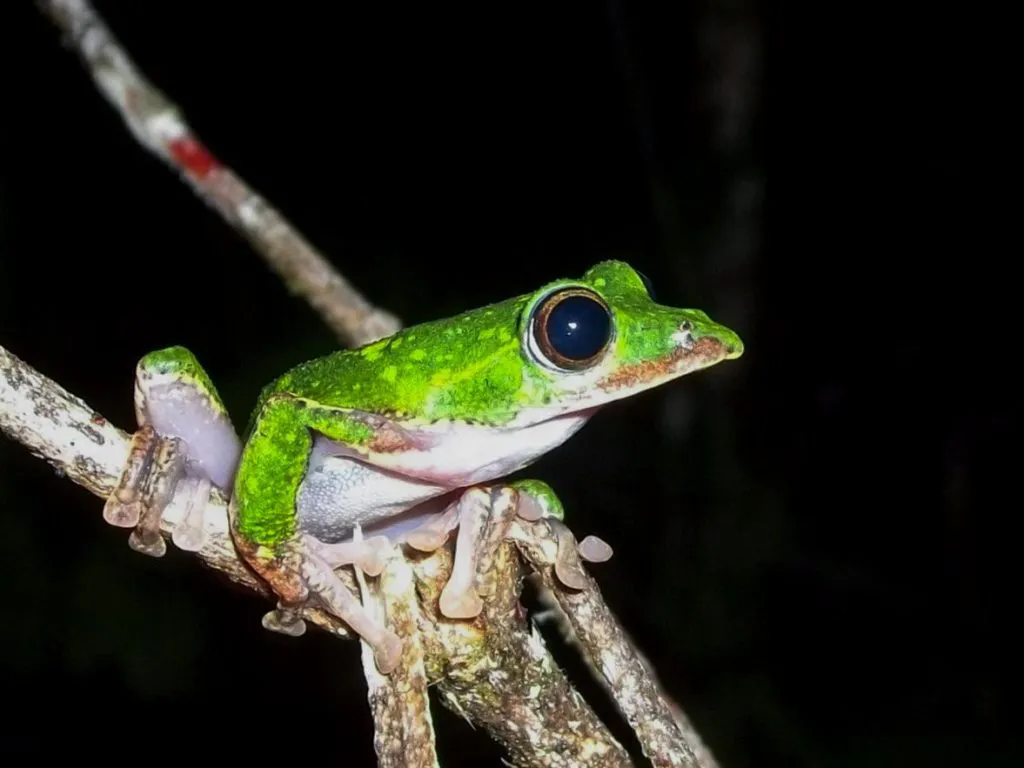
A newly described flying frog from Indonesia’s Sulawesi island lays its eggs in jelly-like masses rather than the foam nests used by many relatives. Named Rhacophorus kurniatiae, the species was formally described on November 11, 2026, in the scientific journal Zootaxa. Its unusual breeding behaviour is helping researchers understand just how much biodiversity remains undocumented in Sulawesi’s mountains.
A Surprising Discovery Beside a Mountain Lake
The story began during biodiversity expeditions between 2009 and 2013. An Indonesian-American research team trekked through the Mekongga Mountains of Southeast Sulawesi, surveying rainforest from low elevations to remote mountain habitats.
More than 1,860 metres above sea level, they reached a small seasonal lake called Danau Coca-Cola. There, they encountered thousands of bright green frogs gathered around the water. The animals were small enough to fit against a person’s cheek.
The researchers suspected these frogs were different from known species. But recognising a new species takes more than finding an unfamiliar animal.
The Eggs That Set This Frog Apart
Flying frogs do not fly like birds. Members of the Rhacophorus genus use broad, webbed feet to glide between trees.
To identify the Mekongga frogs, scientists compared 28 physical characteristics, genetic evidence and recorded calls. They found a pointed snout and distinctive vocalisations. Their most revealing finding, however, concerned reproduction.
Instead of producing the frothy foam nests associated with related frogs, R. kurniatiae deposits eggs in irregular, transparent gel. The masses occur on vegetation above or close to water, where embryos and tadpoles develop inside the gelatinous material.
The scientific paper identifies this as an unusual reproductive strategy within the group. It may reflect adaptation to temporary mountain waters, although researchers have not established exactly why the behaviour evolved.
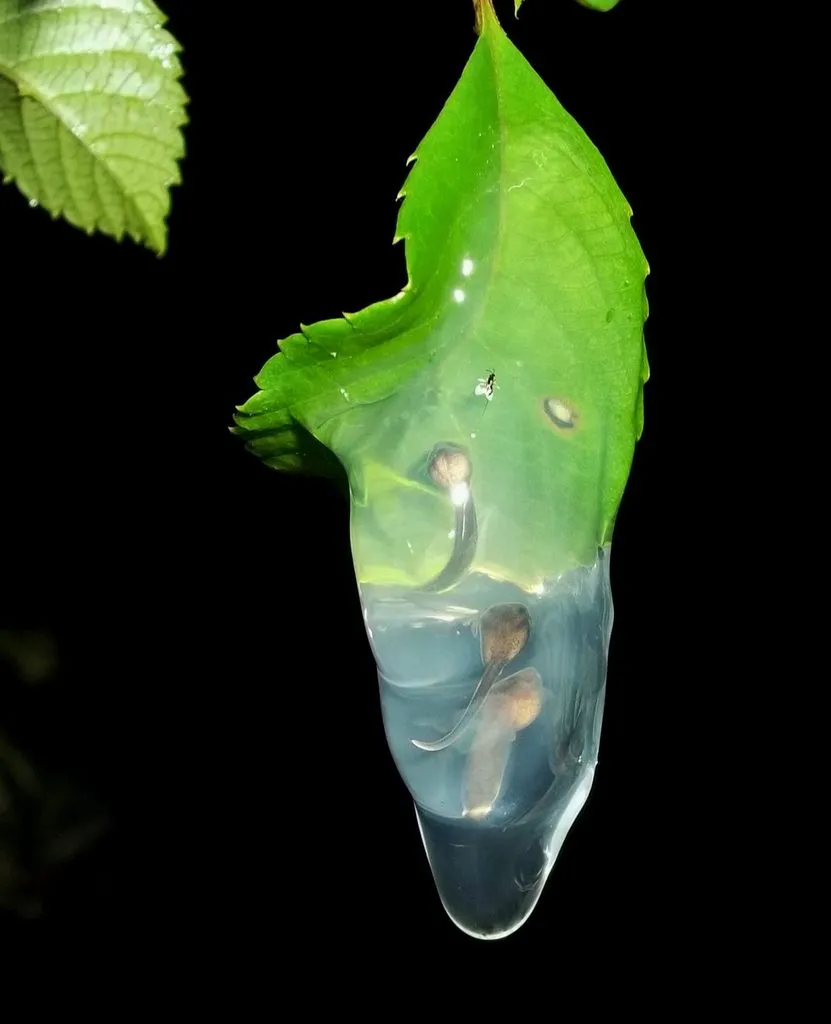
©️ Wahyu Trilaksono / Museum Zoologicum Bogoriense.
A Name That Honours an Indonesian Herpetologist
The species honours the late Hellen Kurniati, an Indonesian herpetologist whose work helped document the country’s amphibians and reptiles. Naming the frog after her connects the finding to a longer history of Indonesian field research.
Wahyu Trilaksono, of Museum Zoologicum Bogoriense, led the study. Collaborators included researchers from the University of California, Davis.
Why the Mekongga Mountains Matter
Sulawesi is known for species found nowhere else. Yet its more remote highland ecosystems remain incompletely surveyed.
The new frog strengthens the scientific case for further research in the Mekongga Mountains. According to UC Davis, the region is being considered for national park status. That remains a proposal, not a confirmed designation.
The discovery also illustrates why scientists combine field observations, sound recordings and genetics. Animals that look alike can follow very different evolutionary paths.
For this small green frog, the clearest clue was not how it moves through the forest, but how it begins life.
Legend & Credit Photo Hero
Rhacophorus kurniatiae, a newly described flying frog from Sulawesi, Indonesia, distinguished by its unusual gelatinous egg masses.©️ Wahyu Trilaksono
Follow us on Instagram and Facebook to stay informed
This article may be of interest to you: Coral Bleaching Recovery: A New Discovery Offers Hope