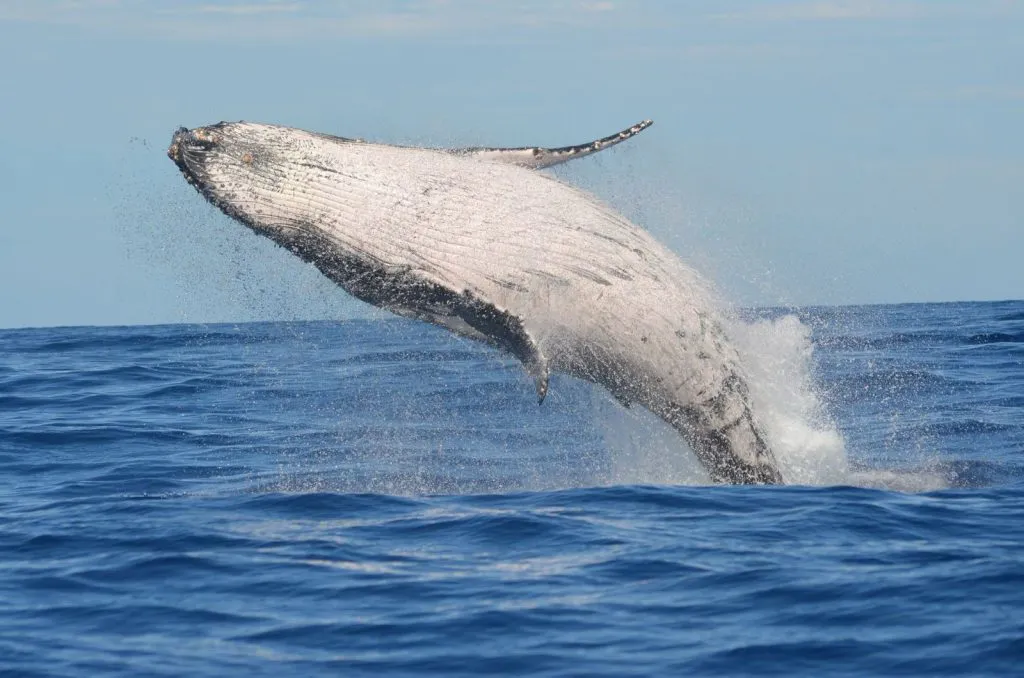
Scientists have recovered whole-genome data from humpback whales using only their exhaled breath. Published on November 17, 2026, the research offers a less invasive way to study whale populations without taking tissue samples.
Collecting Whale DNA Without Touching the Animal
In the fjords of northern British Columbia, Canada, researchers flew a small drone through the mist released when humpback whales surfaced to breathe. Sterile Petri dishes attached beneath the aircraft captured tiny droplets of respiratory fluid.
The team collected 58 breath samples from 26 humpback whales (Megaptera novaeangliae) in 2022 and 2023. The work took place in Gitga’at First Nation territory, through a research partnership with the North Coast Cetacean Society.
To prevent mixed samples, the researchers targeted the whale positioned upwind when animals travelled together. They did not sample resting whales. This careful protocol matters: clean, individual samples are essential when scientists compare genetic profiles or investigate relationships within a group.
According to the study in Molecular Ecology Resources, approximately 84% of the DNA recovered came from the whales themselves. That was enough to reconstruct their nuclear genomes at low coverage and their mitochondrial genomes at much higher coverage.
Did You Know?
A whale’s visible blow carries microscopic droplets from its respiratory system. Those droplets can contain cells and genetic material, allowing scientists to study the animal without making contact.
What a Whale’s Breath Reveals
The researchers checked their results against repeat breath samples and existing tissue biopsies from the same whales. The genetic profiles agreed, supporting the reliability of the technique.
The samples also revealed three previously undescribed mitochondrial DNA variants and accurately identified the animals’ sex. Researchers found little evidence of recent inbreeding among the sampled whales, although the small dataset cannot describe every humpback population.
These findings could help scientists track genetic diversity, distinguish populations and investigate how individual whales are related. Before this study, publicly available whole-genome data for North Pacific humpbacks were extremely limited.
Could It Reveal Whether Whales Are Family?
One question is especially intriguing: do humpback whales that feed together share family ties, or do they form long-lasting social bonds?
Lead researcher Éadin O’Mahony hopes to explore that distinction using the new genomic dataset. It is a future research goal, not a conclusion of the current study.
The approach could also reduce the need for close vessel encounters and biopsy darts. More than one-third of the study’s samples were collected with drones launched directly from shore.
Did You Know?
Around 16% of the DNA in the breath samples came from other sources, largely microbes associated with the whales’ airways. Future analysis could help researchers investigate respiratory health, although this study did not diagnose disease.
A Promising Tool, With Limits
Breath collection will not replace every biopsy. The nuclear genomes obtained had relatively shallow sequencing coverage, and success may differ across whale species. Drone flights also require specialist training, permits and careful monitoring of animal behaviour.
Still, the University of St Andrews reports that flights stopped whenever whales reacted. The study shows how field technology and genetics can expand research while reducing direct contact.
FAQ
Yes. Respiratory droplets contain whale DNA suitable for genomic analysis.
Twenty-six humpback whales in northern British Columbia, Canada.
No. Drones collected exhaled droplets without direct contact.
Potentially. Genetic and microbial information could support future health research.
Legend & Credit Photo Hero
Researchers in British Columbia have recovered whole-genome data from humpback whales using breath samples collected by drones @Aurore Murguet
Follow us on Instagram and Facebook to stay informed
This article may be of interest to you: Whale Sharks: Understanding the Largest Fish in the World