Bali is approaching its rainy season, yet hot and dry conditions continue in parts of the island. A powerful El Niño is changing rainfall patterns and raising concerns about water shortages.
November usually marks the transition from dry to wet weather in Bali. But in 2026, the island is experiencing an uneven start to its rainy season.
Some areas have already received heavy rain. Others remain dry, with high temperatures and growing concerns about water supplies.
Indonesia’s Meteorology, Climatology and Geophysics Agency (BMKG) says a very strong El Niño is influencing weather across the country. Its latest climate update, published on November 14, confirms that the phenomenon remains active.
For Bali, this means the arrival of regular rainfall may take longer than usual.
Why Is Bali Still Hot in November?
Bali has a tropical climate, with warm temperatures throughout the year. However, November normally brings more cloud cover and increasing rainfall.
This year, the seasonal transition is taking longer in many areas.
According to BMKG’s rainy season forecast, only 15% of Bali’s seasonal zones are expected to enter the rainy season in November. The remaining 85% are forecast to follow in December.
This delayed transition can allow hot and dry conditions to persist, even as showers begin elsewhere.
A Powerful El Niño Is Affecting Indonesia
El Niño occurs when surface waters in the central and eastern Pacific Ocean become unusually warm.
These changes can affect atmospheric circulation and reduce rainfall across parts of Indonesia.
BMKG’s November 14 update confirmed that El Niño had reached very strong intensity. A positive Indian Ocean Dipole is also influencing rainfall conditions.
Together, these climate patterns can favour drier weather across parts of the country.
However, El Niño does not prevent rain entirely. Local weather systems can still produce heavy showers and thunderstorms.
In fact, BMKG recorded up to 300 millimetres of rain in one day in Bali during the first four days of November.
Drought Warnings Remain in Place
Despite these heavy rainfall events, the risk of drought has not disappeared.
On November 11, Bali’s disaster management agency issued an advisory covering November 11–20.
Several areas remain under meteorological drought warnings, including the highest alert category.
Authorities have urged residents to conserve water and avoid activities that could start fires.
Dry conditions can place additional pressure on agriculture, household water supplies and vegetation. However, local impacts depend on rainfall, water availability and land use.
When Will Bali’s Rainy Season Begin?
BMKG expects the rainy season to develop across most of Bali during December 2026.
Rainfall may increase before then, but the transition will not happen everywhere at once.
The coming weeks could therefore bring an unusual mix of hot afternoons, dry spells and sudden heavy rain.
For residents and visitors, the message is clear: November’s changing weather does not mean the dry season has ended across the whole island.
Bali is entering its wet season, but El Niño continues to shape how that transition unfolds.$
Legend & Credit Photo Hero
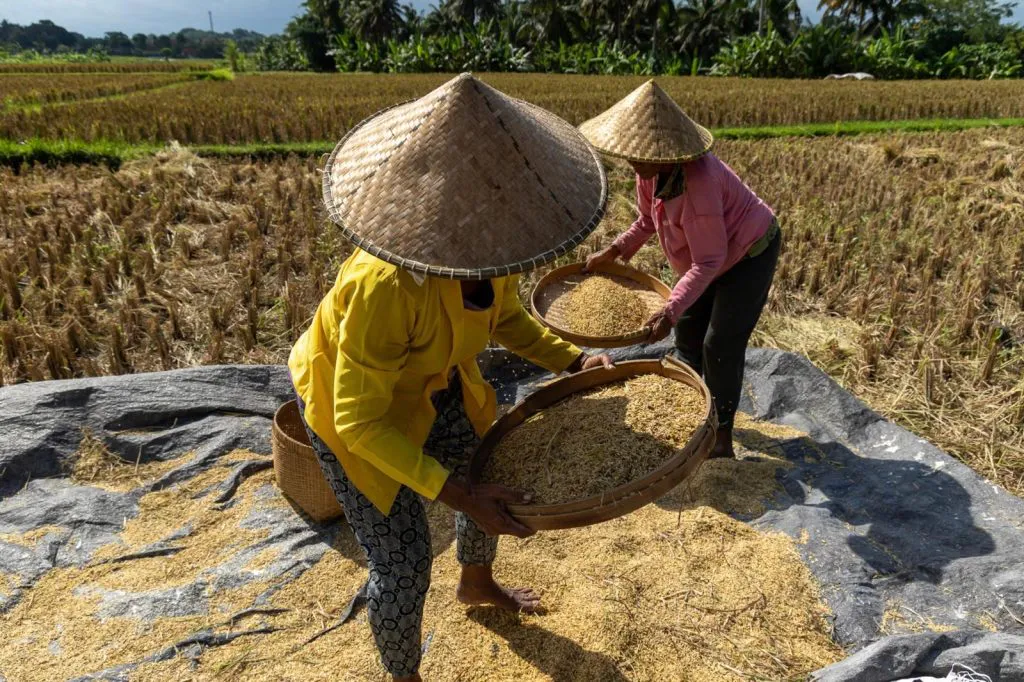
Farmers process harvested rice in Bali, Indonesia, where seasonal rainfall plays an essential role in agriculture. ©️ Damien Lafon / Terra Cultura.
Follow us on Instagram and Facebook to stay informed
This article may be of interest to you: El Niño: When the Pacific Heats Up