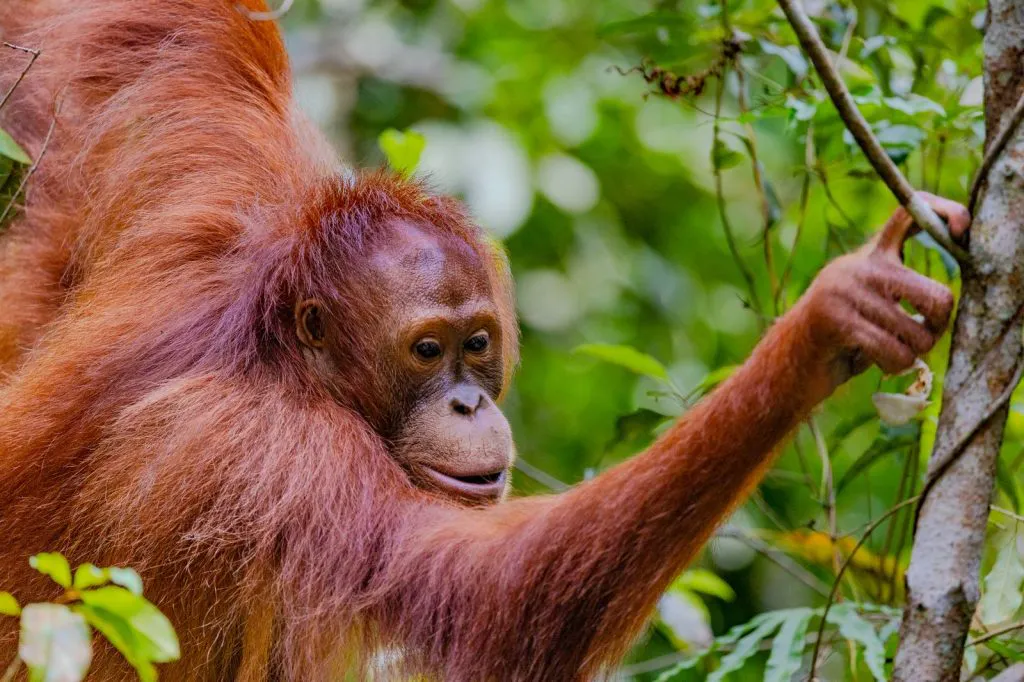
While Indonesia continues to lose its tropical forests, the conservation organisation Kalaweit offers a rare story of hope. Working alongside local communities, it has now secured 3,840 hectares of forest across Borneo and Sumatra, protecting some of Southeast Asia’s most threatened wildlife.
A victory for Indonesia’s rainforests
Amid growing concerns over tropical deforestation, positive conservation stories deserve greater attention. The French conservation organisation Kalaweit, which has operated in Indonesia since 1997, has reached a significant milestone. Its conservation efforts have now secured 3,840 hectares of forest, equivalent to 38.4 square kilometres.
These forests provide essential habitats for an extraordinary diversity of wildlife. Orangutans, gibbons, siamangs, sun bears, clouded leopards and Sumatran tigers are among the species that benefit from these conservation efforts.
However, many of these animals face increasing pressure as industrial activities continue to transform their natural environment.
According to the World Resources Institute, Indonesia’s primary forest loss increased by 14% in 2025 compared with 2024. Agricultural expansion and mining activities contributed to this increase.
Protecting forests before they disappear
In Central Kalimantan, on the Indonesian side of Borneo, the Dulan Reserve represents one of Kalaweit’s most ambitious conservation projects.
Surrounded by industrial plantations and mining concessions, the reserve provides shelter for wild orangutans, gibbons and numerous other forest species.
Meanwhile, in West Sumatra, the Supayang Reserve protects more than 600 hectares of forest. Its remarkable biodiversity includes Sumatran tigers, Asian tapirs, pangolins and siamangs.
Rather than focusing exclusively on individual species, Kalaweit protects entire ecosystems. This approach allows wildlife to remain in its natural environment, where animals can feed, reproduce and establish territories.
Forest rangers, aerial surveillance and camera traps also help monitor these protected areas and document their wildlife.
Local communities at the heart of conservation
One of the most important aspects of Kalaweit’s approach is its partnership with local communities.
The organisation works with villagers and landowners to secure forests threatened by industrial development. Communities retain access to forest resources for traditional activities, including fruit picking and collecting rattan.
This model aims to protect biodiversity while respecting local livelihoods and maintaining the cultural connection between people and forests.
In February 2026, Kalaweit signed an agreement with three Indigenous groups on Siberut Island, in the Mentawai Archipelago. According to its official conservation programme, the agreement aims to protect an additional 3,000 hectares over the following two to three years.
Every hectare makes a difference
Protecting isolated forest areas is important. However, connecting them through ecological corridors could provide even greater benefits for wildlife.
These connections allow animals to move between habitats, find food and maintain genetic diversity. They can also reduce the risks associated with increasingly fragmented forests.
Kalaweit relies on financial contributions to expand its reserves and maintain long-term protection. Through its donation programme, individuals can directly support these conservation efforts.
At a time when environmental headlines often focus on destruction, these 3,840 hectares offer a different perspective. They remind us that conservation can deliver tangible results when communities, organisations and individuals work together.
For Indonesia’s wildlife, every hectare of standing forest represents another chance to survive.
Follow us on Instagram and Facebook to stay informed
This article may be of interest to you: Why Do Tropical Rainforests Host So Many Species?