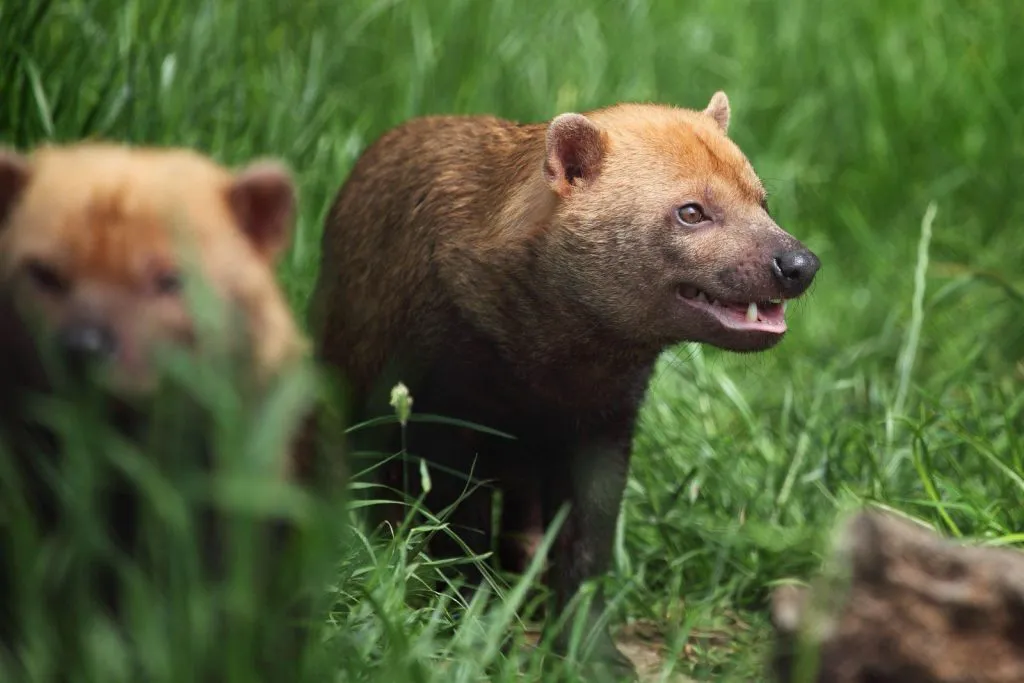
Deep in South America’s forests lives a wild dog that scientists almost never see. Now, 25 years of research reveal just how rare this mysterious animal may be.
Imagine placing thousands of cameras across South America’s forests and leaving them to watch wildlife for 25 years. You might expect to capture countless images of rare animals. Yet one remarkable species appeared just 12 times.
That animal is the bush dog (Speothos venaticus), one of the world’s least-known wild canids.
A new study published in Canid Biology & Conservation reveals just how rarely researchers encounter these small forest hunters. The findings also raise new questions about their future.
A Quarter of a Century, Just 12 Records
Researchers from the Wildlife Conservation Society (WCS) examined camera-trap surveys conducted between 2001 and 2025.
Their study covered 97 locations across seven South American countries. In total, 6,756 camera stations collected more than 611,000 camera-trap nights of data.
Despite this enormous effort, bush dogs appeared on just 12 occasions. Those records captured only 14 individual animals. The cameras detected bush dogs in Bolivia, Brazil, Colombia, and Ecuador. None appeared in the surveys from Paraguay, Peru, or Venezuela.
However, this does not mean the species has disappeared from those countries. The results reflect the areas covered by this particular study.
Meet the Wild Dog Few People Know
The bush dog looks unlike most wild dogs. It has short legs, a long body, small rounded ears, and thick brown fur. At first glance, it may resemble an otter more than a typical member of the dog family.
Adults weigh up to seven kilograms. Yet these small carnivores can be surprisingly effective hunters.
Bush dogs live in social groups, sometimes containing up to 12 individuals. They work together to hunt prey in tropical forests and nearby habitats. However, much of their natural behaviour remains poorly understood.
Their secretive lives and low numbers make studying them extremely difficult.
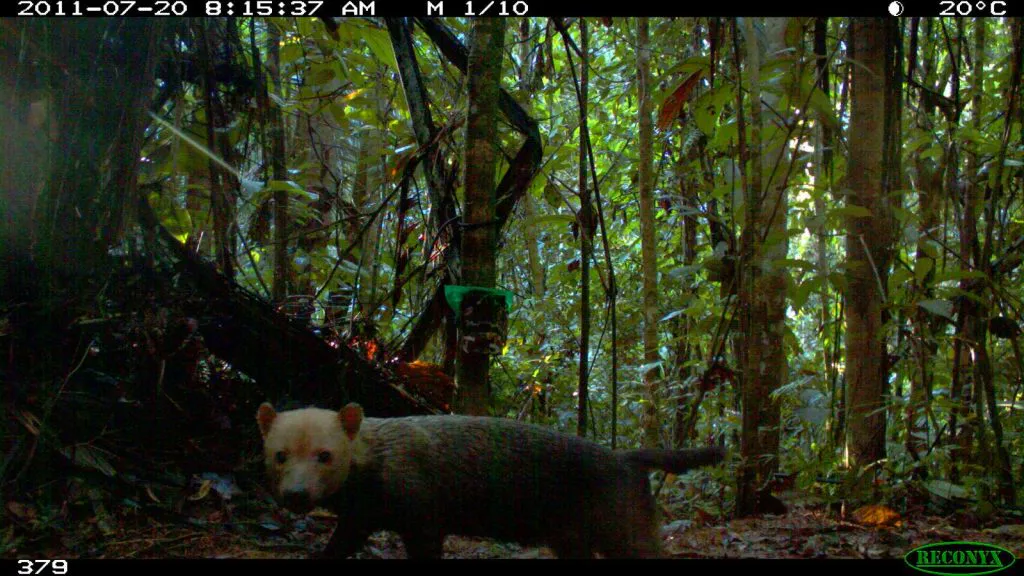
Even Jaguars Appear More Often
Perhaps the most surprising finding comes from comparisons with other forest predators.
During the same surveys, cameras recorded jaguars around 100 times more frequently than bush dogs. Ocelots appeared nearly 280 times more often. Even the elusive short-eared dog was detected about 50 times more frequently.
These comparisons suggest that bush dogs are not simply skilled at avoiding cameras. Instead, researchers believe their populations may exist at exceptionally low densities across large forest areas. In parts of the Amazon, the study suggests there may be fewer than one bush dog per 350 square kilometres. However, scientists stress that these estimates remain uncertain.
What Does This Mean for Their Survival?
The bush dog is currently listed as Near Threatened on the IUCN Red List, based on an assessment published in 2011.
However, the new findings could help scientists reconsider its conservation status. Low population densities may make bush dogs especially vulnerable to habitat loss and forest fragmentation.
Road construction, fires, and diseases transmitted by domestic dogs could place further pressure on these isolated populations. Still, researchers caution that most survey sites were concentrated in the western Amazon. More research is needed across the species’ wider range.
For now, the study offers a remarkable reminder of how much remains unknown about tropical wildlife. After 25 years and thousands of cameras, one of South America’s most unusual predators remains almost invisible.
Credit photo Hero: royalty-free photos
Follow us on Instagram and Facebook to stay informed
This article may be of interest to you: African Wild Dogs: Africa’s Remarkable Pack Hunters