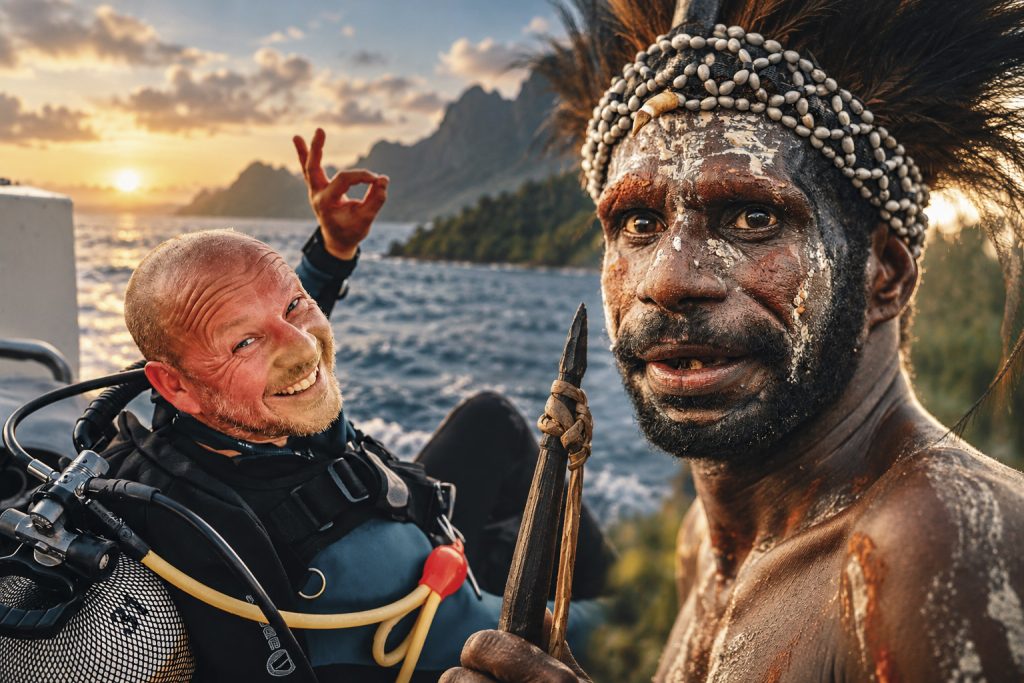
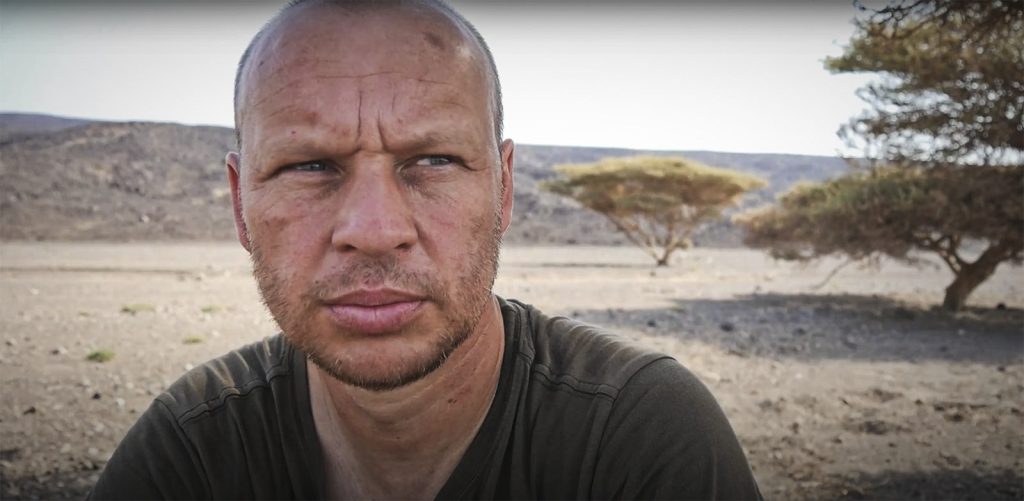
Soldier, explorer, filmmaker and educator, Stéphane Urbinati has spent much of his life learning from the field. Today, he shares that experience through documentary filmmaking and Explore Academy.
For Terra People, Stéphane Urbinati reflects on exploration, risk, storytelling, responsibility and the lessons learned outside conventional paths.
You have lived several lives – soldier, explorer, filmmaker and educator. What connects all these different chapters?
I think the common thread has always remained the same. I need to understand the world by going out to meet it. I was never really made to remain a spectator, especially in my own life. From a young age, I wanted to step outside established frameworks. I wanted to face demanding situations and meet people with very different lives.
I was born in Alsace, and my uncle Francis gave me my first connection with the outside world. He hunted, photographed wildlife and knew the forest incredibly well. He was my own Mike Horn. Whenever he could, he took me into the forests of the Vosges. We explored burrows, searched trees for signs of life and watched animals from the edges of clearings.
Many of my childhood dreams started there. Then the army came to me rather than the other way around. It became my first great school of life. I learned about myself, teamwork, responsibility and adaptation in demanding environments. Later, exploration and filmmaking became another way to continue the same journey.
My intention changed more than my personality. When I was younger, I kept searching without knowing exactly what I wanted to find. Today, I understand that search much better. Explore Academy continues that same path. I wanted to create a place where others could experiment, fail, learn and find their own direction.
Perhaps I have not lived several different lives. I have simply found different ways to live the same passion.
What did your military background teach you that you still use in exploration and filmmaking?
I spent fifteen years in the French Army. That experience deeply shaped the way I work and react today. The first lesson concerns preparation. In difficult conditions, poor preparation should never force you to improvise. You must anticipate problems, know your equipment and understand the environment around you.
Autonomy also matters. In the field, your equipment can fail. Your communications, GPS or power supply can stop working without warning. When technology disappears, you still have your knowledge, experience and ability to adapt.
Technology remains an extraordinary tool, but it should never become a dependency. You should know how to navigate without GPS. You should also understand your surroundings and work with limited resources. You can carry the world’s best cameras and drones. However, equipment will never replace the skills of the person using it.
The military also taught me that autonomy does not mean invincibility. You must know your limits and evaluate each situation carefully. Sometimes, the right decision means turning back. Real field experience does not mean facing every danger. It means making good decisions when conditions suddenly change.
When did you realise that adventure was also about telling stories?
I don’t think one specific moment changed everything. That understanding developed through missions, expeditions and, above all, encounters. At first, adventure attracts you through its physical dimension. You look for large spaces, remote places and difficult conditions. You also want to test yourself.
Over time, my strongest memories changed. They no longer came only from spectacular landscapes or difficult situations. I remembered faces, conversations and gestures of solidarity. I remembered people who opened their homes and shared their daily lives. Some of those people later became close friends.
That is where documentary filmmaking started to make sense for me. A camera gives you an extraordinary reason to connect with the world. It pushes you to observe more carefully. It also makes you ask questions and, most importantly, listen.
Then you feel the need to share what you experienced. You do not need to prove that you were there. You want someone else to feel part of that encounter. I love the idea that a film can extend a meeting far beyond the journey itself.
How do you distinguish between a necessary risk and an unnecessary one?
I always tell my students one simple thing. No image deserves someone’s life, however exceptional that image might be. I distrust the way people sometimes romanticise risk. Some stories present explorers as people who must constantly confront danger. I do not believe that approach creates better work.
The field already gives us enough uncertainty. Our responsibility involves reducing risk rather than creating more of it. Before a shoot, I separate real constraints from problems created by ambition, impatience or ego. That distinction can change everything.
You also need to recognise when conditions change. The original plan may no longer make sense. Continuing does not always show courage. Sometimes, courage means stopping after months of preparation.
A good field filmmaker does more than return with strong images. A good filmmaker also brings the entire team home safely.
Has the field changed the way you deal with uncertainty in everyday life?
Yes, profoundly. I still get irritated sometimes, like everyone else. However, the field teaches you perspective. Difficult weather, exhaustion and logistical problems change your relationship with everyday frustrations. Many small problems suddenly seem less important.
The field also teaches you that total control remains impossible. I love preparation and organisation, but a schedule stays only an intention. Nature, people and circumstances can always change your plans. When that happens, you have two choices. You can fight against reality, or you can adapt to it.
The same principle applies to human relationships. We often waste energy trying to change people or repair situations. Sometimes, accepting reality gives us more strength than fighting it. That does not always mean giving up. It means understanding what you can change and what you cannot.
The field also taught me patience. You can wait hours for only a few seconds of footage. You can prepare for months and still face a completely different situation. Yet those unexpected moments often create the strongest stories.
We used to say something similar in the military: whatever you decide, the field always has the final word.
In your documentaries, how important is lived experience compared with beautiful images?
For me, lived experience must come before the image. Technology now allows us to produce extraordinary visuals. Cameras, drones and other tools offer possibilities we could barely imagine before. However, a beautiful image does not automatically tell a meaningful story.
I care about everything that happens before someone presses the record button. I remember the journeys, waiting, trekking and bivouacs. I also remember the trust we must build before filming begins. Those unseen moments often make the film possible.
Documentary work always carries a human dimension. Technology cannot replace that part of the process. Some of the most important moments happen when we choose not to film. Sometimes, you need to put the camera down. You need to respect someone’s privacy or simply experience the moment.
You can tell the story later, or you may decide not to tell it. I prefer an imperfect image that communicates something true. A spectacular image means little if it creates no emotion. The beauty of a documentary should always serve its story.
After all these years, what still makes you want to return to the field?
Curiosity still drives me. The world has an enormous amount to teach us, even in places we think we know. I still feel excitement when I prepare a bag. I still want to discover new territories and meet unfamiliar people.
One recent shoot connected with a dream that began more than forty years ago. I was around seven or eight years old. At my uncle’s house, I saw an old National Geographic magazine. Its cover showed a man from what seemed like another world to me. That image stayed in my mind for decades.
Eventually, I experienced the kind of encounter I had imagined as a child. It became one of my strongest memories. However, my idea of exploration has changed.
When I was younger, distant destinations and extreme environments attracted me most. I loved difficult expeditions and remote places. Today, I can feel the same excitement while discovering a human story near my own home.
Adventure does not always depend on distance. It depends on our ability to look at the world differently.
What do you want young filmmakers to learn through Explore Academy?
I wanted to create the school that I would have loved to find when I was younger. Students should learn more than camera techniques or storytelling. They should also experience the realities of the field.
At Explore Academy, exercises become films and assignments become encounters. We built our teaching around three pillars: technique, field experience and ethics.
Students need to understand image, sound, writing, directing and editing. However, those skills represent only part of the job. I also want them to prepare expeditions, manage autonomy and anticipate problems. They must learn teamwork and respect natural environments.
They also need to understand their responsibility toward the people they film. Above all, students need permission to fail.
Our society often expects young people to succeed before giving them enough time to experiment. The field teaches a different lesson. Failure can become one of the best learning tools.
A filmmaker does not simply enter a place and collect images. Filmmakers enter ecosystems and the lives of other people. Some ecosystems remain fragile. Some people offer you their trust. We need to teach students how to deserve that trust.
Has the meaning of exploration changed now that almost everything can be mapped before we leave home?
Completely. For a long time, people linked exploration with geographical discovery. They imagined unknown territories and places that nobody had reached. Today, maps cover most of the planet. We can see remote regions through our phones. We can also follow expeditions without leaving home.
Yet access to images does not mean real understanding. A map can show you a territory. It cannot explain what living there actually feels like. It cannot describe every relationship between people and their environment.
Contemporary exploration should therefore become more human, cultural and environmental. Countless stories still deserve attention. Communities still carry knowledge that outsiders rarely understand. Even familiar places can hide complex realities.
For me, exploration no longer means conquest. It means understanding, protection and ethics. Going somewhere simply to say you were there has little value. The real question concerns what that place can teach you.
After years of expeditions, filmmaking and teaching, what has the field taught you about yourself?
Almost everything. When I work in the field, I enter a different mental space. I move away from daily noise and distractions. My ideas often become clearer there. Some questions find answers more easily. Some decisions also become obvious.
When I think about it, several major decisions in my life probably started in a hammock.
The field also changed the way I look at people. Appearances and social status quickly lose importance in remote environments. I learned to value resilience, loyalty and the ability to listen. I also learned to recognise the people who truly build something.
On an expedition, the route matters. However, the people travelling beside you often matter even more.
Perhaps the field taught me one lesson above all others. Experience gains real value only when we share it. Today, I watch Explore Academy students prepare their own expeditions. I see them discover new environments and return with their first images.
I recognise some of the excitement that pushed me forward for years. However, I now feel another form of satisfaction. Our experience can help them make their own discoveries. It can also help them tell stories that we never imagined.
I do not know whether age has made me wiser. I simply understand my good fortune more clearly today.
We often leave because we hope to discover something. Yet we return with what other people chose to share.
Today, I can pass that experience forward.
More information: Explore Academy